

Mental illness does not only affect individuals—it reshapes the lives of entire families. Behind every person living with a mental disorder, there is often a caregiver quietly navigating emotional strain, financial pressure, and social stigma. A recent study sheds light on this overlooked reality, revealing how families manage stress and what helps them stay resilient.
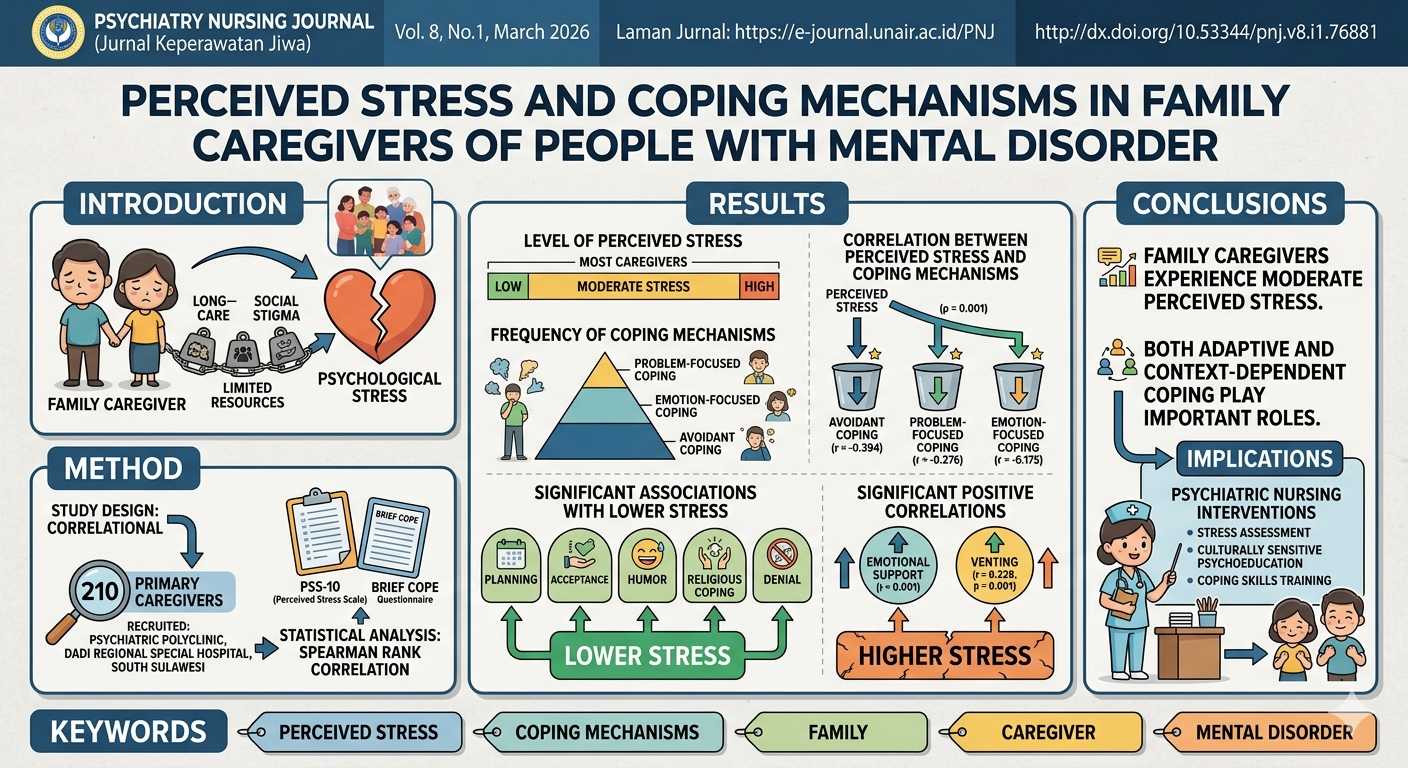
The study, titled “Stress Levels and Coping Mechanisms in Families of People with Mental Disorder,” was published in the Journal of Psychiatric Nursing by the Faculty of Nursing, Universitas Airlangga on April 21, 2026. It examined 210 family caregivers and found that most experienced moderate levels of stress, a condition that may not always be visible but can significantly impact well-being .
At first glance, “moderate stress” may sound manageable. However, in the context of long-term caregiving, it often reflects a constant psychological burden. Families must deal with unpredictable symptoms, recurring relapses, and limited mental health resources. Over time, this can lead to fatigue, anxiety, and even depression.
What’s particularly interesting is how these caregivers cope. The study found that many rely on what experts call avoidant coping strategies—such as denial or temporarily distancing themselves from the problem. While this might seem unhealthy, it can actually serve as a short-term emotional shield. In difficult situations where control is limited, stepping back mentally may help caregivers preserve their energy.
At the same time, more constructive approaches like problem-solving and positive thinking were also linked to lower stress levels. Caregivers who planned ahead, reframed challenges positively, or sought practical solutions tended to feel more in control. Another powerful coping tool was religion and spirituality, which provided meaning, comfort, and a sense of community—especially in culturally rooted societies like Indonesia.
Interestingly, seeking emotional support or expressing frustration did not always reduce stress. In fact, the study found that these behaviors were sometimes linked to higher stress levels. This suggests that people often reach out only when stress has already become overwhelming.
Why does this matter? Because supporting caregivers is essential for improving mental health outcomes overall. When families are overwhelmed, the quality of care for patients can decline. Strengthening caregiver resilience is not just a personal issue—it is a public health priority.
This connects directly to Sustainable Development Goal (SDG) 3: Good Health and Well-being, which emphasizes the importance of mental health and support systems. Ensuring that caregivers receive proper education, psychological support, and community resources is key to achieving this goal.
Ultimately, this research reminds us that caregiving is not just an act of love—it is also a demanding role that requires support. By recognizing and addressing the stress faced by families, we can build a more compassionate and effective mental health system—one that cares for both patients and those who stand beside them.


