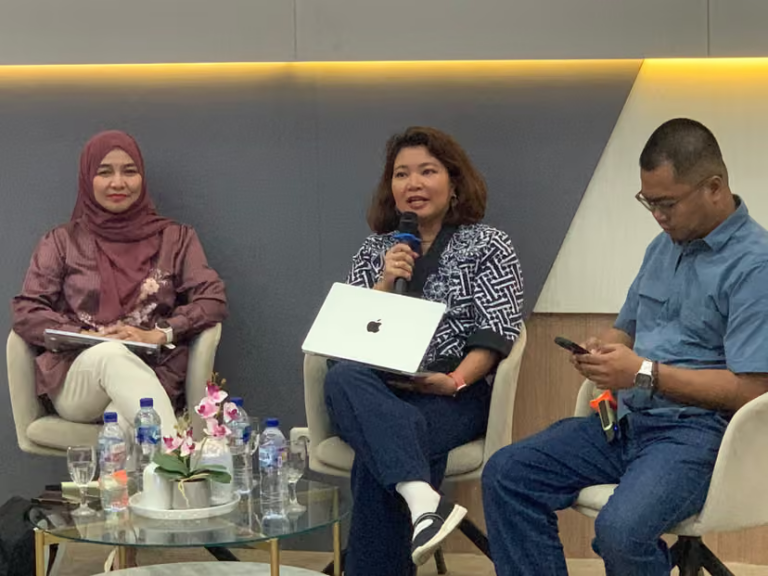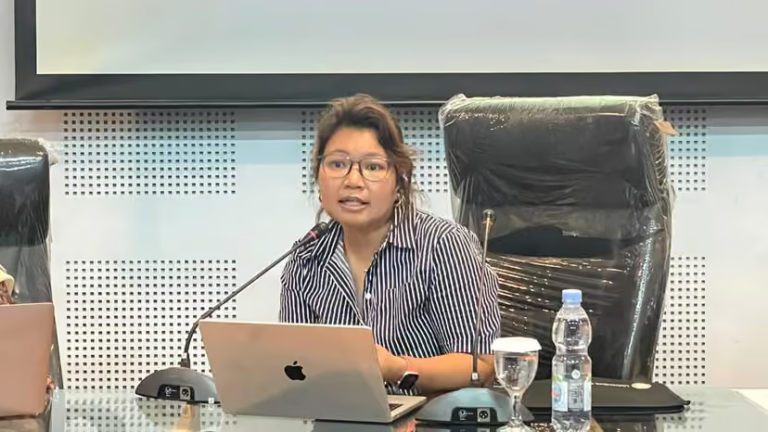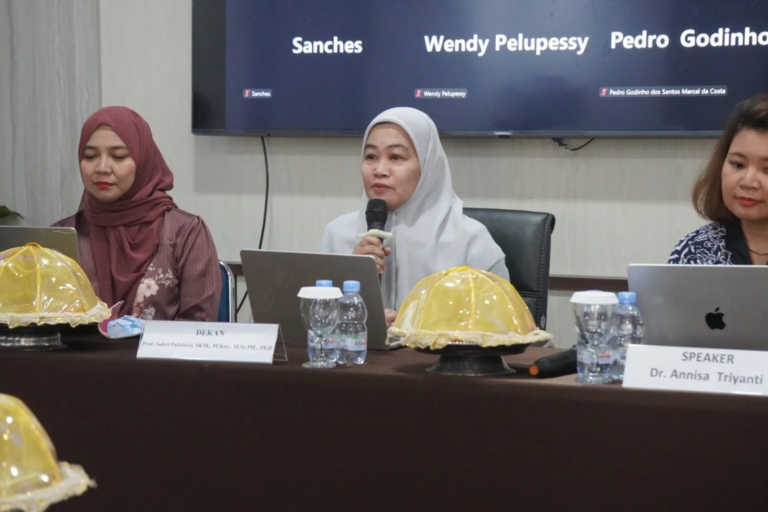

As maritime security and global trade routes undergo significant shifts driven by national strategic development, understanding subnational governance along vital sea lanes has become increasingly essential. On a national diplomatic platform, Universitas Hasanuddin (Unhas) made a significant contribution to the 17th National Convention of the Association of International Relations Studies in Indonesia (VENNAS XVII AIHII 2026). Hosted at President University, Cikarang, the convention served as a prominent scholarly gathering focused on contemporary diplomacy, international security, and regional maritime dynamics.
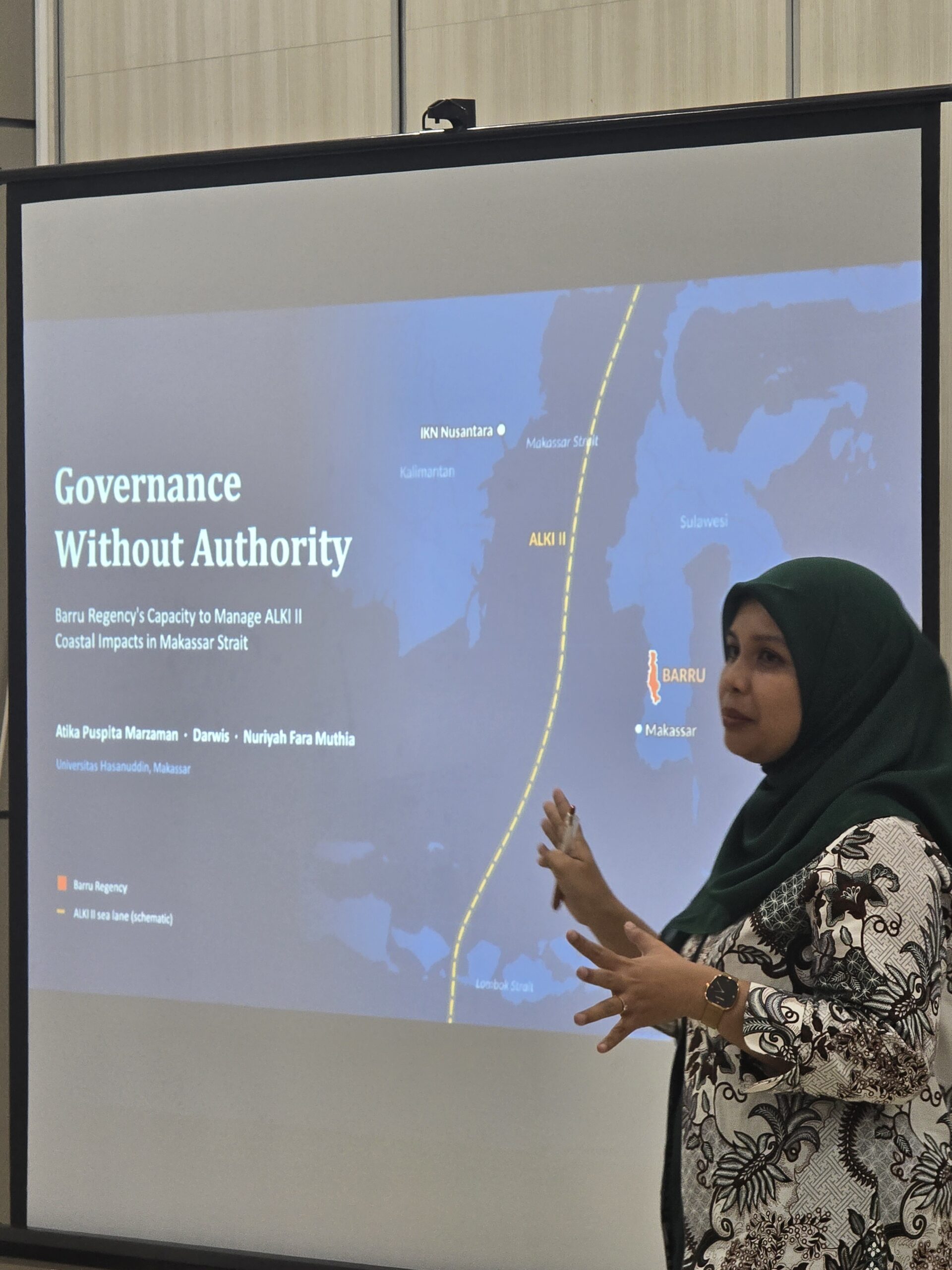
The academic session took place on 13th October 2026 at President University, Cikarang. The venue brought together a diverse intellectual cohort, recording 200 vennas participants from 70 campus across Indonesia. Representing Unhas, Atika Puspita Marzaman, together with co-authors Darwis and Nuriyah Fara Muthia, presented their compelling empirical research entitled “Governance Without Authority: Barru Regency’s Capacity to Manage ALKI II Coastal Impacts in Makassar Strait”.
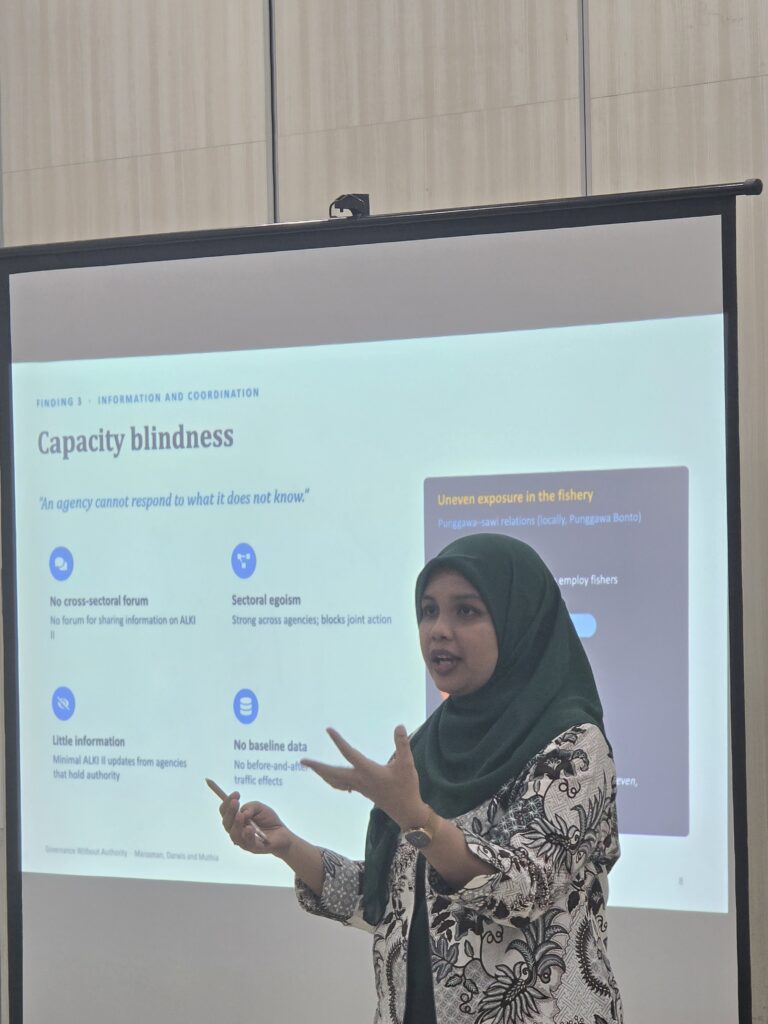
The main objective of the presentation was to analyze how the legal mismatch between local administrative boundaries and national sea lane regulations influences subnational capacity to manage maritime impacts along Indonesian Archipelagic Sea Lane II (ALKI II). Under Law 23/2014, local regencies lost marine authority from shoreline to 4 nautical miles, severing onshore consequences from offshore enforcement points. As the development of Indonesia’s new capital, IKN Nusantara, intensifies traffic through the Makassar Strait, local areas like Barru Regency face prospective socio-economic shifts without direct regulatory power, institutional forums, or baseline information channels.
This presentation directly links to several United Nations Sustainable Development Goals, explicitly advancing SDG 1: No Poverty, SDG 4: Quality Education, and SDG 17: Partnerships for the Goals. By highlighting how regulatory gaps and unmanaged shipping impacts threaten local coastal livelihoods—particularly traditional small-scale fishers (sawi) dependent on near-shore waters—the study seeks to prevent socio-economic marginalization aligned with SDG 1: No Poverty. Furthermore, by sharing cutting-edge empirical findings, policy frameworks, and analytical case studies with academic audiences across 17 universities, the presentation enriches national higher education standards in line with SDG 4: Quality Education. Finally, by proposing a multi-level co-management framework uniting regency officials, provincial bodies, naval posts, port authorities, and local fishing communities, the presentation advocates for collaborative governance as envisioned under SDG 17: Partnerships for the Goals.
Through this presentation, Unhas continues to demonstrate its commitment to translating rigorous field research into actionable maritime policy insights for national and regional diplomacy.