

MAKASSAR, Indonesia Aug 8 2026/Medi-Edu/ – Think about the doctors who will one day care for you. Before a young resident — a doctor still in training — can practice independently, someone must judge whether they are truly ready. For decades, that judgment rested on the shoulders of a single senior supervisor. But is one pair of eyes really enough to see the whole person?
A new study from Makassar suggests it is not. Titled “Bridging the Gaps: Allied Health Practitioners, Clinical Educators, and Peers Perspectives on Resident Performance Assessments,” the research was published in the Journal of Advances in Medical Education and Professionalism in 2025 by a team from Hasanuddin University.
Everyone Sees a Different Doctor
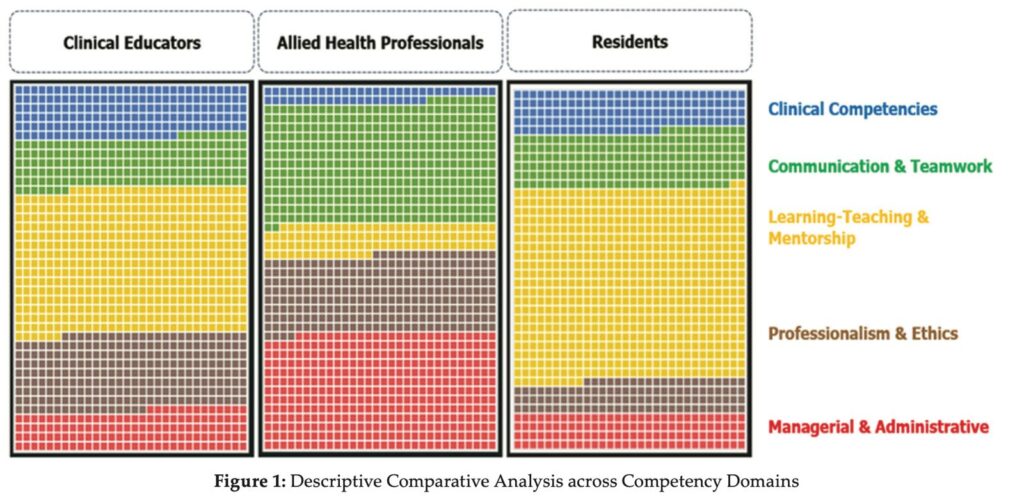
The researchers brought together three groups who work beside residents every day: senior clinical educators; allied health professionals such as nurses, pharmacists, physiotherapists, and radiographers; and the residents themselves. Through focus group discussions, a striking pattern appeared — each group was, in effect, evaluating a different doctor.
Senior educators watched most closely for teaching ability, mentorship, and professionalism, the marks of a future leader. Allied health staff, who see residents in the daily chaos of the wards, cared most about communication, teamwork, and the unglamorous world of documentation and coordination. Residents, for their part, focused on their own growth: learning, feedback, and clinical confidence.
The Hidden Curriculum
One of the most revealing findings was what the authors call a “hidden curriculum.” Nurses and pharmacists repeatedly stressed that administrative skills — accurate medical records, timely documentation, and clean patient handovers — are vital to patient safety. Yet residents often treated these tasks as secondary to “real” medicine. A single wrong medical record number, one professional warned, can delay a prescription and put a patient at risk.
When Culture Silences Feedback
The study also turns a spotlight on something rarely discussed openly: hospital hierarchy. In Indonesia’s respectful, harmony-seeking culture, junior doctors may hesitate to question a senior or to give honest peer feedback, fearing repercussions. Decisions can stall while residents wait for approval, and the most valuable learning conversations quietly never happen.
Why It Matters
This research is more than an academic exercise; it speaks directly to SDG 3: Good Health and Well-being and SDG 4: Quality Education. Better-trained doctors mean safer patients. The authors argue that fair assessment should gather many perspectives — moving toward 360-degree feedback rather than a single verdict from above — and should remain sensitive to local culture.
As the study concludes, shaping competent, compassionate doctors takes more than examinations. It takes a hospital brave enough to view its trainees through many eyes, and honest enough to talk about what it sees.
Reference
DOI:https://doi.org/10.30476/jamp.2025.106145.2148
Contact
Bau Dilam Ardyansyah, MD, M.BiomedSc., MHPE, PhD
+62 859-38369919
bardyansyah@med.unhas.ac.id