



Description
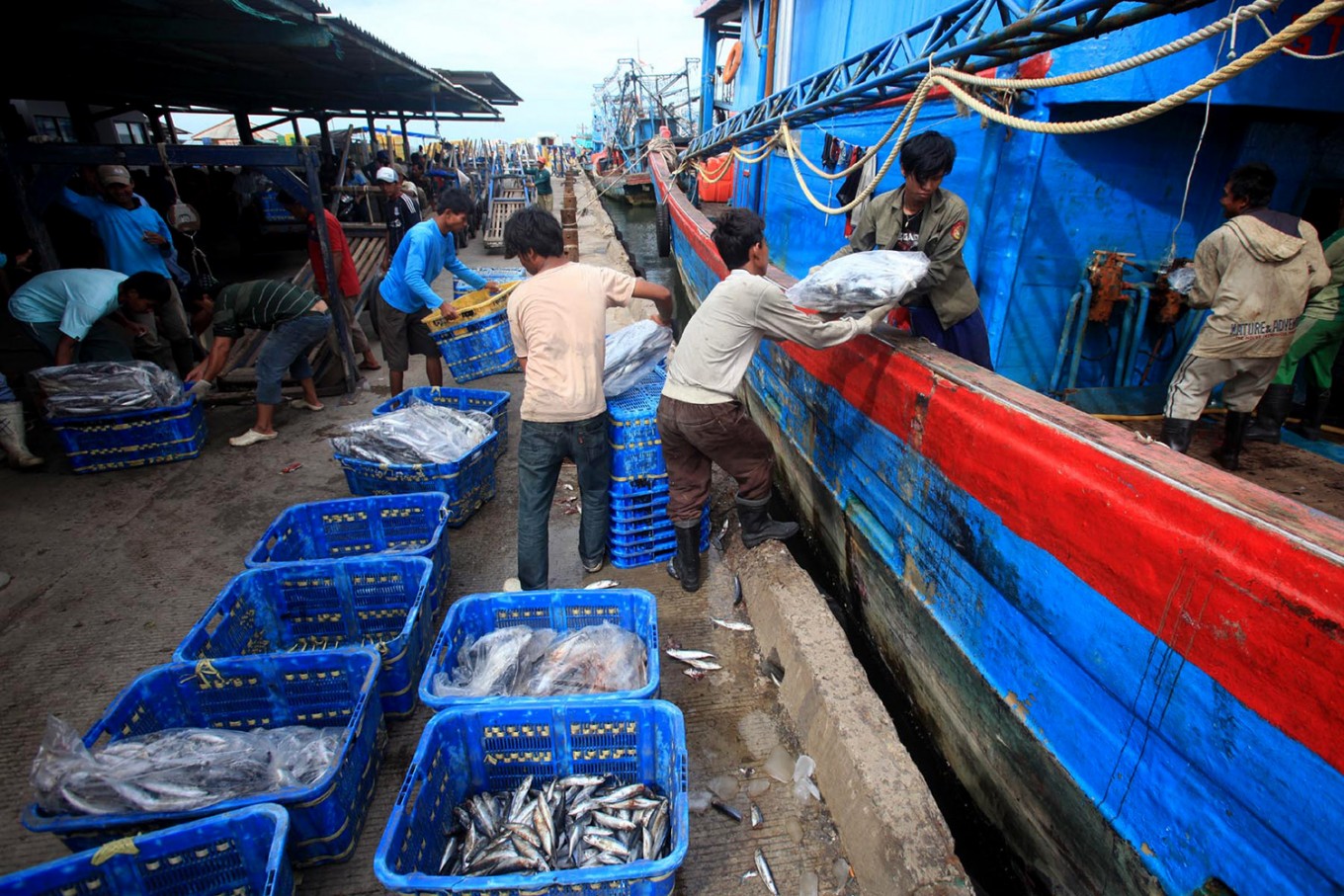
Fish Auction Place can be interpreted as a place where the sellers and buyers is doing the transaction of fish through the auction process, in this case the process of selling the fish using bidding way in a public. North Jakarta City has 3 (three) active fish auction places which are TPI Muara Angke , TPI Muara Baru, and TPI Kalibaru. Efficiency is the ratio of output and input. DEA is a non parametric method that uses a linear programming model to calculate the ratio of output and input for all units that are compared. This study aims to identify infrastructure facilities, analyze the efficiency level and compare the efficiency of Fish Auction Locations in North Jakarta. The method used in this research is descriptive method. Sampling method used is purposive sampling. The method used to analyze the efficiency of TPI is the forth DEA banxia forontier analysis tool. There are two out of three TPI that have been efficient or can be said to have score of 100% efficiency that are TPI Muara Angke and TPI Muara Baru. As for Kalibaru TPI has not achieved efficient scores and obtained a score of 21.2% efficiency.

Description
The integration of the Analytical Hierarchy Process-Balance scorecard model in decision- making is not something new, but the application in selecting the broiler agribusiness partnership model is something new. Combining the two will further improve performance in decision-making, a balanced scorecard approach with perspective and strategic objectives will be very helpful as criteria and sub-criteria in the Analytical Hierarchy Process-based decision-making hierarchy. This study aims to identify the broiler agribusiness partnership model that has the best performance in efforts to increase income and empower breeders partner in the broiler agribusiness partnership system in South Sulawesi, located in selected cities based on population development and the characteristics of partners in South Sulawesi. The results of the study found that the cooperative- based partnership model showed better performance in efforts to increase partner farm income compared to the other two partnership models, namely the private partnership model based on production facilities producer companies, and the private partnership model based on non-production facilities producers, because the cooperative model allows income. So far, only partially owned by companies that do partnership can be channeled to breeders’ partner through a mechanism for sharing the remaining profits from the cooperative\'s business, whose members are all breeders partner as additional income other than income from the recapitulation of breeder maintenance, so that it will make the distribution of income more proportional.

Description
The successful implementation of customer relationship management (CRM) is not easy and seems to be a complex task. Almost about 70% of all CRM implementation projects fail to achieve their expected objectives. Therefore, most researchers and information systems developers concentrate on the critical success factors approach which can enhance the success of CRM implementation and turn the failure and drawbacks faced CRM into successful CRM systems adoption and implementation. In this paper, the number of the previous studies is reviewed to demonstrate the barriers behind this high failure rate. In addition, an extensive review is conducted in order to identify and prioritize the critical success factors (CSFs) that if the organizations are aware of and have knowledge of them properly; they will achieve success and will obtain the expected benefits of their CRM initiative. And then, an extensive CSFs classification is proposed. Finally, the work proposes an extensive list of metrics as the means to help in measuring these critical success factors.