
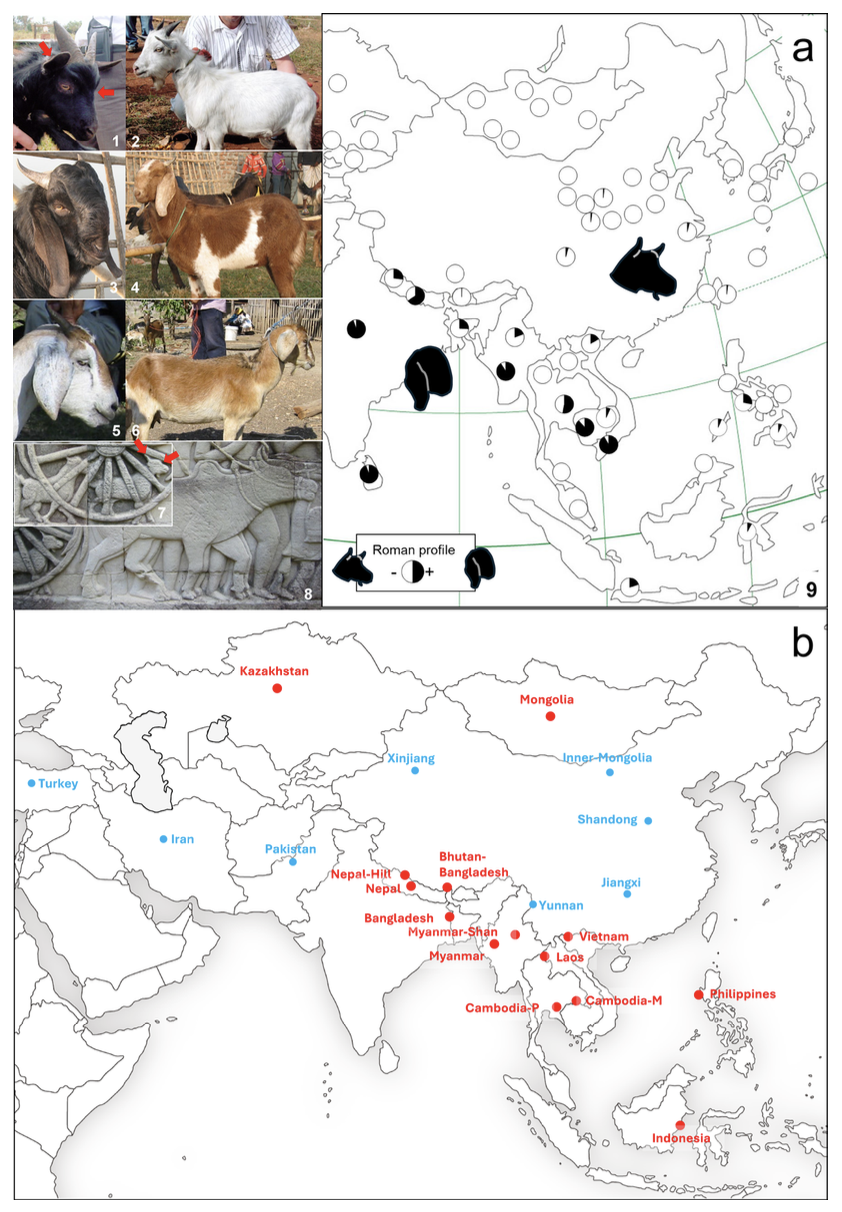

MAKASSAR, Indonesia, Apr 15, 2026/LLGR-RG/-Have you ever looked at a goat and thought, “You are a little hero”? Probably not. But new research proves that goats are unsung heroes of human history. A fascinating study titled “Genome-wide variation reveal that goats were introduced into Asia via multiple migrations” (Scientific Reports, Nature.com, 21 December 2025) rewrites what we know about how these hardy animals spread across the ancient world.
Let me break it down simply. Scientists analyzed the full DNA of ancient goats. They discovered that goats did not come to Asia through one single path. Instead, they arrived through multiple waves of migration thousands of years ago. Imagine different groups of farmers, traveling at different times, bringing their best goats along winding mountain trails and across vast deserts. This genetic diversity made Asian goats incredibly tough and adaptable.
So, why should a modern reader care about goat DNA? Because this story connects directly to a major global goal: SDG 15 – Life on Land. Goats can live on poor land where cows cannot survive. By understanding their ancient genetics, we can protect this biodiversity today. Healthy, genetically diverse goats help communities restore dry lands without overgrazing. They turn bushes on fragile land into milk and meat, reducing pressure on forests.
But the impact goes further. This research also supports SDG 2 (Zero Hunger) indirectly through livestock resilience, and directly links to SDG 1 (No Poverty) and SDG 3 (Good Health and Well-being). How? In remote Asian villages, a family’s few goats are their bank account and their medicine. Goat milk provides affordable nutrition for children. When goats are healthy thanks to their robust genetic heritage, families escape poverty and stay healthy.
Finally, this study is a perfect example of SDG 17 (Partnerships for the Goals) . The research required geneticists, archaeologists, and local herders working together across borders. Science cannot succeed in isolation.
In conclusion, the humble goat carries the map of ancient migrations in its blood. By respecting that genetic wisdom, we can fight rural poverty (SDG 1), improve child health (SDG 3), support quality education about sustainable farming (SDG 4), protect life on land (SDG 15), and build global partnerships (SDG 17). Next time you see a goat, see a survivor. See a partner in building a better, more sustainable future for our planet.
Reference :
Contact :
Prof. Muhammad Ihsan Andi Dagong
+62 812-4236-415
ihsandagong@unhas.ac.id
