


MAKASSAR, Indonesia April 10 2026/LIMAR/ – Have you ever imagined that coconut shells—often thrown away as waste—could help make steel stronger and more durable? What seems like a simple agricultural byproduct is now being used by scientists as a powerful material to improve the performance of low carbon steel.
Steel is one of the most important materials in engineering and construction. It is widely used in machines, vehicles, and infrastructure because of its strength and versatility. However, not all steel is created equal. Low carbon steel, for instance, is affordable and easy to shape, but it has a major weakness: low fatigue strength. This means it can fail over time when exposed to repeated loads, especially in rotating components like shafts and gears.
A study titled “Fatigue Strength Improvement of Low Carbon Steel through Carburizing Process with Coconut Shell Charcoal,” published in the IOP Conference Series: Materials Science and Engineering by IOP Publishing on June 1, 2020, explores an innovative solution to this problem. The researchers developed a method called carburizing—a process that adds carbon to the surface of steel to improve its mechanical properties. Instead of using expensive industrial materials, coconut shell charcoal was utilized as a natural and low-cost carbon source, combined with shell powder as a catalyst.
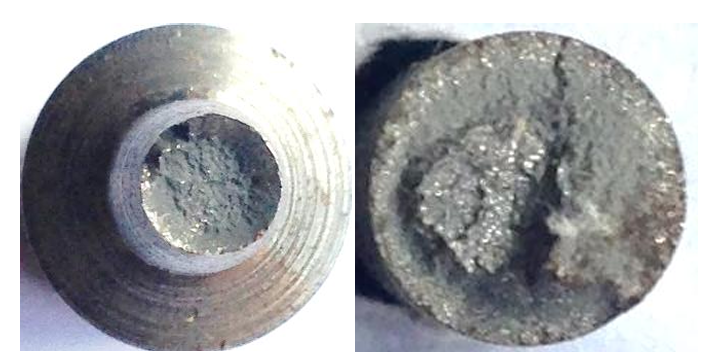
The results were significant. After undergoing carburizing at high temperature, the hardness of the steel increased from 118 HRB to 127 HRB. Its tensile strength also improved dramatically, rising from 356.66 MPa to 541.15 MPa. Most importantly, the fatigue strength increased from 161 MPa to 232 MPa. This means the steel becomes much more resistant to repeated stress and less likely to fail during long-term use.
On a microscopic level, the process changes the internal structure of the steel. Carbon atoms diffuse into the surface, forming harder phases such as pearlite and martensite. This transformation makes the material stronger, although slightly more brittle. Additionally, rapid cooling using seawater helps create a uniform and effective hardening effect across the surface.
So, why does this matter beyond engineering?
This innovation strongly supports Sustainable Development Goal (SDG) 3: Good Health and Well-being. Stronger steel means safer machines, vehicles, and infrastructure. When materials fail, accidents can occur. By improving fatigue strength, this research helps reduce the risk of mechanical failure, ultimately protecting human lives.
It also contributes to Sustainable Development Goal (SDG) 4: Quality Education. The study demonstrates how scientific principles—such as heat treatment, material structure, and mechanical testing—can be applied to solve real-world problems. This provides valuable knowledge for students, researchers, and future engineers, encouraging innovation and critical thinking.
Beyond safety and education, the use of coconut shell charcoal highlights an additional benefit: sustainability. By utilizing abundant natural waste materials, this method reduces costs and promotes environmentally friendly engineering practices.
In conclusion, this study proves that simple, locally available materials like coconut shells can play a crucial role in advancing modern engineering. With improved strength, better safety, and valuable educational insights, this innovation shows how small ideas can lead to meaningful impact.
Reference:
DOI: https://iopscience.iop.org/article/10.1088/1757-899X/875/1/012064/pdf
Contact:
Muhammad Syahid
+62 852-5563-1651
syahid@unhas.ac.id


