
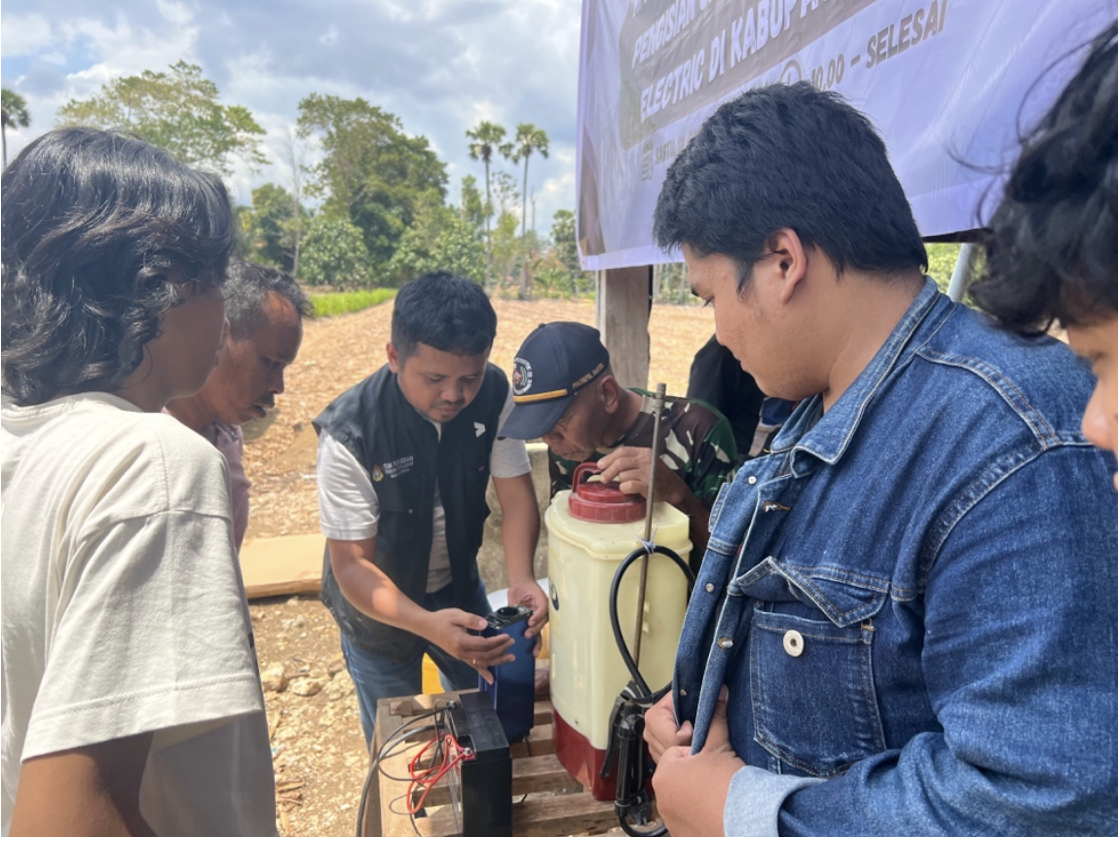

On October 4, 2025, a community-based educational activity was successfully conducted in MattaroPurae Village, Amali District, Bone Regency, aiming to introduce and promote the application of Solar Charge Station (SCS) technology for recharging electric sprayer batteries. This initiative brought together 30 participants, primarily local farmers, to engage in a structured learning experience designed to enhance their understanding of renewable energy utilization in agricultural practices.
The activity was driven by the growing need to transition from conventional, fuel-dependent farming tools to more sustainable and environmentally friendly technologies. Electric sprayers, which are increasingly adopted by farmers, require reliable and cost-effective energy sources. However, limited access to electricity in rural areas often becomes a barrier. The introduction of Solar Charge Station (SCS) offers a practical solution by harnessing solar energy as a clean, renewable power source for battery charging.
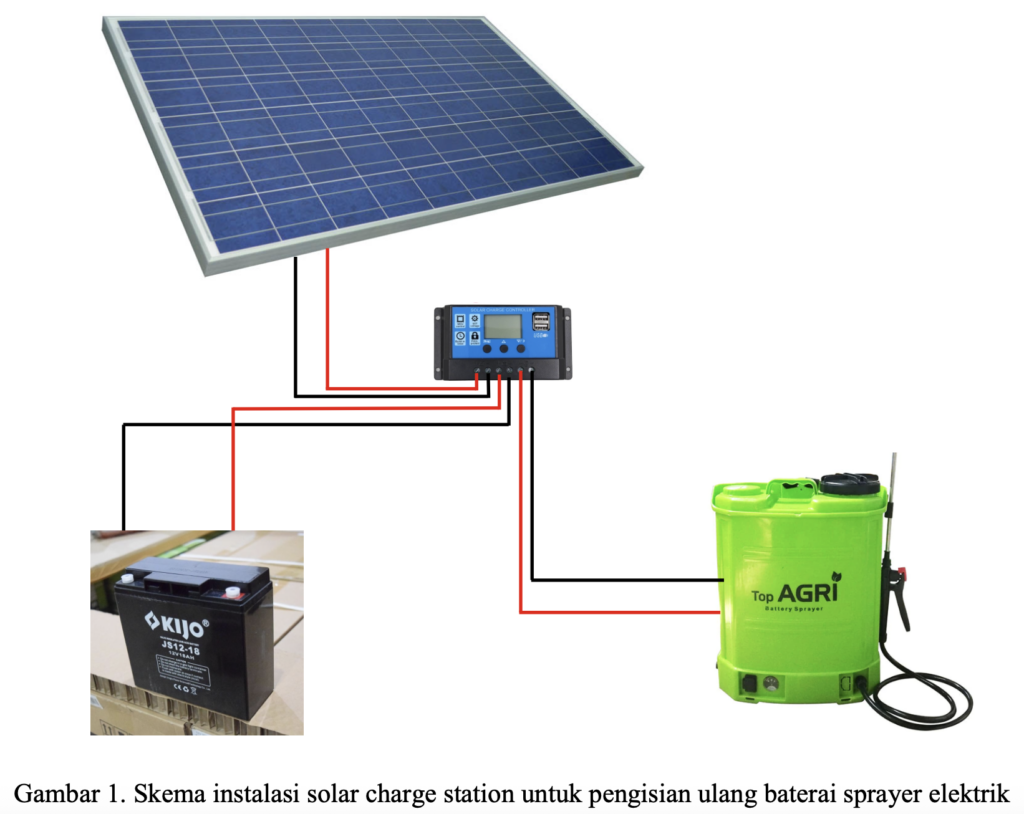
The program was structured into several sessions, including an introductory seminar, technical demonstration, and hands-on practice. Participants were first introduced to the fundamental concepts of solar energy, photovoltaic systems, and their application in agriculture. This was followed by a live demonstration of the SCS unit, where participants observed how solar panels convert sunlight into electrical energy and store it for later use. The hands-on session allowed farmers to directly operate the system, ensuring a deeper and more practical understanding.
This initiative aligns strongly with several Sustainable Development Goals (SDGs), particularly SDG 1: No Poverty, SDG 4: Quality Education, and SDG 17: Partnerships for the Goals. By reducing operational costs associated with fuel and electricity, the SCS technology contributes to improving farmers’ economic resilience, thereby supporting SDG 1. The educational component of the program enhances knowledge transfer and capacity building among rural communities, directly addressing SDG 4. Furthermore, the collaboration between academic institutions, local communities, and stakeholders reflects the spirit of SDG 17, emphasizing the importance of partnerships in achieving sustainable development.
Beyond economic and educational benefits, the adoption of SCS also contributes to environmental sustainability by reducing carbon emissions and minimizing reliance on fossil fuels. This shift not only supports cleaner agricultural practices but also fosters long-term ecological balance in rural areas.
Overall, the activity demonstrated that integrating renewable energy technologies into agriculture is both feasible and impactful. The positive response from participants indicates a strong potential for wider adoption of Solar Charge Station systems in similar rural settings. Continued efforts in education, technical support, and collaborative partnerships will be essential to sustain and expand this initiative in the future.

