
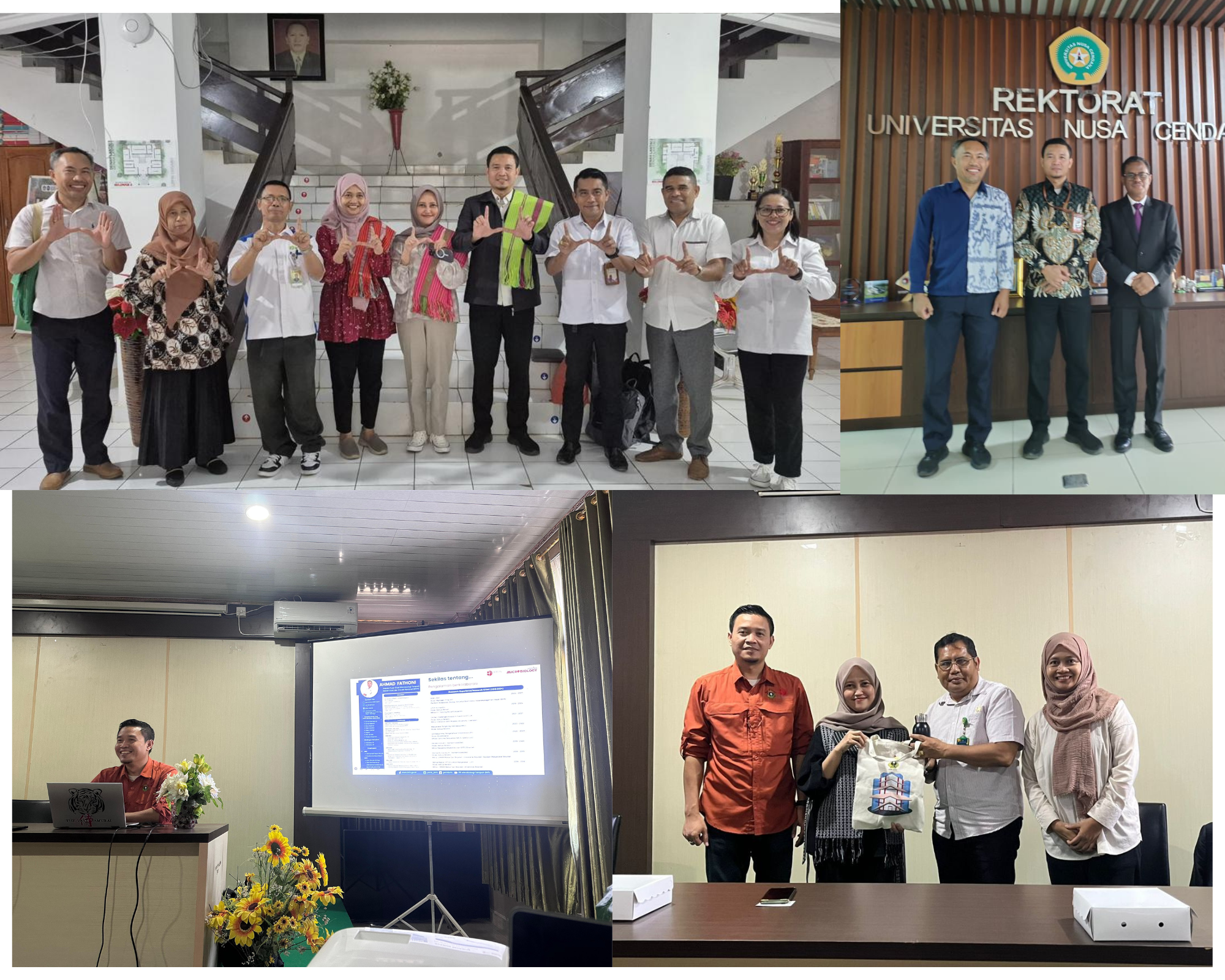

KUPANG, INDONESIA – To strengthen synergy and expand the national research network in microbiology, the UNHAS-BRIN Karst Microbe Research Collaboration Center conducted a working visit and signed a Memorandum of Understanding (MoU) with Nusa Cendana University (Undana), Kupang. This strategic activity, which took place on Wednesday, July 30, 2025, was focused on promoting research and development of the potential of karst microbes in Eastern Indonesia.
The UNHAS-BRIN delegation was warmly received by the leadership of Nusa Cendana University. Also present to welcome the delegation were Welem Turupadang, S.Pi., G.Dip.Sc., M.Sc, Prof. Ir. Lily F. Ishaq, M.Phil., Ph.D, and Prof. Dr. I Gusti Made Ngurah Budiana, S.Si., M.Si.
The BRIN delegation was led by Dr. Ahmad Fathoni, M.Eng as Head of the Applied Microbiology Research Center (PRMT) at the National Research and Innovation Agency (BRIN). Also attending the delegation were Prof. Dr. Ir. Siti Halimah Larekeng as Principal Investigator (PI) from Hasanuddin University, and Dr. Retno Prayudyaningsih, S.Si., M.Sc as PI from the BRIN Applied Microbiology Research Center.
In his address, Dr. Ahmad Fathoni emphasized the importance of strategic collaboration between research institutions and universities in driving science and technology innovation in Indonesia.
“The signing of this MoU with Undana today is not merely a formality, but a real commitment from BRIN and UNHAS to build a center of excellence for karst microbe research by involving the local potential and resources of East Nusa Tenggara. We believe Undana is a strategic partner to achieve this,” he said.
Prof. Dr. Ir. Siti Halimah Larekeng added that the rich biodiversity of the karst regions in NTT is an invaluable natural laboratory for researchers.
“Through this collaboration, we will focus on the exploration, characterization, and utilization of karst microbes with high application value, both in the fields of health, agriculture, and the environment. The synergy of expertise from researchers at BRIN, UNHAS, and Undana will greatly enrich the quality of the research,” she explained.
The PI from BRIN, Dr. Retno Prayudyaningsih, also conveyed the plans for technical implementation following the MoU signing, which includes the exchange of research data, co-supervising students, joint scientific publications, and the utilization of research facilities.
On behalf of Nusa Cendana University, Welem Turupadang, S.Pi., G.Dip.Sc., M.Sc, expressed full commitment to supporting the joint research activities.
“Nusa Cendana University, with all its potential and human resources, is ready to actively contribute to this karst microbe research collaboration. We hope this cooperation will not only produce world-class scientific findings but also empower local communities and contribute to sustainable development in NTT,” he stated.
The MoU signing was conducted solemnly and followed by an in-depth discussion regarding the action plans and priority programs to be implemented immediately. This event marks a significant milestone in strengthening the national research ecosystem and positioning Indonesia as a key player in microbial biodiversity research.
