
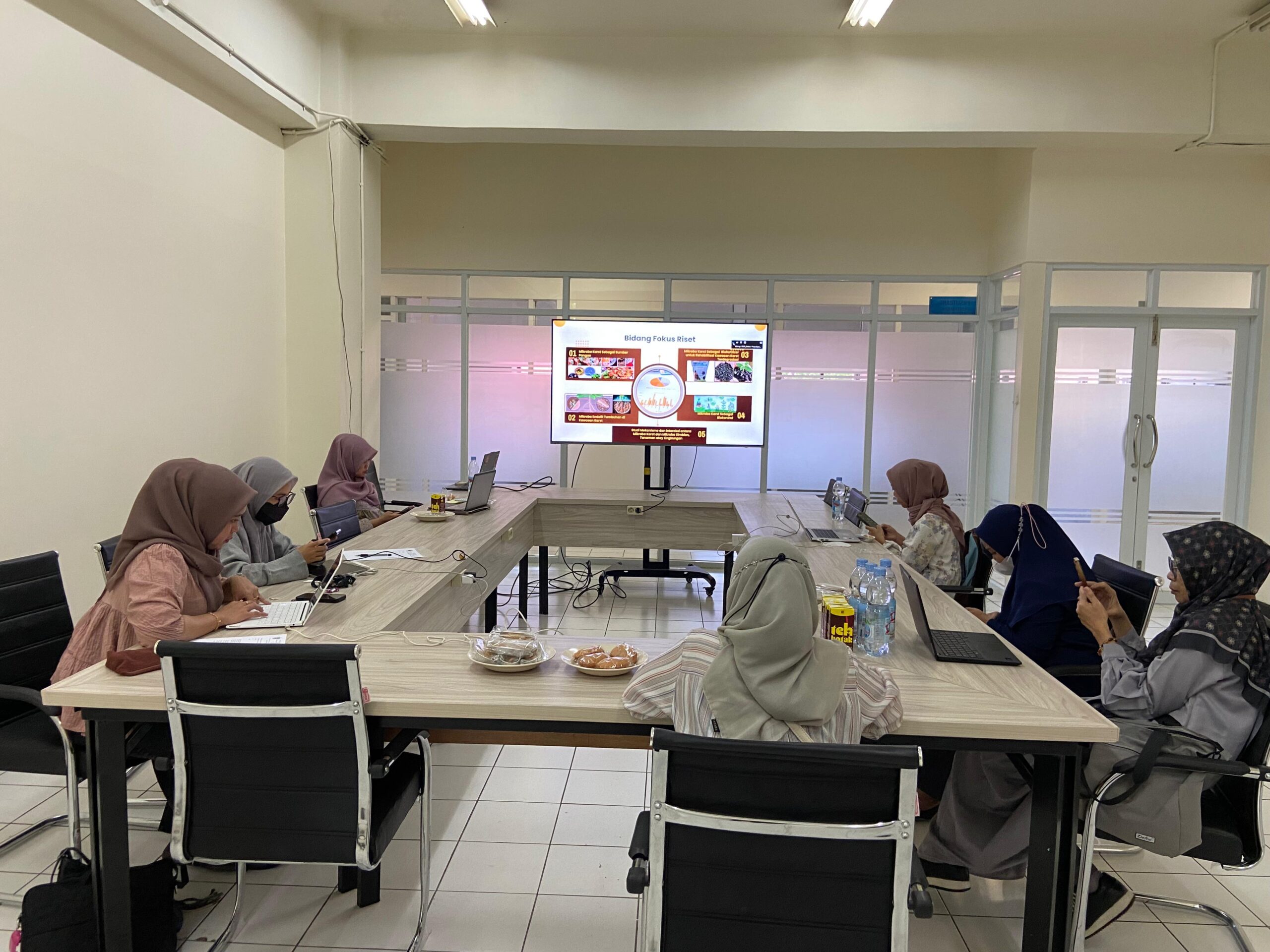

On Wednesday, 4 June 2025, the Karst Microbes Research Collaboration Programme (PKR) Research Team held a hybrid Focus Group Discussion (FGD). The event, which took place from 10:00 to 12:00 WITA, brought together researchers from various institutions to discuss the 2025 PKR karst microbes activity plan.
The in-person meeting, held in the 4th Floor Meeting Room, was attended by representatives from the Research and Community Service Institute (LPPM) of Hasanuddin University, researchers from the BRIN Centre for Applied Microbiology Research, the Organisation for Biological and Environmental Research, researchers from the BRIN Centre for Ecology and Ethnobiology Research, the Biological and Environmental Research Organisation, researchers from SEAMEO BIOTROP (Southeast Asian Regional Centre for Tropical Biology),
Muhammadiyah University of Parepare, Muhammadiyah University of Enrekang, as well as researchers from the Faculty of Medicine and Forestry at Hasanuddin University. Meanwhile, online participants joined via the provided online meeting platform.
The event began with an opening address by the Head of the Unhas Research and Community Service Institute (LPPM), emphasising the importance of multidisciplinary collaboration, followed by a presentation from the Head of the BRIN PRMT Centre on the 10 research indicators and the potential of karst microbes as solutions for food security and bioremediation. The discussion also generated new ideas regarding the study of microbial interactions with the environment, including the opportunity to trace ancient history through microbial analysis at the Maros archaeological site, as suggested by Dr. Isra Wahid, a lecturer at the Faculty of Medicine, Hasanuddin University.
The main outcomes of the FGD included an agreement to form a collaborative team for field testing in the karst region of South Sulawesi (August 2025) and a commitment to international publication. BRIN will act as a bridge between academia and industry, particularly for the production of thermostable enzymes such as polymerase. SEAMEO BIOTROP expressed its readiness for synergy through regional seminars and multi-location testing in the Philippines. The main challenges identified include the need to deepen research indicators and accelerate product commercialisation, such as the basidiomycota fungi already commercialised by UMPAR.
The event concluded with a commitment to strengthen research networks and the capacity of young researchers. The Karst Microbe Research Programme will serve as a platform for sustained collaboration to address food security and environmental rehabilitation challenges based on local potential. Follow-up plans include developing a proposal for the BRIN RIIM scheme for thermophilic enzymes and coordinating with industry to ensure the practical application of research outcomes.
