
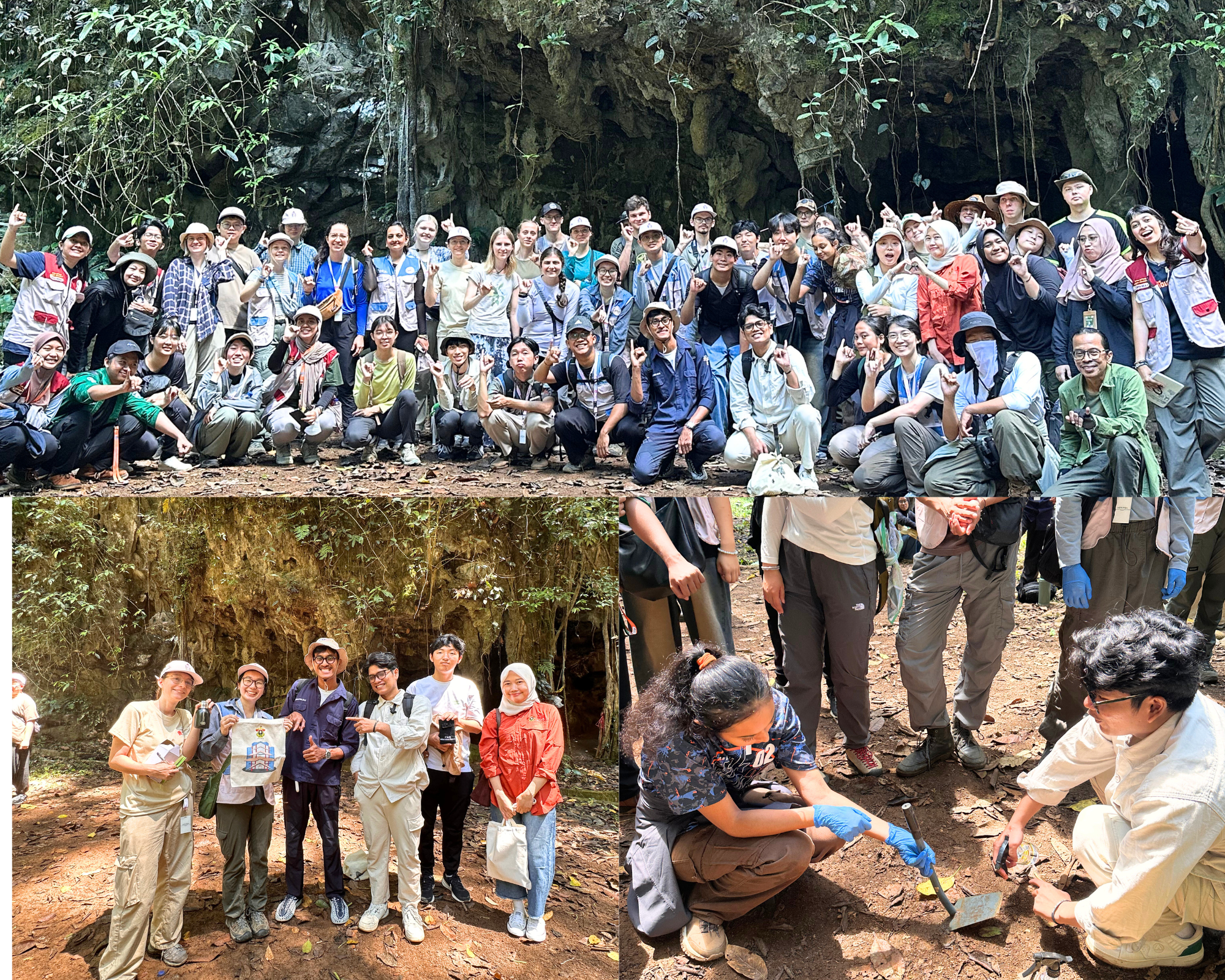

Maros, 27 August 2025 – The Special Research Team (Tim Peneliti Khusus Riset – PKR) for Karst Microbes, a strategic collaboration between Hasanuddin University (UNHAS) and the National Research and Innovation Agency (BRIN), demonstrated global leadership in forest science by acting as the primary resource and guide for an exclusive field trip for participants of the International Forestry Students Symposium (IFSS) 2025.
The activity, held in the Pattunuang karst area, Maros Regency, was an implementation of the sub-theme “Forest Technology” with a specific focus on “Exploration of Karst Region Microbes”. Sixty-four participants from 21 countries across Europe, East Asia, and West Asia had the honour of learning directly from Indonesia’s leading researchers in the field.
On this occasion, the PKR Mikrob Karst UNHAS-BRIN team not only delivered a presentation but also immersed the international delegates directly into the natural laboratory of the karst ecosystem. Participants were invited to practice standard protocols for collecting soil microbial samples under the strict guidance of the researchers.
“Karst areas like Pattunuang are repositories of biodiversity, especially microbes, that remain largely untapped. Through meticulous exploration, we can uncover the immense potential of karst microbes for various applications, from bioremediation and bioenergy to the discovery of new bioactive compounds. Today, we are not just sharing techniques; we are opening new horizons on the richness of Indonesia’s biodiversity,” explained Muhammad Bima Akzad, acting as a delegate for PKR Mikrob Karst UNHAS-BRIN.
The event began with an introduction to the uniqueness of the karst ecosystem as a carbon sink, followed by a demonstration and practical session on the use of sterile equipment, sampling techniques at various depths, and proper preservation methods to maintain microorganism viability. High enthusiasm was shown by participants from diverse educational backgrounds in forestry and environmental science.
A participant from German, Casey, expressed, “This is a different level of learning. Being able to learn directly from the research team that works daily in this habitat is truly inspiring. It enriches our perspective on how advanced forestry technology can begin with understanding fundamental things in the field.”
