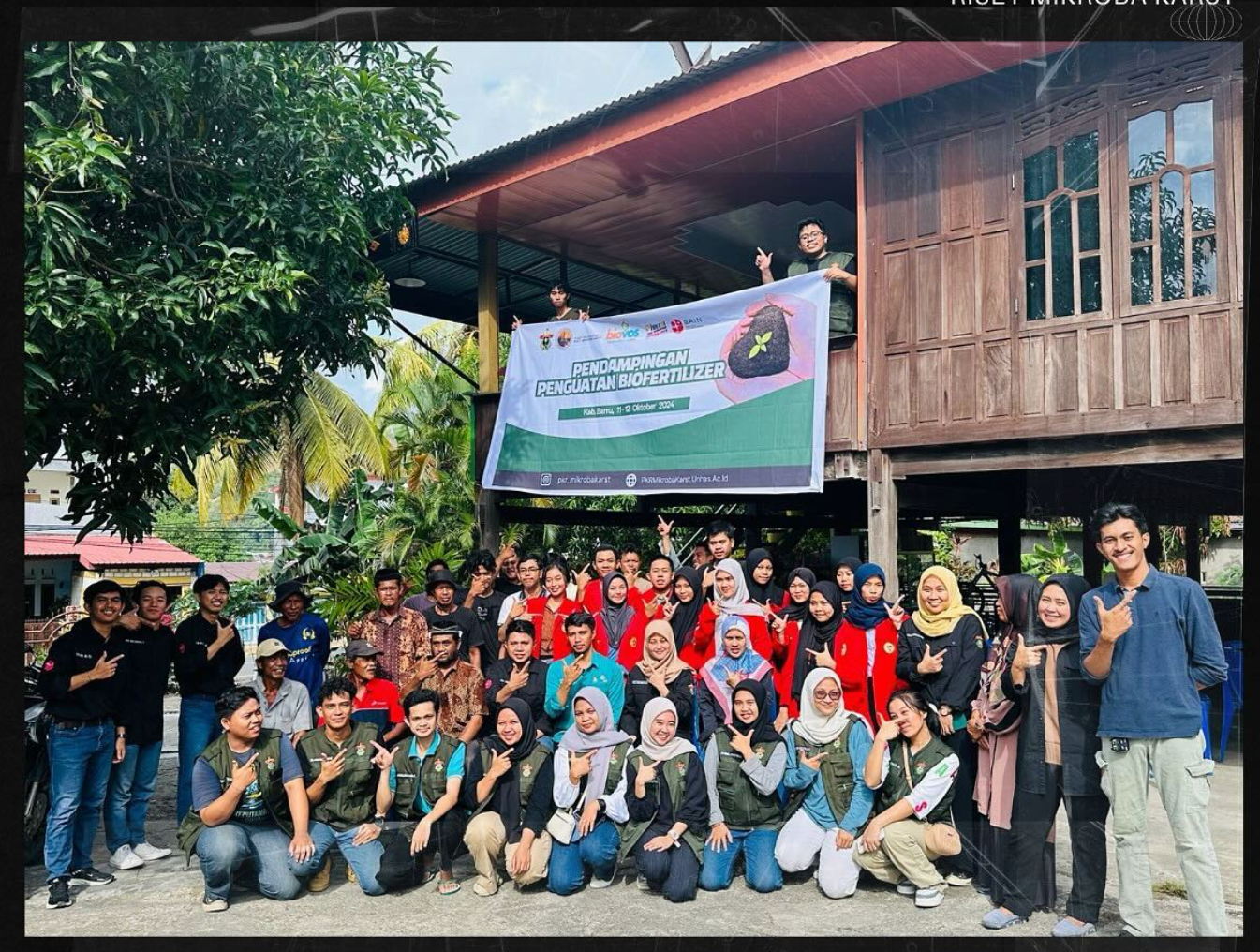

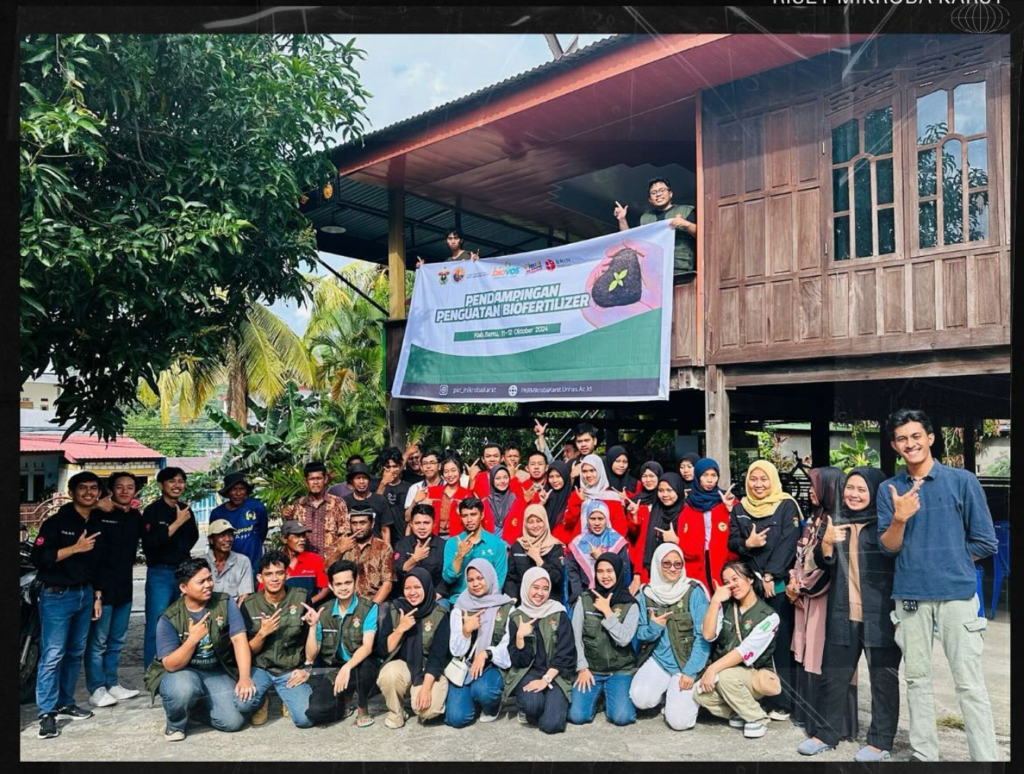
Barru, South Sulawesi – On 11–12 October, a community service activity entitled “Community Assistance and Strengthening of Biofertilizer Production” was successfully conducted in Barru. The program was organized as an effort to transfer scientific knowledge and practical skills related to sustainable agriculture through the utilization of livestock manure as raw material for biofertilizer production. Approximately 50 participants attended the activity, including local farmers, livestock owners, youth representatives, and members of the surrounding community who were highly enthusiastic about environmentally friendly agricultural practices.
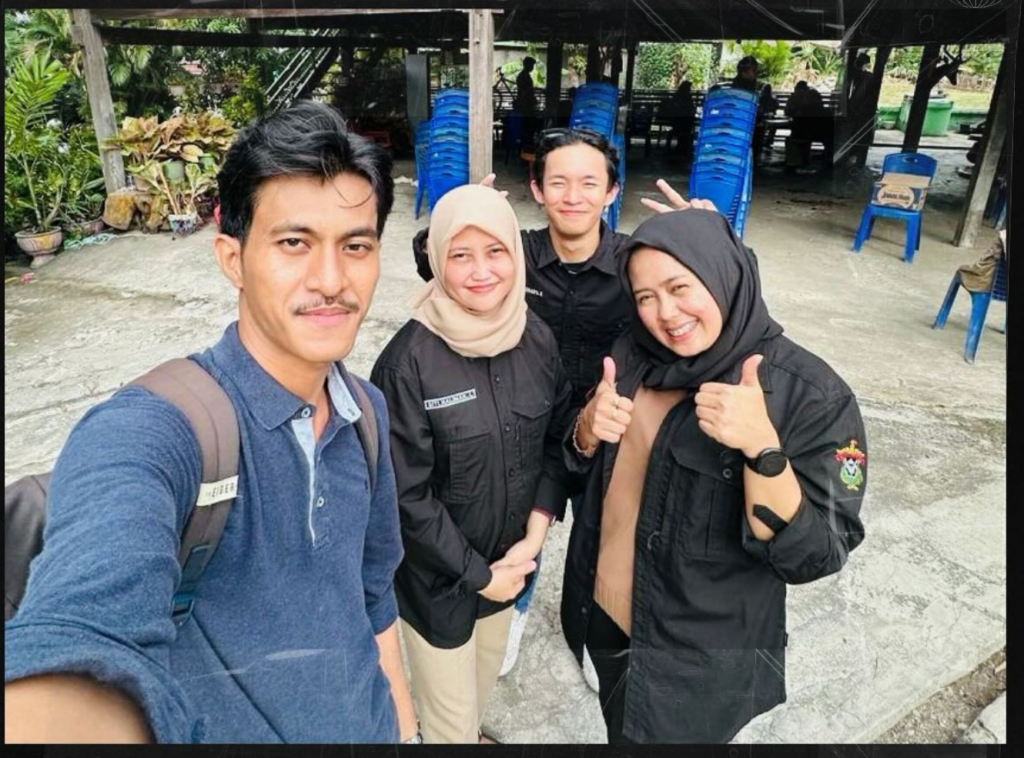
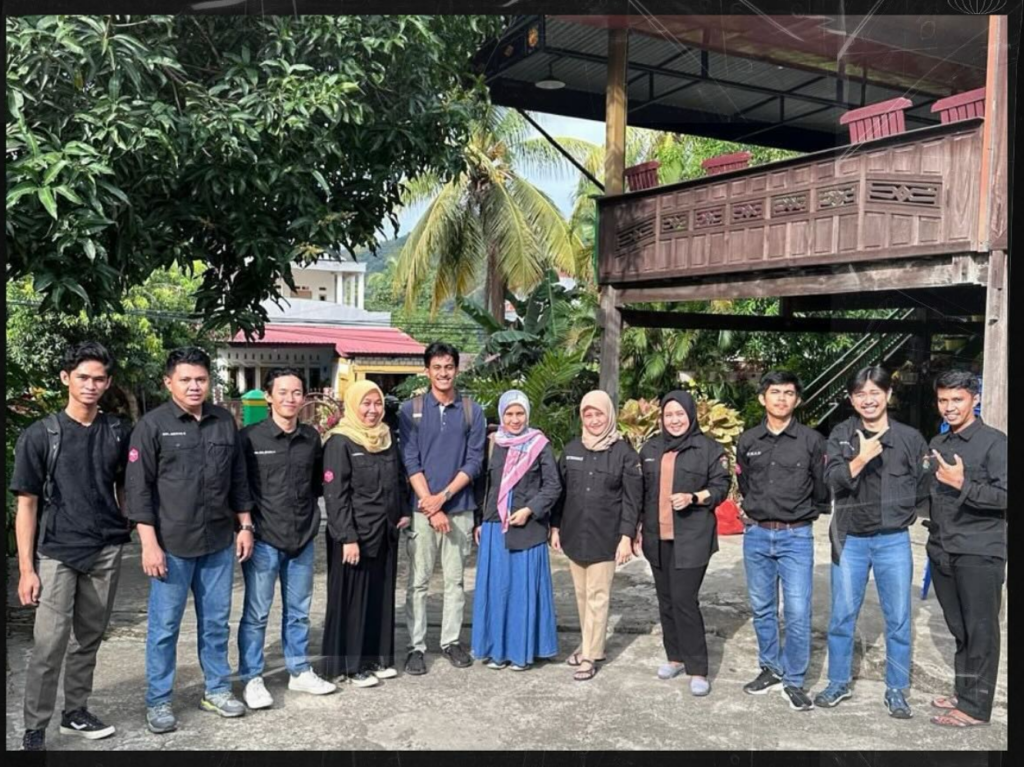
The activity was attended by the lead researcher, Dr. Ir. Siti Halimah Larekeng, S.P., M.P., together with the research team from Hasanuddin University. The program was also carried out in collaboration with the research team of PKR Mikroba Karst-UNHAS and National Research and Innovation Agency. This collaboration demonstrated the importance of partnerships between academic institutions, research organizations, and local communities in supporting sustainable rural development and community empowerment.
The increasing use of chemical fertilizers in agricultural practices has created several environmental and economic challenges, including declining soil quality and rising production costs for farmers. Through this program, participants were introduced to biofertilizer as an environmentally friendly alternative that can be produced independently using organic waste from livestock. The facilitators provided both theoretical explanations and direct practical training to ensure that participants could easily understand and apply the methods introduced during the activity.
During the training sessions, participants learned about the biological processes involved in biofertilizer production, including microbial fermentation, decomposition, and nutrient recycling. They were guided step-by-step on the preparation of materials, mixing techniques, fermentation management, and the proper application of biofertilizer to agricultural land. Interactive discussions were also conducted to encourage active participation and knowledge exchange between researchers and community members regarding local agricultural challenges and waste management practices.
This activity strongly supports several Sustainable Development Goals (SDGs), particularly SDG 1: No Poverty, SDG 4: Quality Education, and SDG 17: Partnerships for the Goals. Through the introduction of affordable and sustainable agricultural inputs, the program contributes to SDG 1 by helping farmers reduce fertilizer expenses and improve productivity, which may enhance economic resilience within the community. In relation to SDG 4, the activity provided accessible scientific education and practical skills for community members through direct learning experiences. Furthermore, the collaboration among universities, researchers, and local communities reflected the implementation of SDG 17 by strengthening partnerships to achieve sustainable development goals.
In addition, the activity also contributes to SDG 15: Life on Land by promoting environmentally sustainable agricultural practices that support soil health, biodiversity, and ecosystem balance. Overall, the program served as a meaningful initiative in empowering communities, improving environmental awareness, and encouraging the adoption of sustainable agricultural innovations in Barru.