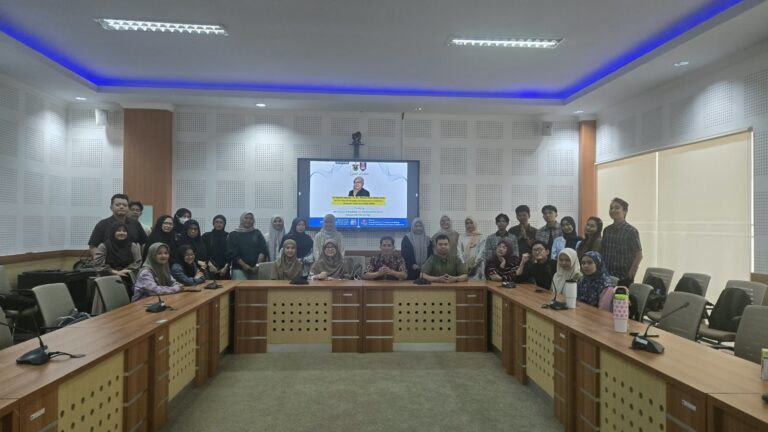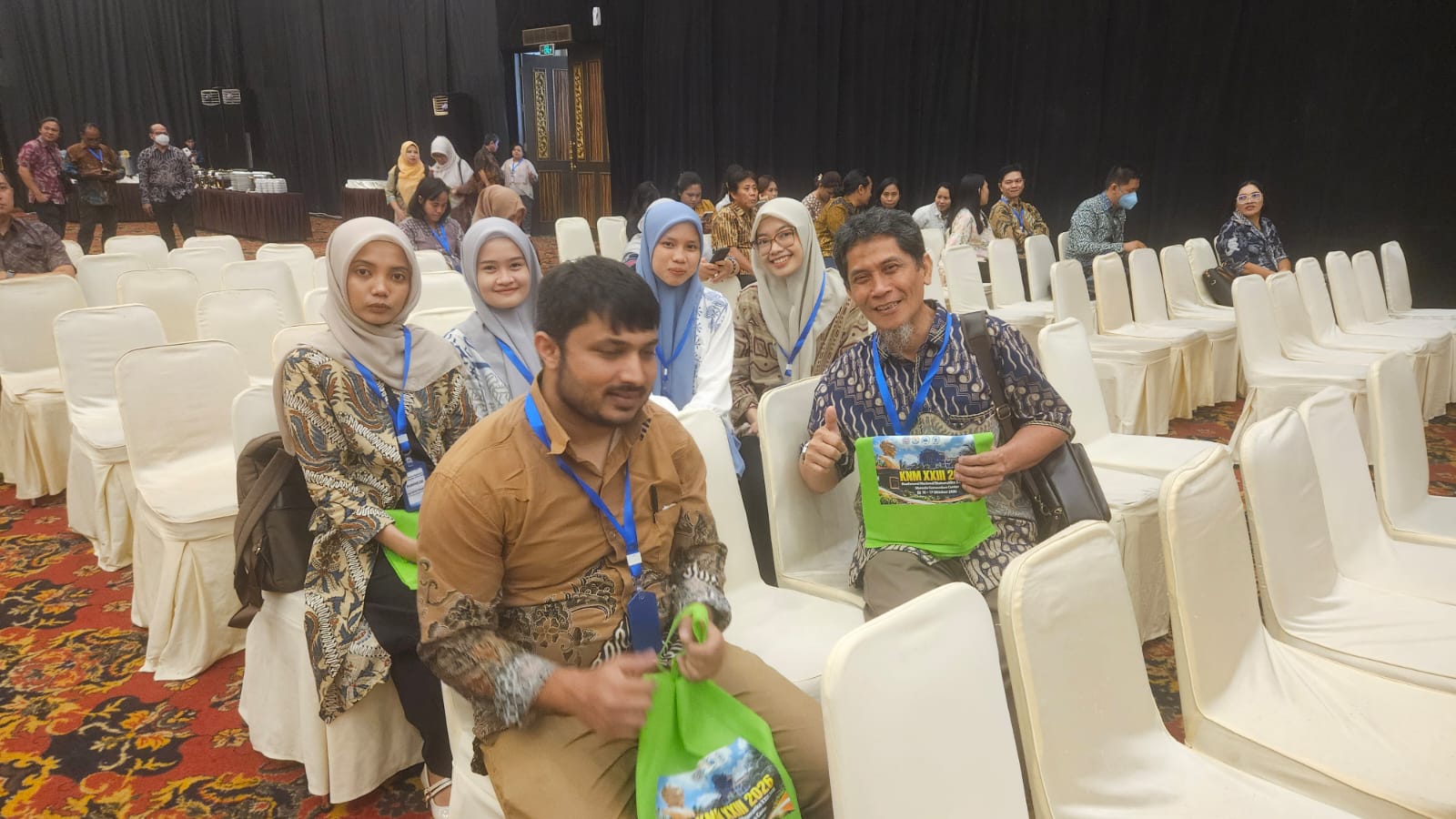

In an era where complex global challenges demand innovative and structured problem-solving, mathematics serves as a foundational language for scientific progress and societal development. Emphasizing this vital role, a dedicated academic delegation recently took part in the prestigious Konferensi Nasional Matematika XXIII (XXIII National Mathematics Conference). The primary purpose of this significant academic endeavor was the Presentation of Research Results with Partners and Master’s Students, showcasing the real-world applications of theoretical sciences.
The highly anticipated event was officially hosted by Universitas Sulawesi Utara and took place from 16 – 17 Oktober 2026 at the prestigious Manado Convention Center, Manado. The conference functioned as an expansive intellectual hub, gathering researchers, scholars, and policy advocates from various regions to exchange cutting-edge mathematical insights.
Our delegation consisted of exactly 6 orang (participants), demonstrating a strong commitment to academic excellence and institutional representation. This focused team was expertly led by Prof Nurdin Leader TRG graphtheory, whose profound expertise in discrete mathematics and structural networks provided a guiding vision for the group’s research output. Adding a significant global dimension to the research initiative, the team proudly collaborated with an esteemed international partner, Hassan Pervaiz dari The University of Bahawakpur Pakistan. This cross-border academic partnership highlights the universal nature of mathematical inquiry and the importance of bridging knowledge across continents.
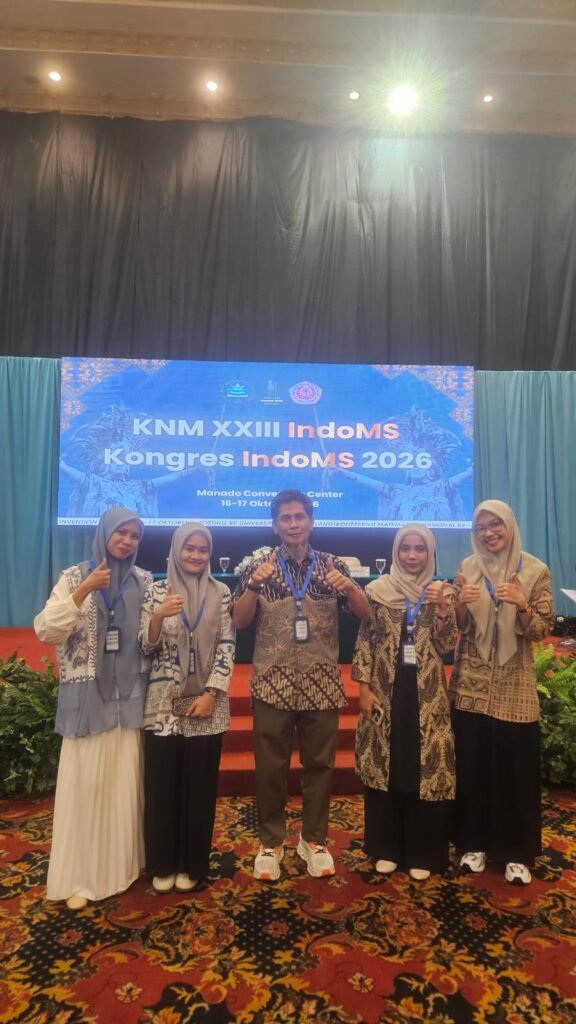
The driving force behind the presented research was a brilliant cohort of Master’s students who have shown exceptional dedication to their studies. The involved scholars—Nursyafika, A. Munawwarah, Adhe Monika Yulia Putri, and Asnidar—delivered compelling presentations that not only highlighted their rigorous analytical skills but also demonstrated their readiness to contribute to the global scientific community.
This academic participation extends far beyond traditional theoretical exploration; it is deeply intertwined with the United Nations’ Sustainable Development Goals (SDGs). By empowering students with advanced analytical capabilities and fostering inclusive educational environments, the initiative directly supports SDG 4: Quality Education. Furthermore, mathematics is a critical tool for economic modeling and resource optimization, equipping future leaders with the strategies necessary to tackle systemic inequalities, thus actively contributing to the mission of SDG 1: No Poverty. Above all, the successful integration of local students and a distinguished international researcher perfectly exemplifies SDG 17: Partnerships for the Goals. This global synergy proves that collaborative networks are essential to driving sustainable innovations.
Ultimately, the delegation’s successful engagement at the Manado Convention Center signifies a monumental step forward in academic research. By combining local talent with international expertise, the program successfully accelerated student publication timelines and enriched the mathematical discourse substantially. This impactful event stands as a shining testament to how targeted academic initiatives, guided by visionary leadership and robust international cooperation, can effectively empower the next generation of scientists to create a more sustainable and mathematically literate world.