
In Labbo Village, farming offers more than a source of food: it supports household incomes and the wider rural economy. The village also benefits from forest-based resources, including coffee, rattan, and other products managed through local institutions. Yet promising resources alone cannot guarantee prosperity. Without reliable financial records, farmers may struggle to calculate profits, manage expenses, or secure funding to expand their businesses.
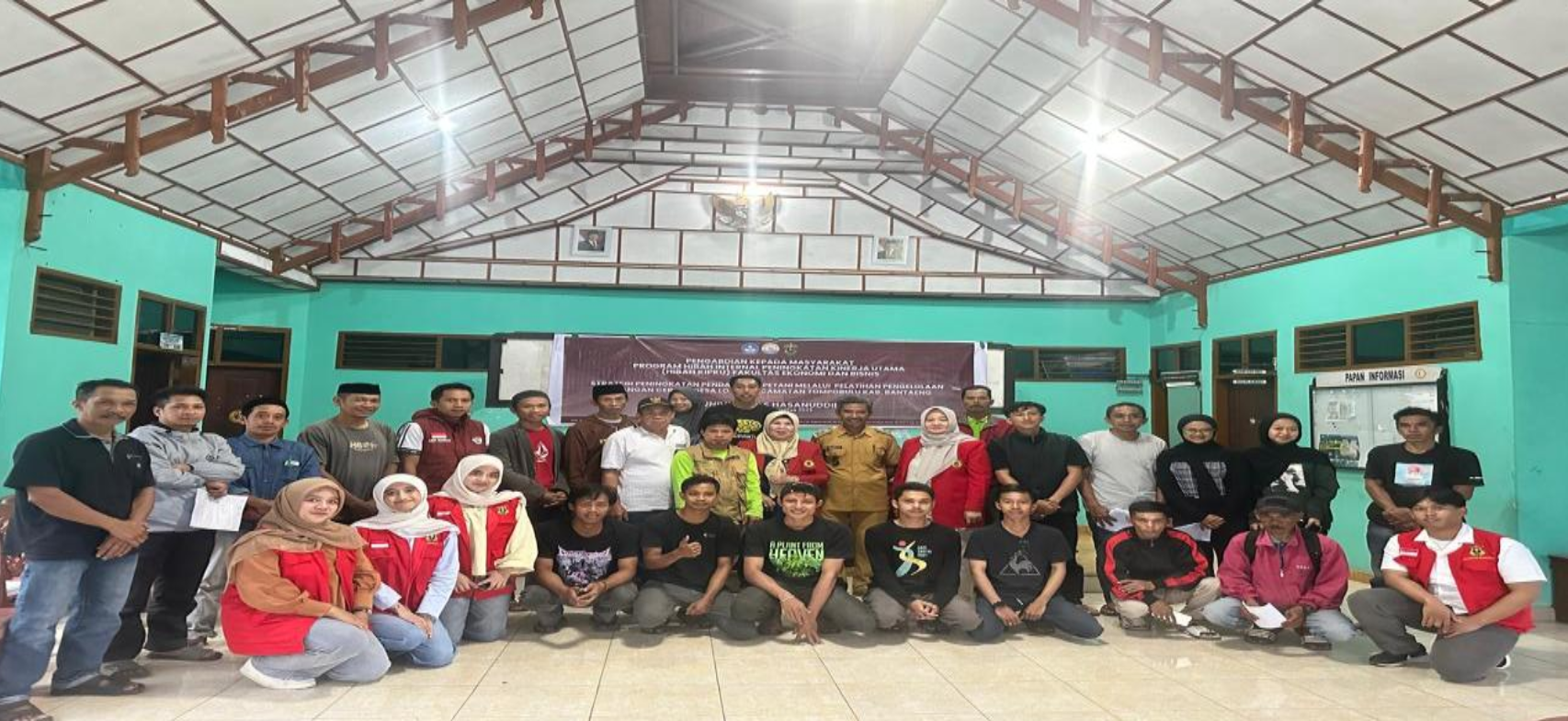
Responding to these challenges, a community service initiative led by Hasanuddin University, entitled “Strategies to Increase Farmers’ Income in Labbo Village through Smart Financial Management,” was conducted on January 25, 2026, in Labbo Village, Tompobulu District, Bantaeng Regency, South Sulawesi, Indonesia. Involving 30 farmers, the program aimed to strengthen financial literacy and practical skills in financial management, transaction recording, financial reporting, and loan proposal preparation, supporting more efficient, transparent, and sustainable rural businesses.
The activity addressed limited bookkeeping experience, uncertain budgeting, and difficulties meeting the documentation requirements of formal lenders. Rather than relying on technical lectures alone, facilitators encouraged questions and shared problem-solving with participants.
The sessions focused on everyday financial decisions that matter to farming households. Participants learned how to record income and expenses, plan cash needs, prepare simple budgets, and distinguish business performance from assumptions based on memory. Working with examples from their own activities, they practiced maintaining cashbooks and organizing transactions into clear, usable information.
Training also introduced basic financial statements, including income statements, simplified balance sheets, and cash-flow reports. Through participatory learning and direct practice, farmers explored how these documents could help evaluate business results and communicate with banks or cooperatives. The program additionally introduced accessible digital tools, such as smartphone-based recording and spreadsheet templates, to make financial management more practical.
According to the program’s published report, the training produced encouraging results. Participants demonstrated better recording and reporting skills, while 78% began using smartphones for digital financial records. The report also stated that 60% prepared loan proposals considered ready for submission to local financial institutions. These achievements indicate stronger financial capabilities, although long-term income growth will depend on continued application and support.
The initiative contributes directly to Sustainable Development Goal (SDG) 4: Quality Education, by delivering useful, hands-on learning beyond formal classrooms. It also supports SDG 1: No Poverty, because improved financial planning and access to financial information can help strengthen farmers’ economic resilience. Just as importantly, it reflects SDG 17: Partnerships for the Goals through cooperation among university educators, farming groups, the village-owned enterprise BUMDes Ganting, and local institutions.
The next challenge is sustaining these gains. Continued mentoring, reliable digital access, and stronger links with financial institutions can help participants turn training into lasting habits. Labbo Village shows how community-centered financial education can move beyond classroom lessons to foster accountability, confidence, and a more sustainable future for rural livelihoods.