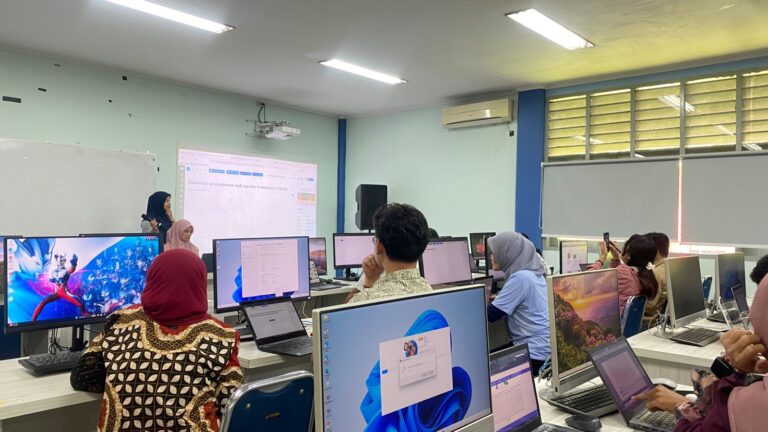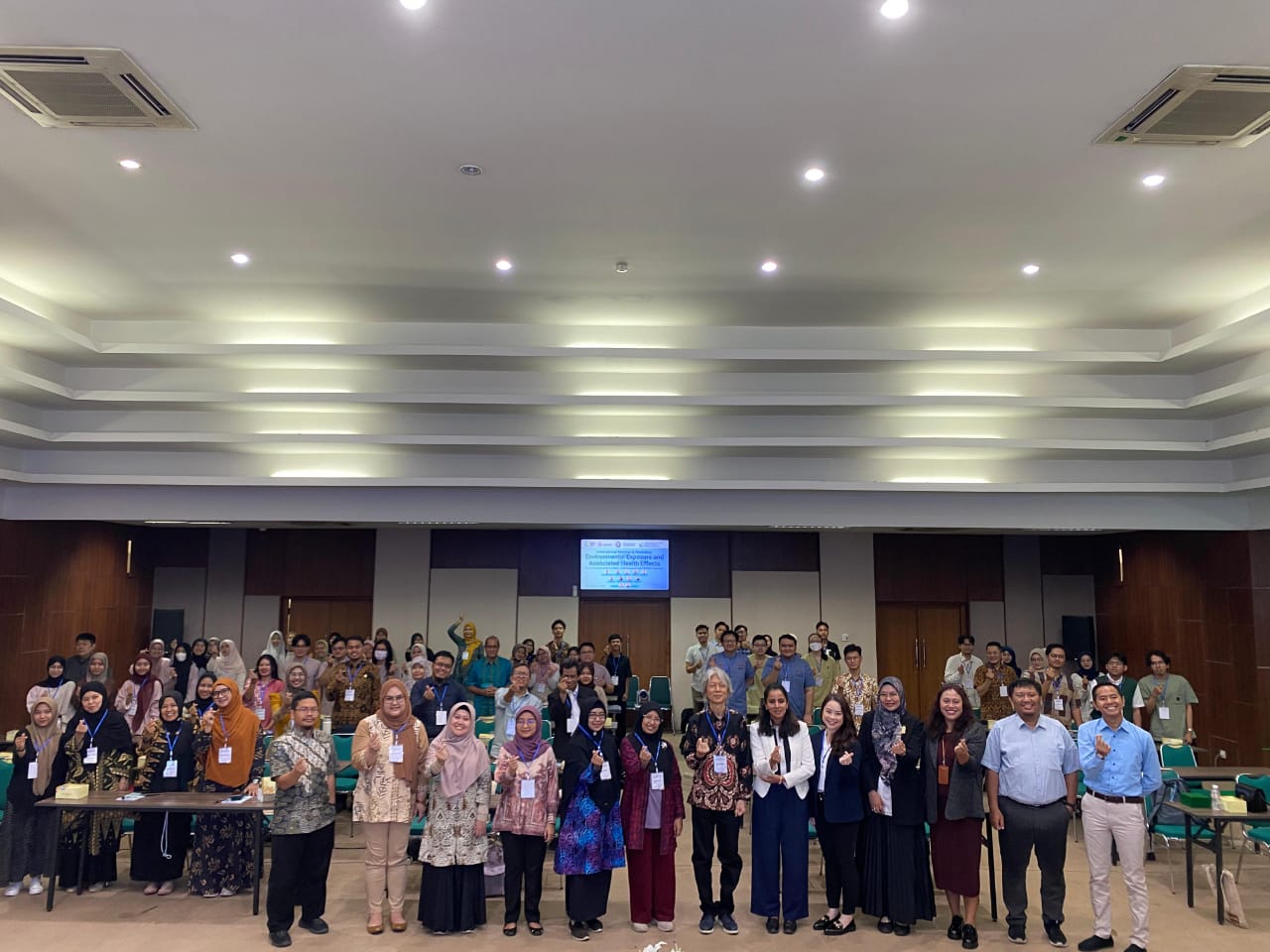

The Seminar and Workshop on Environmental Exposure and Associated Health Effect Study of Indonesian Mothers, Children, and Environmental Health (SIMCEH) Consortium was successfully held on 28–29 July 2025 at the Multipurpose Room, Building A, 3rd Floor, Faculty of Medicine, Diponegoro University. The event brought together more than 100 participants, including researchers, academics, healthcare professionals, postgraduate students, and representatives from various institutions who share a commitment to advancing environmental health research in Indonesia.
The primary objective of this seminar and workshop was to strengthen participants’ knowledge and research capacity in understanding the impact of environmental exposure on maternal and child health while fostering multidisciplinary collaboration among researchers through the SIMCEH Consortium. The activity also aimed to encourage scientific discussion, promote the exchange of innovative research methodologies, and establish sustainable partnerships to generate evidence-based solutions for environmental health challenges in Indonesia.
Throughout the two-day program, participants attended keynote lectures, scientific presentations, panel discussions, and interactive workshops led by experts in environmental health, epidemiology, toxicology, public health, and maternal and child health. The sessions explored a wide range of topics, including exposure assessment, environmental pollutants, health risk analysis, biomonitoring, and emerging research approaches for investigating the relationship between environmental contaminants and human health outcomes. The workshop sessions further provided practical opportunities for participants to discuss collaborative research designs, data collection strategies, and future consortium initiatives.
The seminar emphasized that environmental exposure remains one of the major public health concerns affecting vulnerable populations, particularly pregnant women and children. Strengthening scientific collaboration and improving research quality are therefore essential to generating reliable evidence that supports effective public health interventions and environmental policies. Through open discussions and knowledge exchange, participants were encouraged to build interdisciplinary networks capable of addressing increasingly complex environmental health issues.
This activity directly contributes to several Sustainable Development Goals (SDGs). It supports SDG 4 (Quality Education) by enhancing scientific knowledge, research skills, and professional capacity among researchers and students through evidence-based learning and collaborative workshops. It also contributes to SDG 3 (Good Health and Well-being) by promoting research that aims to reduce health risks associated with environmental exposure, particularly among mothers and children. In addition, the program aligns with SDG 1 (No Poverty) by supporting scientific evidence that can guide policies to reduce health inequalities and improve community well-being, especially among vulnerable populations affected by environmental hazards. Furthermore, the establishment and strengthening of the SIMCEH Consortium exemplify SDG 17 (Partnerships for the Goals) by fostering collaboration among universities, research institutions, healthcare professionals, and other stakeholders to advance environmental health research and develop sustainable solutions for Indonesia.
Overall, the Seminar and Workshop on Environmental Exposure and Associated Health Effect Study of Indonesian Mothers, Children, and Environmental Health (SIMCEH) Consortium served as an important platform for scientific exchange, capacity building, and partnership development. The event reaffirmed the commitment of participating institutions to advancing high-quality environmental health research that supports evidence-based policymaking and contributes to healthier communities and sustainable national development.