
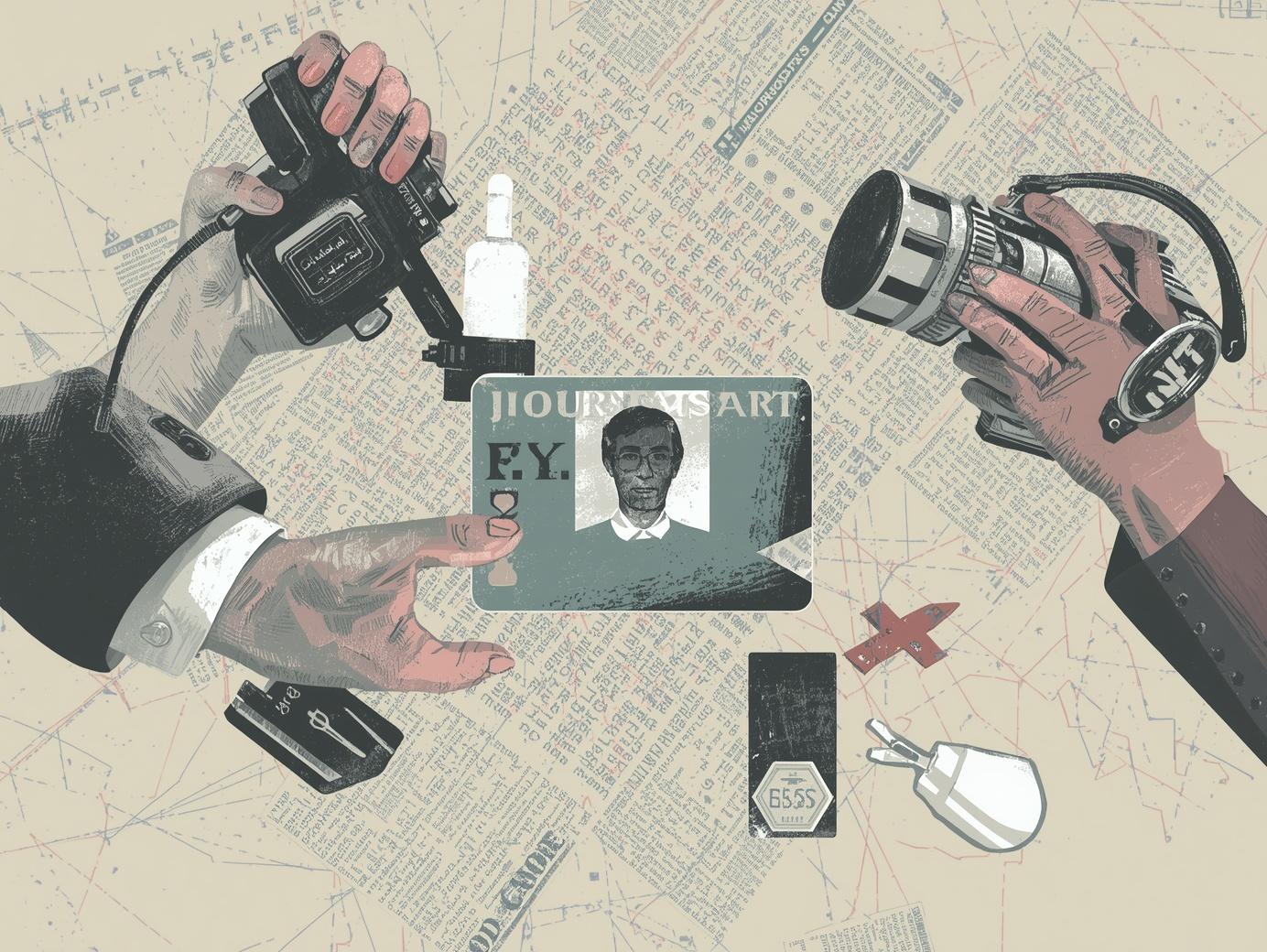

MiDS-RG – The revocation of CNN Indonesia reporter Diana Valencia’s press pass after she posed critical questions to President Prabowo Subianto regarding the Free Nutritious Food Program has reignited a fundamental discussion about the relationship between the press and those in power in Indonesia. As a communications scholar, I view this incident as a reflection of the complex dynamics of media-politics that require in-depth analysis.
In political communication theory, the press performs a vital function as a watchdog or oversight of power. This concept, developed by media theorists such as Denis McQuail, emphasizes the press’s role as a mediator between the government and the people. The question Valencia posed about the government program is, in fact, a manifestation of the media’s agenda-setting function, that is, the press’s ability to direct public attention toward important issues relevant to people’s lives.
From a purely journalistic perspective, Valencia’s question did not violate professional ethics. On the contrary, in the context of the public interest, the question was highly relevant given that the free nutritious food program involves significant state funding and directly impacts people’s lives. The President also provided an informative response, indicating that the dialogue proceeded within reasonable and productive parameters.
However, the subsequent revocation of the press credentials created what communication studies refer to as a “chilling effect.” This intimidating effect can limit press freedom and potentially foster self-censorship among journalists, causing them to think twice before asking critical questions, questions that are, in fact, part of their professional duty.
Within the framework of gatekeeping theory, the revocation of accreditation can be viewed as an attempt to control the flow of information from sources to the public. This is problematic because it reduces government transparency, which is a fundamental pillar of a democratic system. When media access is restricted, the public’s right to obtain accurate and comprehensive information about government policies is also restricted.
The IJTI’s stance, citing Article 18 of the Press Law No. 40 of 1999, has a strong and relevant legal basis. This article explicitly protects journalistic functions from interference by any party, including the government. However, it should be noted that the Presidential Palace also has the authority to regulate access based on established security protocols and regulations. The main issue is the proportionality of such actions. Is the revocation of accreditation commensurate with the “violation” allegedly committed? In the context of communication ethics, this principle of proportionality is crucial for maintaining a balance between press freedom and government authority.
From the perspective of government strategic communication, the revocation of accreditation actually demonstrates a counterproductive approach. Rather than reducing criticism or controlling the narrative, this action instead amplifies the issue and creates a Streisand effect, a phenomenon where efforts to hide or restrict information actually increase public attention on the issue. The media and the public become increasingly focused on discussing not only the substance of the initial question but also the restrictive actions taken.
A government mature in its communication should view critical questions from the media as a golden opportunity to demonstrate transparency and accountability. This is not a threat to be suppressed, but rather a natural part of a healthy democratic process. Openness to criticism and difficult questions will actually strengthen the government’s legitimacy in the public eye.
This case tests the maturity of Indonesia’s democracy in managing the natural tension between press freedom and government authority. The revocation of a reporter’s accreditation is not merely an administrative or technical issue, but a deeper reflection of how the state views and treats the role of the press within our democratic system.
Moving forward, constructive dialogue is needed between the Presidential Palace and the press community to establish clear protocols regarding coverage within the presidential environment. These protocols must safeguard the security and dignity of the presidential institution without sacrificing the fundamental principles of press freedom. The Press Council, as an independent institution, plays a strategic role in mediating potential conflicts like this, preventing escalation that could harm Indonesia’s democratic climate as a whole.
The journalism community itself needs to strengthen professional solidarity while maintaining high ethical standards in the performance of its duties. Press freedom must be balanced with a high degree of professional responsibility, so that public trust in the media remains intact.
In the long term, a healthy and productive relationship between the media and the government requires mutual respect and a deep understanding that constructive criticism is an integral part of the democratization process. A free yet responsible press, along with an open and accountable government, are absolute prerequisites for the establishment of true good governance. Without both, Indonesia’s democracy will lose one of its most fundamental pillars.
This article was published in the OPINION section of Tribun Timur https://makassar.tribunnews.com/opini/1814553/pencabutan-id-card-reporter-cnn-di-istana-ketegangan-antara-akuntabilitas-publik-dan-akses-pers

