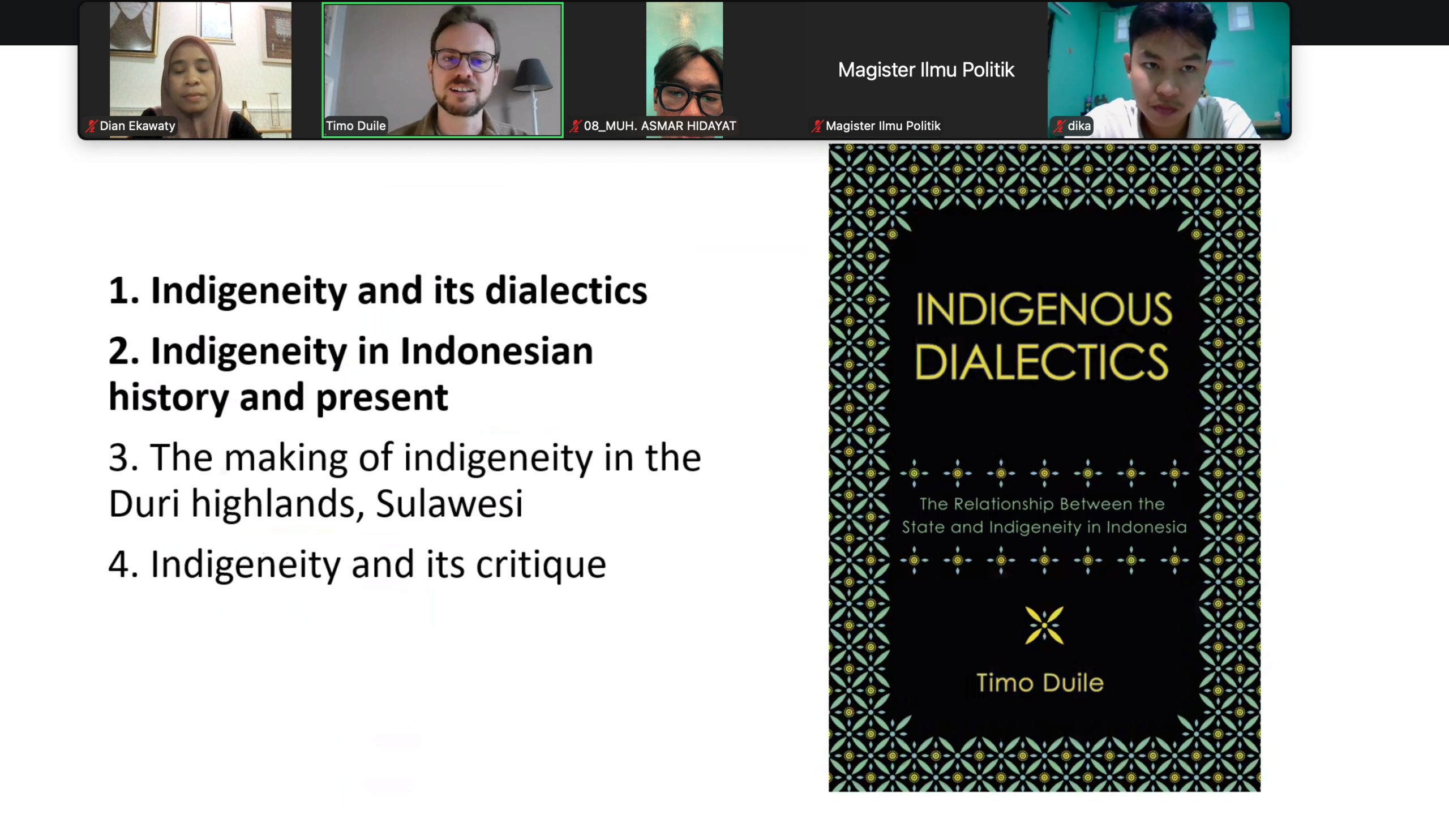

On August 25, 2026, an online book discussion was held to explore contemporary issues surrounding Indigenous communities in Indonesia. The event featured the book Indigenous Dialectics: The Relationship Between the State and Indigeneity in Indonesia, a research-based work that examines the complex relationship between the Indonesian state and Indigenous people. The discussion brought together 24 participants, creating an interactive space for sharing knowledge, exchanging perspectives and reflecting on the challenges faced by Indigenous communities.
The primary objective of this activity was to share the findings and insights from research concerning the Indigenous community in Duri, Enrekang Regency, South Sulawesi. Rather than presenting research only as an academic product, the book discussion sought to make the research findings accessible to a broader audience. Through open and accessible discussion, participants were encouraged to understand how questions of Indigenous identity, recognition, state policies, and community rights are connected to everyday social and political realities.
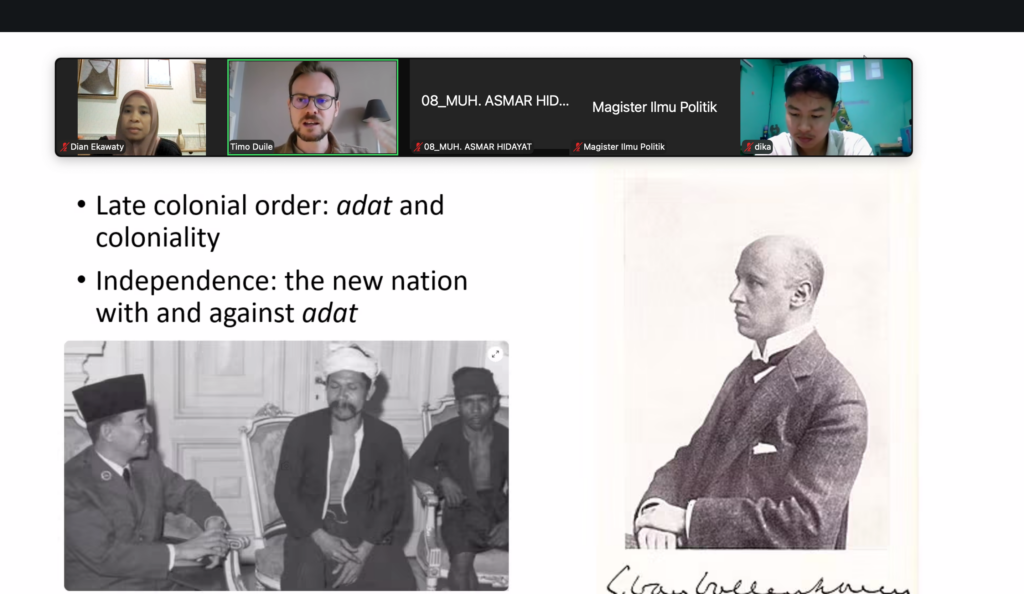
An important dimension of this event was its international academic engagement. The discussion involved Timo Duile from Bonn University, Germany as an international partner. His involvement strengthened the international dimension of the activity and provided an opportunity for participants to engage with perspectives that connect Indonesian Indigenous experiences with broader discussions of indigeneity, state relations, and social justice. This collaboration also demonstrates how academic exchange can contribute to knowledge production that is more inclusive and responsive to local community needs.
The activity also involved students, namely, Andika Wijaya, Eufimia Fatima Hernandes, Muh. Asmar Hidayat, and A. Fikran Walid Ramadhana. Their participation reflects the importance of involving young people in academic discussions and encouraging them to engage critically with the social and political issues affecting Indonesian society. Students can play an important role in connecting academic knowledge to public conversations and community concerns.
From the perspective of the Sustainable Development Goals (SDGs), this activity contributes particularly to SDG 1: No Poverty, SDG 4: Quality Education, and SDG 17: Partnerships for the Goals. Discussions about Indigenous communities are relevant to SDG 1 because social exclusion, limited access to resources, and unequal recognition can influence the socioeconomic well-being of vulnerable communities. This activity supports SDG 4 by creating an inclusive learning environment in which research findings and academic knowledge can be shared beyond conventional classroom settings. The involvement of an international academic partner directly supports SDG 17, emphasizing the importance of partnerships and international cooperation in strengthening knowledge exchange and sustainable development.
Conducted online, the book discussion also demonstrated how digital platforms can expand access to academic dialogue beyond geographical boundaries of the campus. Ultimately, the activity was not merely a discussion of a book but a meaningful effort to connect research, education, international collaboration, and public understanding of Indigenous issues in Indonesia. This highlights the importance of bringing academic knowledge closer to society while encouraging continued dialogue on recognition, equality, and the rights of Indigenous communities.