Research Sub-Theme
Social Welfare
The concept of social welfare refers to the design of programs and service systems aimed at ensuring the well-being of society, particularly for those who are vulnerable or in need.
The primary objective of social welfare is to deliver high-quality support to individuals, families, and communities, while fostering principles of social justice, equality, and human dignity.
Research in social welfare is directed towards formulating policies that effectively address pressing social issues such as poverty, unemployment, and inequality. This involves the provision of essential resources, including education, healthcare, housing, and food security, to create a more equitable society.
Green and Blue Economy
The concepts of green economy and blue economy represent an integrated approach to fostering economic growth while ensuring environmental sustainability and long-term resilience. Each plays a crucial role in shaping a future where economic progress aligns with ecological responsibility.
The green economy focuses on promoting economic growth while reducing environmental risks and resource depletion. It encourages the use of renewable energy, sustainable industries, and responsible consumption to minimize carbon footprints and protect natural ecosystems. By prioritizing clean technology and circular economy principles, the green economy supports a transition towards low-carbon and resource-efficient development.
The blue economy emphasizes the sustainable use of marine and coastal resources for economic activities. It ensures that ocean-based industries—such as fisheries, aquaculture, tourism, and maritime transport—operate in ways that preserve biodiversity and protect marine ecosystems. By balancing economic benefits with environmental stewardship, the blue economy supports coastal communities and long-term ocean sustainability.
Together, these two approaches contribute to sustainable economic development, which seeks to achieve long-term economic prosperity without compromising environmental integrity or future generations’ ability to meet their needs. Sustainable economic development integrates green and blue economy principles to create resilient economies, promote inclusive growth, and mitigate the impacts of climate change.
Research and policy efforts in this framework focus on addressing key development economics challenges, such as promoting inclusive growth, reducing economic inequality, and ensuring long-term economic resilience. This includes fostering sustainable infrastructure to support industrial development, enhancing climate adaptation strategies to protect vulnerable economies from environmental shocks, and ensuring efficient resource management to sustain productivity and long-term capital accumulation.
Strengthening Gender Equality
Gender equality refers to the state in which man and women have equal rights, responsibilities, and opportunities across various aspects of life, including access to education, employment, politics, healthcare, and participation in decision-making processes. In many parts of the world, women continue to encounter significant challenges that prevent them from fully realizing their potential. Discrimination and stereotypes often hinder progress, creating significant gaps across different aspect of life. Achieving gender equality involves not only strengthening women’s rights, but also encouraging the active participation of men in supporting the social change.
Research on gender equality aims to explore and address the inequalities experienced by both women and men. The findings of those research provide a foundation for developing public policy and inspiring social movements that drive positive transformation within society. Therefore, research on gender equality plays a crucial role in promoting equitable social well-being and supporting sustainable development.
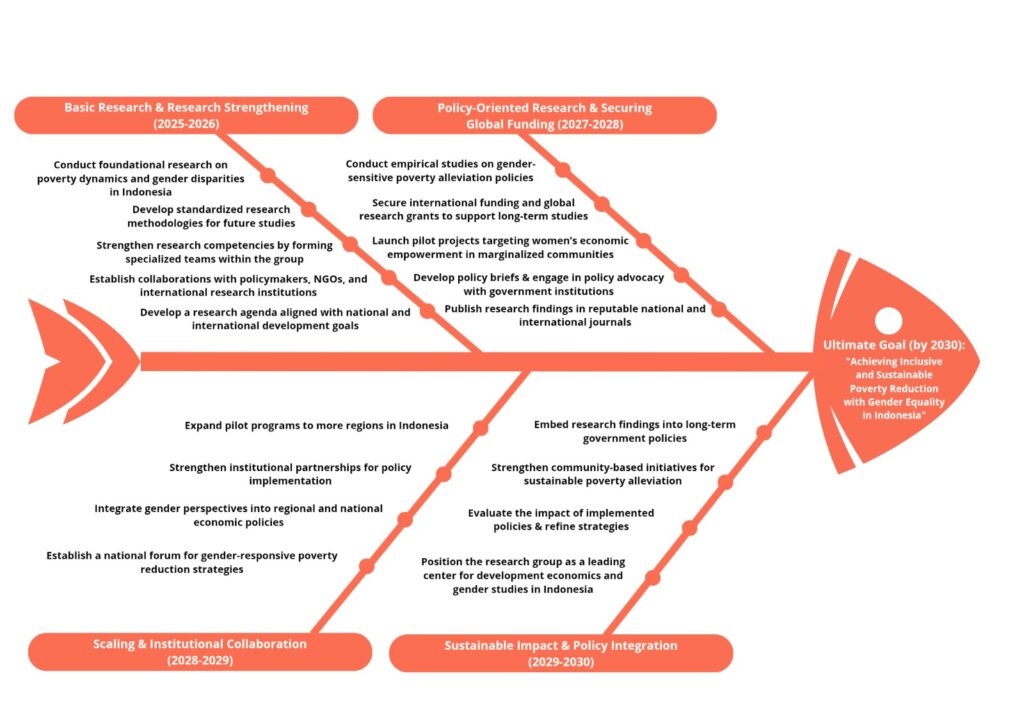
Road Map