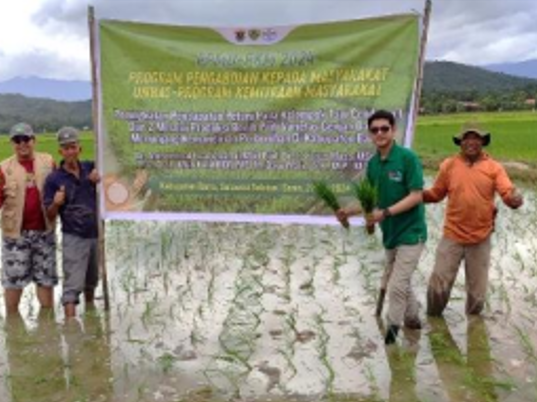
Barru Regency – As part of the commitment of the HORTIBB (Horticultural Breeding and Biotechnology) Research Group to the Tri Dharma of Higher Education—education, research, and community service—the HORTIBB Research Group conducted a community engagement program focused on increasing farmers’ income through the production of early-maturing rice seeds to strengthen seed independence in Barru Regency. The initiative addressed the limited availability of high-quality certified rice seeds and the increasing need for climate-resilient rice varieties. Through science-based training, technology transfer, and participatory field activities, the program empowered members of Cendrana Farmer Groups 1 and 2 to independently produce superior early-maturing rice seeds while enhancing sustainable rice production. The activity was held on 25 January 2025 and involved 86 participants, including farmers, agricultural extension officers, representatives of the Barru Regency Agricultural and Food Security Office, and researchers from Universitas Hasanuddin.
The program was designed with the primary objective of increasing farmers’ income and supporting local seed independence through the production of high-quality early-maturing rice seed varieties. The initiative responded to the challenges faced by farmers, including limited access to quality seeds, fluctuating crop productivity, and increasing climate-related risks affecting rice cultivation. By improving farmers’ technical knowledge and practical skills, the program sought to reduce dependence on external seed suppliers and encourage the establishment of a resilient community-based seed production system.
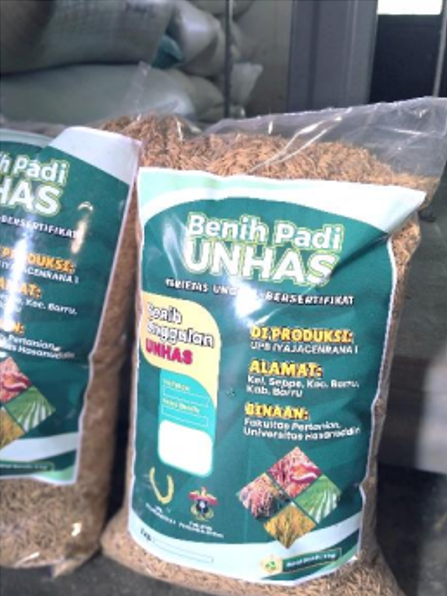
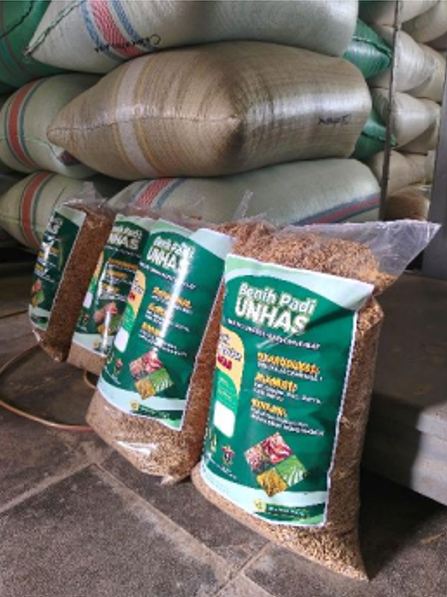
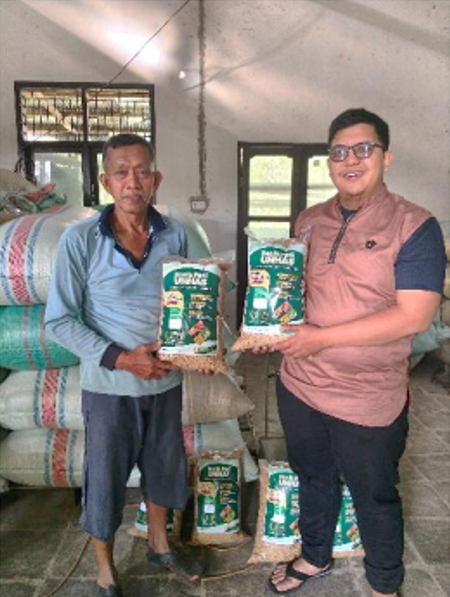
The implementation combined scientific knowledge with participatory learning approaches. Participants attended technical training sessions covering seed production techniques, seed quality standards, field management, post-harvest handling, seed processing, packaging, and marketing strategies. In addition, demonstration plots were established to provide hands-on learning experiences, allowing farmers to directly observe and apply recommended cultivation practices for early-maturing rice varieties. Training on compost production from locally available agricultural residues was also introduced to improve soil fertility while promoting environmentally responsible farming practices.
The program demonstrated that empowering farmers through knowledge transfer and practical assistance can generate tangible economic and agricultural benefits. Farmers gained the confidence and technical competence required to produce quality rice seeds independently, creating new business opportunities beyond conventional grain production. This approach contributes not only to higher agricultural productivity but also to stronger local seed security, improved resilience to climate variability, and more sustainable farming systems capable of supporting long-term rural development.
This community engagement initiative directly supports the United Nations Sustainable Development Goals (SDGs). First, it contributes to SDG 1: No Poverty by creating additional income opportunities through community-based seed enterprises and strengthening farmers’ economic resilience. Second, it advances SDG 4: Quality Education by providing inclusive, practical, and science-based agricultural training that enhances farmers’ knowledge, technical skills, and lifelong learning capacity. Third, the program promotes SDG 17: Partnerships for the Goals through strong collaboration among Universitas Hasanuddin, the Barru Regency Agricultural and Food Security Office, agricultural extension personnel, and the Cendrana Farmer Groups, demonstrating that multi-stakeholder partnerships are essential for achieving sustainable agricultural transformation.
Beyond its immediate outcomes, the activity serves as a model for community-based agricultural innovation that integrates research, education, technology transfer, and local participation. By strengthening farmers’ capacity to produce superior early-maturing rice seeds independently, the program lays a solid foundation for sustainable agricultural productivity, enhanced food security, and improved rural livelihoods in Barru Regency. The collaborative spirit established throughout this initiative is expected to inspire similar programs that foster resilient farming communities and accelerate the achievement of sustainable development in Indonesia.
-
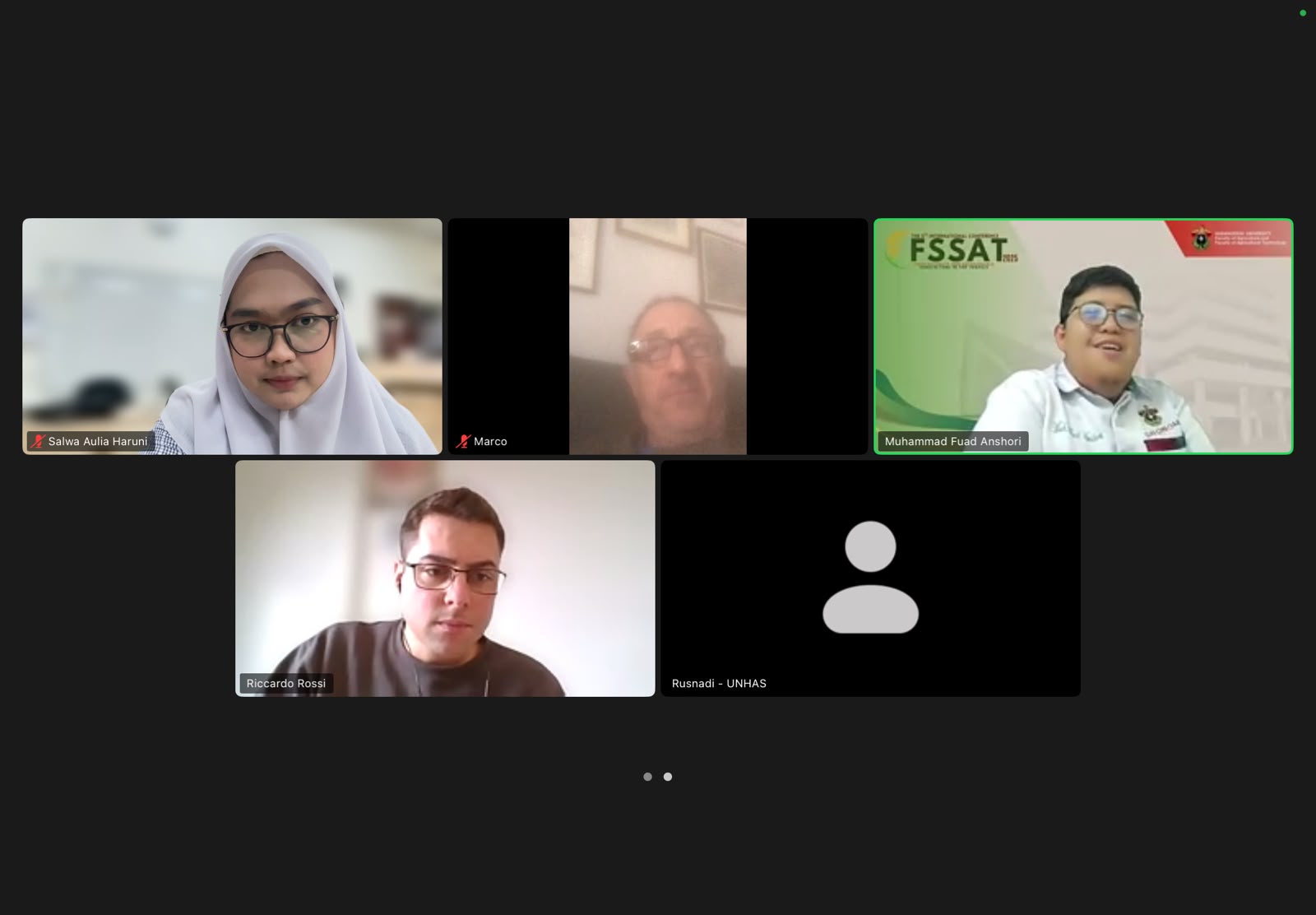
FGD on the Development of World Modeling: Strengthening Indonesia–Italy Research Collaboration
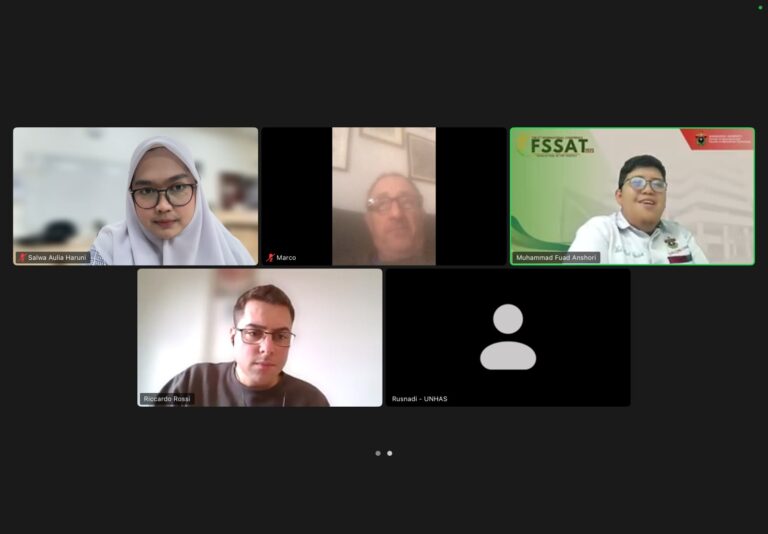
Makassar — CSVA-RG hosted a Focus Group Discussion (FGD) on the development of world modeling as part of its strategic effort to explore new findings in modeling research and to exchange knowledge between Indonesia and Italy, held online via Zoom on February 9, 2026. The discussion served as a platform for knowledge exchange among academics,…
-
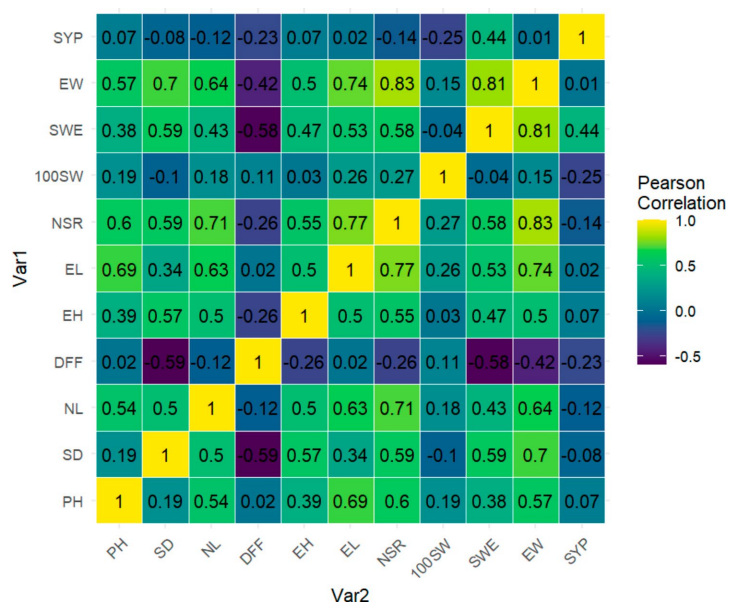
Hidden Potential Inside Corn: A New Genetic Pathway Toward Sustainable Future Harvests
MAKASSAR, Indonesia Aug 30 2026 /CSPA-RG/– Corn is one of the world’s most valuable crops, serving not only as human food but also as a major ingredient for animal feed and various industries. As demand continues to increase, farmers face a difficult challenge: producing more corn while dealing with climate change, shrinking agricultural land, and…
-
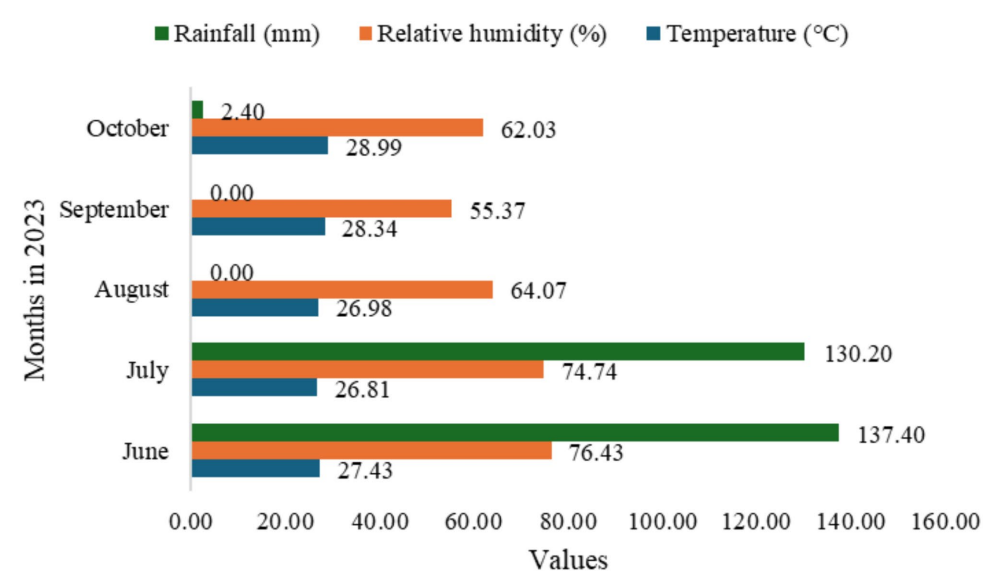
When Drones Meet Rice Fields: Smarter Nitrogen for Faster Harvests
MAKASSAR, Indonesia Aug 30 2026 /CSPA-RG/– Rice feeds more than half of the world’s population, especially across Asia. Yet producing enough rice is becoming more difficult as farmers face changing climates, limited land, and the challenge of using fertilizer efficiently. Early-maturing rice varieties offer one possible solution because they complete their life cycle faster and…
Location
Faculty of Agriculture, Hasanuddin University VF9M+CVG, Tamalanrea, Makassar, South Sulawesi 90245
Pages
Contact
Proudly powered by WordPress