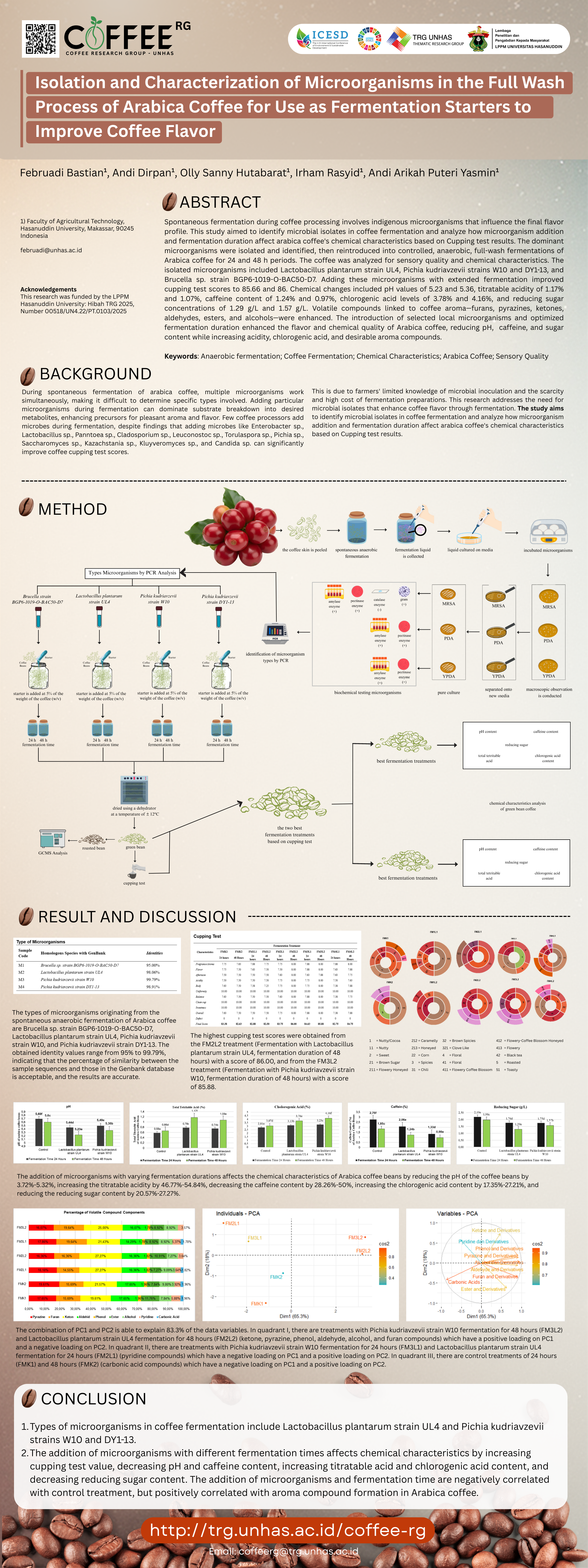
Spontaneous fermentation during coffee processing involves indigenous microorganisms that influence the final flavor profile. This study aimed to identify microbial isolates in coffee fermentation and analyze how microorganism addition and fermentation duration affect arabica coffee’s chemical characteristics based on Cupping test results. The dominant microorganisms were isolated and identified, then reintroduced into controlled, anaerobic, full-wash fermentations of Arabica coffee for 24 and 48 h periods. The coffee was analyzed for sensory quality and chemical characteristics. The isolated microorganisms included Lactobacillus plantarum strain UL4, Pichia kudriavzevii strains W10 and DY1-13, and Brucella sp. strain BGP6-1019-O-BAC50-D7. Adding these microorganisms with extended fermentation improved cupping test scores to 85.66 and 86. Chemical changes included pH values of 5.23 and 5.36, titratable acidity of 1.17% and 1.07%, caffeine content of 1.24% and 0.97%, chlorogenic acid levels of 3.78% and 4.16%, and reducing sugar concentrations of 1.29 g/L and 1.57 g/L. Volatile compounds linked to coffee aroma—furans, pyrazines, ketones, aldehydes, esters, and alcohols—were enhanced. The introduction of selected local microorganisms and optimized fermentation duration enhanced the flavor and chemical quality of Arabica coffee, reducing pH, caffeine, and sugar content while increasing acidity, chlorogenic acid, and desirable aroma compounds.