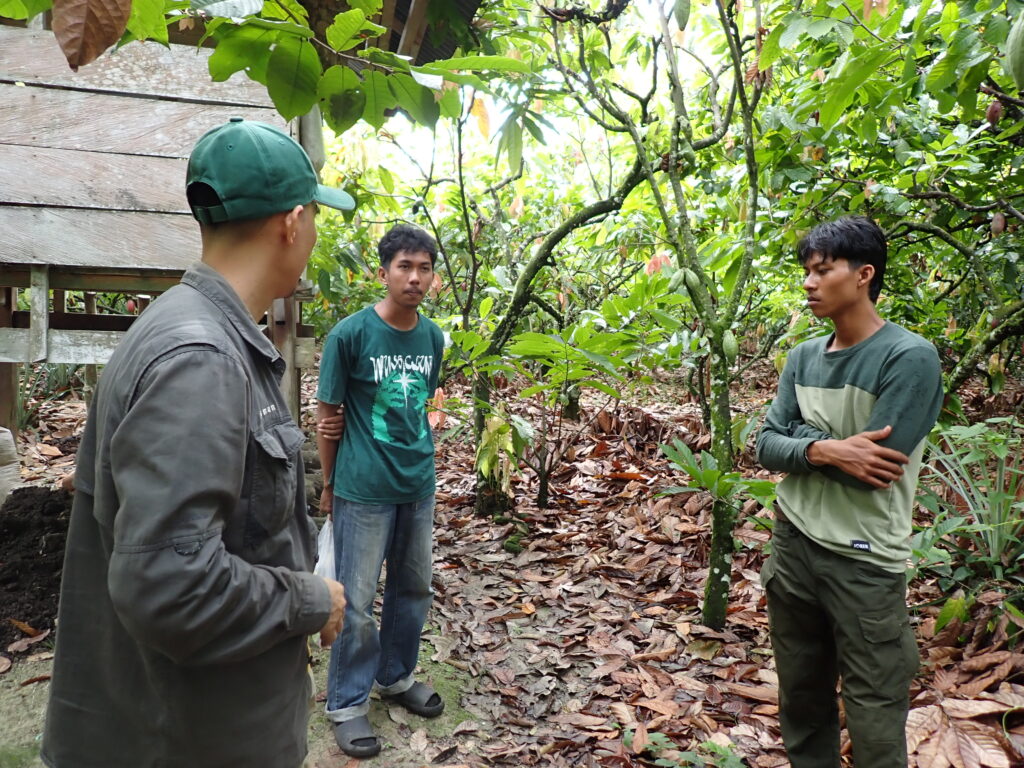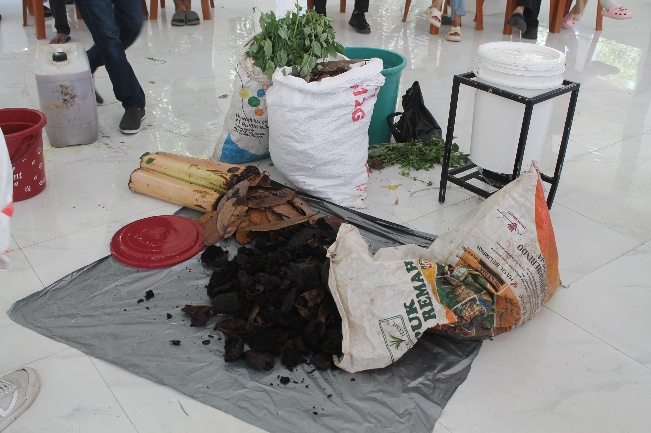

A field-based monitoring and evaluation activity entitled “Monitoring and Evaluation of Cocoa Pod Damage Caused by Cocoa Pod Borer (CPB)” was initiated in Bende Village, Kolaka, Southeast Sulawesi. This activity, conducted from September 29, 2025 to August 31, 2026, involves 4 lecturers and 4 research assistants who collaboratively assess the extent of cocoa pod damage caused by CPB infestation. The initiative aims to generate scientific data that can support effective pest management strategies and improve cocoa productivity at the farmer level.

The Cocoa Pod Borer (Conopomorpha cramerella) is recognized as one of the most destructive pests in cocoa plantations, significantly reducing both yield and bean quality. Therefore, this activity focuses on systematically observing cocoa pods in the field to identify damage intensity, infestation patterns, and associated environmental conditions. The monitoring process includes visual assessment of pod symptoms, categorization of damage levels, and documentation of infestation frequency over time.
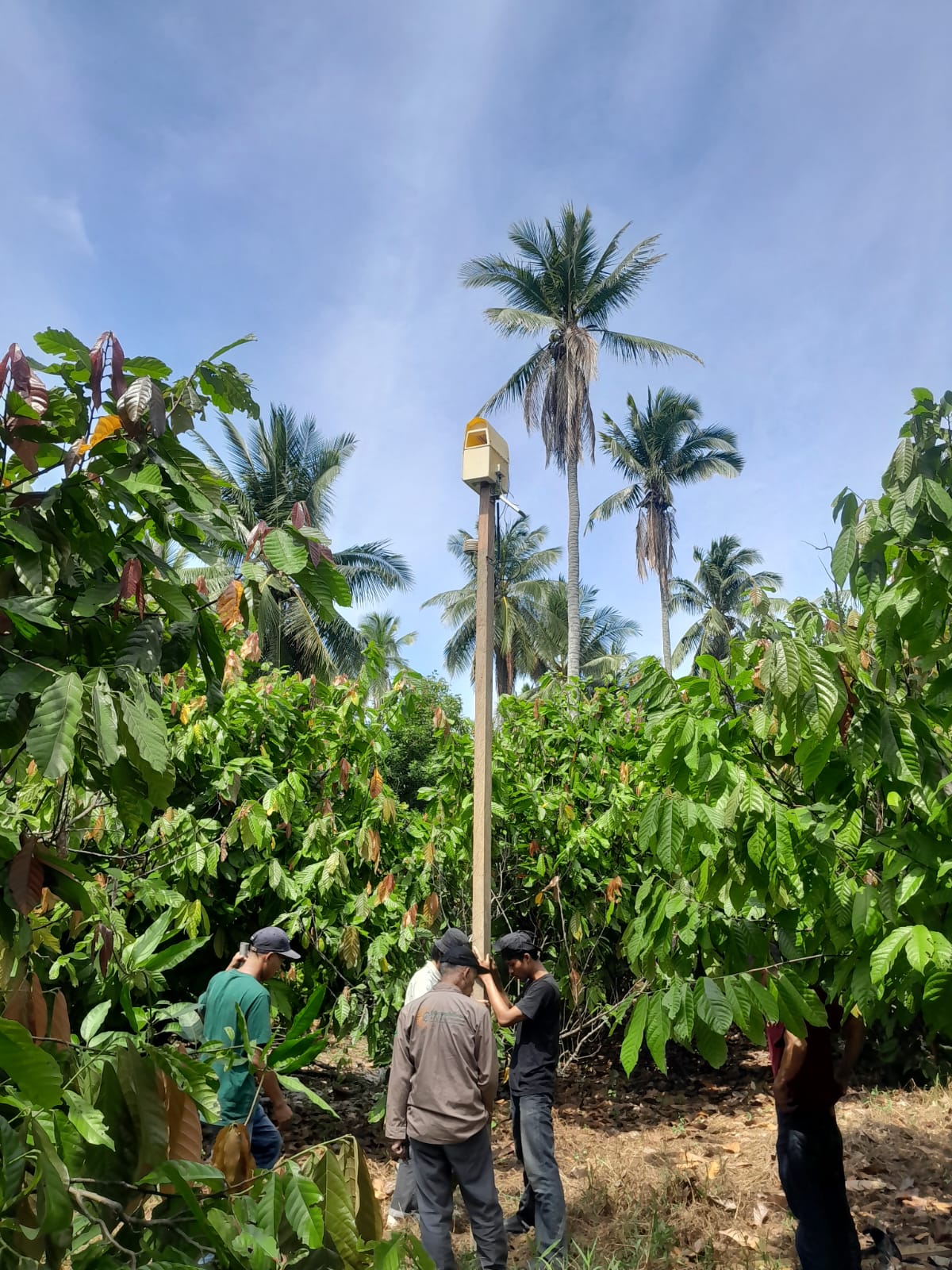
To strengthen the monitoring system, the activity also includes the installation of insect traps in selected cocoa plantation areas. These traps are used to monitor the population dynamics of Cocoa Pod Borer as well as other associated insect species present in the agroecosystem. The use of traps provides quantitative data on insect abundance and diversity, enabling researchers to better understand pest population trends and their interactions with environmental factors. This approach complements visual observations and enhances the overall accuracy of pest monitoring.
To ensure consistent and reliable data collection, observations are conducted every two weeks throughout the study period. This regular monitoring schedule allows the research team to capture temporal variations in pest infestation, identify peak attack periods, and better understand the progression of damage under different environmental conditions. Such a structured approach is essential for producing high-quality data that can support accurate analysis and recommendations.
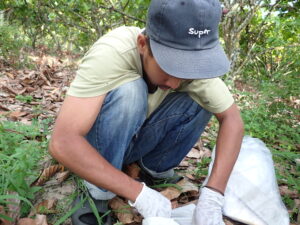
Using a scientific yet practical approach, the research team conducts regular field visits to collect primary data directly from cocoa farms in Bende Village. The involvement of research assistants ensures accurate data recording and consistency in observation methods. In addition, the activity emphasizes knowledge exchange, where field findings are discussed and interpreted collaboratively, strengthening both technical skills and analytical capacity within the research team.
The results of this monitoring activity are expected to provide valuable insights into the dynamics of CPB infestation, including peak attack periods and factors influencing pest development. The integration of trap-based monitoring and field observations allows for a more comprehensive understanding of pest ecology. This information can be used to formulate targeted and timely pest control strategies, such as integrated pest management (IPM), which combines biological, cultural, and mechanical control methods.
This activity is closely aligned with several Sustainable Development Goals (SDGs), particularly SDG 1: No Poverty. Cocoa is a major source of income for rural communities in Southeast Sulawesi, and reducing losses caused by pest infestation can significantly improve farmers’ economic conditions. By providing scientific evidence and practical recommendations, this initiative contributes to increasing productivity and farmer resilience, thereby supporting poverty reduction efforts.
Furthermore, the activity also supports SDG 4: Quality Education through hands-on learning and capacity building among research assistants, as well as SDG 15: Life on Land by promoting environmentally sound pest management practices that minimize ecological disruption. The collaborative nature of the research reflects SDG 17: Partnerships for the Goals, highlighting the importance of teamwork in advancing agricultural research and development.
Overall, this monitoring and evaluation activity demonstrates the critical role of scientific research in addressing agricultural challenges. By combining field observation, trap-based monitoring, data analysis, and sustainable practices, the initiative contributes to the development of effective pest management strategies that can improve cocoa productivity and support long-term rural development.