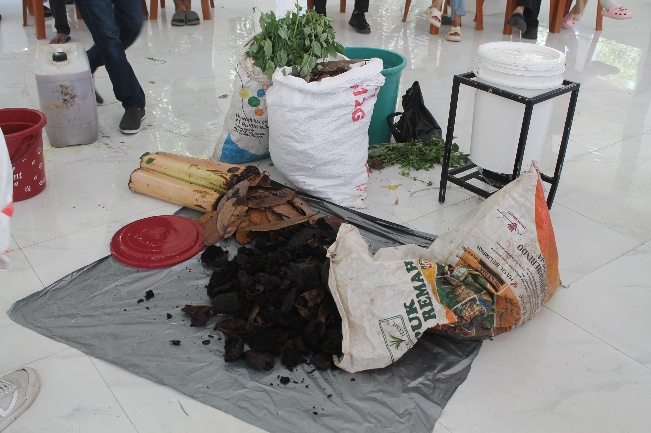
On December 13, 2025, at the UPTD Dampang, Kel. Lembang Gantarang Keke, Tompo Bulu, a pivotal dialogue took place that reshaped the future of local agriculture. The Cocoa Research Group from Universitas Hasanuddin, in partnership with the Bantaeng Regency Government, hosted a high-impact Focus Group Discussion (FGD). This session brought together 50 participants, primarily local farmers and agricultural practitioners, to engage in a participatory evaluation of cocoa cultivation strategies. The primary objective was to synchronize academic research with the lived experiences of farmers to create a resilient roadmap for doubling cocoa production.
The cocoa sector in Indonesia is currently grappling with a legacy of declining yields. Scientific data indicates that after the peak of the 1980s, productivity has fallen nearly fourfold, a crisis driven by aging tree stock and significant soil nutrient depletion. This FGD served as a critical platform to identify these hurdles directly from the field. Participants engaged in a transparent review of previously introduced technologies, specifically side-grafting (sambung pucuk) and organic composting, to determine their practical effectiveness in the Bantaeng landscape.

Central to this initiative is the commitment to SDG 1: No Poverty. By fostering a participatory environment where farmers can voice their challenges, the program ensures that agricultural interventions are not just theoretically sound but economically transformative. By refining cultivation techniques based on farmer feedback, the project aims to stabilize crop yields and increase household income, providing a robust defense against the economic instability that often plagues rural farming communities.
Furthermore, the event exemplified SDG 4: Quality Education by transforming a standard meeting into a collaborative learning environment. Rather than a top-down lecture, the FGD facilitated a “knowledge exchange” where scientific principles of pest management and soil health were weighed against local wisdom. This approach empowers farmers with critical thinking skills and technical literacy, ensuring they are not merely recipients of technology but active innovators in their own right.
The success of such an intensive gathering highlights the vital role of SDG 17: Partnerships for the Goals. The synergy between Universitas Hasanuddin and the Bantaeng Government demonstrates how institutional cooperation can bridge the gap between laboratory findings and field implementation. This partnership ensures that research remains “grounded” and that government policies are supported by empirical data, creating a sustainable model for regional development.
By synthesizing research with local expertise, the FGD also contributes to SDG 15: Life on Land. The strategies formulated during this discussion prioritize long-term soil restoration and biodiversity, ensuring that the push for productivity does not come at the cost of environmental integrity. As the 50 participants concluded the day, they left not just with a plan, but with a shared vision: a Bantaeng where sustainable cocoa thrives as a result of science, partnership, and community-led innovation.