


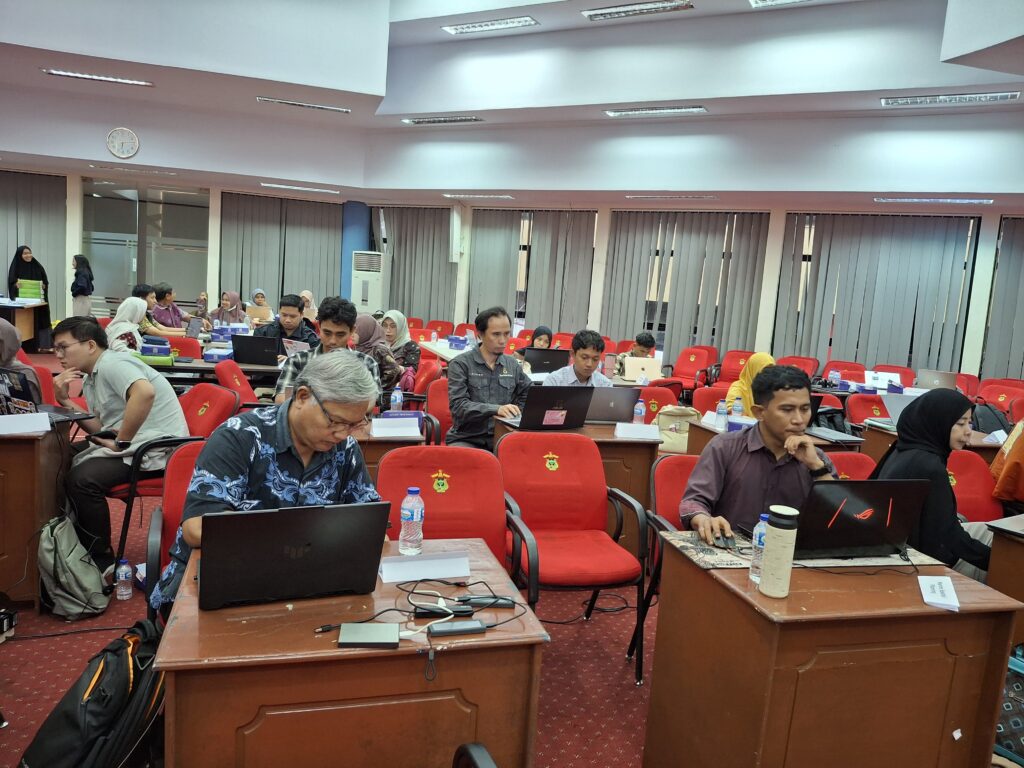
On January 30, 2025, a strategic training activity titled “Training Website with Several Research Groups” was conducted at the Institute of Research and Community Service, Hasanuddin University. The event brought together 100 participants, including lecturers, researchers, and representatives of multiple research groups, with a shared goal of improving how scientific outputs are communicated to broader audiences through institutional websites.
The primary objective of this training was to guide participants in systematically describing their research sub-themes, which represent the main focus of their ongoing and completed research activities. Each research group was encouraged to present a clear and structured narrative, including detailed explanations of research methodologies, key findings, and the specific objectives of each project. By doing so, the activity aimed to ensure that research outputs are not only scientifically robust but also accessible and understandable to non-specialist audiences.
The training adopted a participatory and practice-oriented approach. Participants engaged in interactive sessions where they learned how to transform complex scientific information into concise and engaging web content. Emphasis was placed on clarity, logical structure, and relevance, ensuring that the information presented can effectively communicate the significance and impact of each research project. In addition, participants were introduced to digital communication strategies that enhance the visibility and credibility of research at both national and international levels.
One of the significant outcomes of this activity was the development of draft website content for each participating research group. These drafts included well-organized descriptions of research themes, detailed activity reports, and summaries of research results and expected impacts. This process not only improved participants’ communication skills but also strengthened their ability to document and disseminate research findings in a transparent and accountable manner.
This initiative contributes to several Sustainable Development Goals (SDGs), particularly SDG 1: No Poverty. By improving the dissemination of research findings, especially those related to agriculture, health, and environmental management, the training supports the development of knowledge-based solutions that can enhance community livelihoods and reduce poverty. Accessible research information allows stakeholders, including farmers, policymakers, and local communities, to adopt evidence-based practices that can improve productivity and socio-economic conditions.
Furthermore, the activity also aligns with SDG 4: Quality Education by enhancing participants’ skills in scientific communication and digital literacy. The training provides a valuable learning platform that supports lifelong learning and capacity building among researchers. In addition, the collaborative nature of the activity reflects the principles of SDG 17: Partnerships for the Goals, as it fosters stronger connections among research groups and promotes knowledge sharing across disciplines.
The training also indirectly supports SDG 3: Good Health and Well-being, SDG 14: Life Below Water, and SDG 15: Life on Land, as many of the research projects discussed during the sessions address critical issues related to human health, marine ecosystems, and terrestrial biodiversity. By making these research outputs more visible and understandable, the initiative contributes to increased public awareness and informed decision-making.
Overall, this website training represents an important step toward strengthening the role of research in addressing global challenges. By combining scientific rigor with effective communication strategies, the activity ensures that research findings can reach wider audiences and generate meaningful impacts for sustainable development.


