
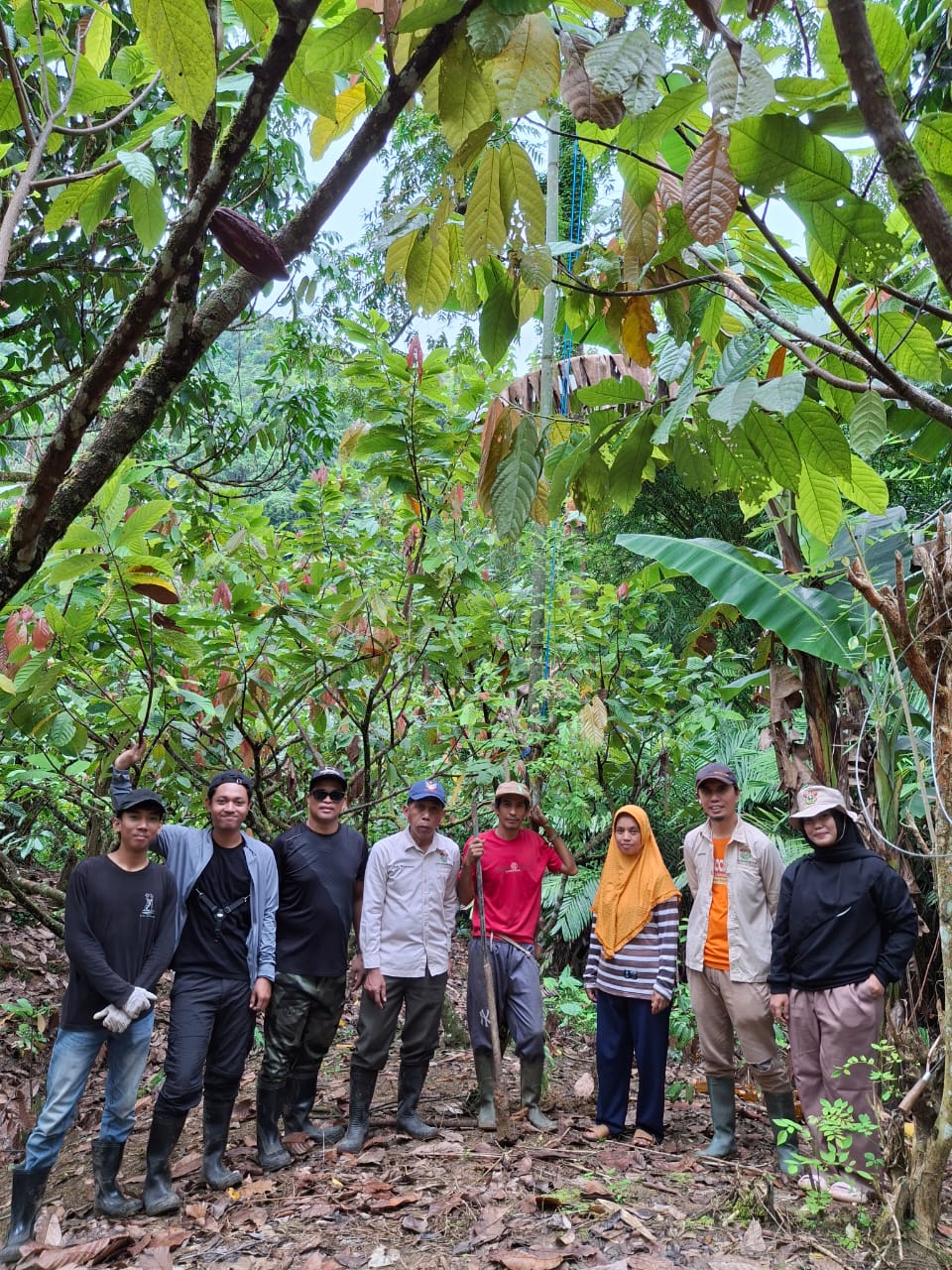

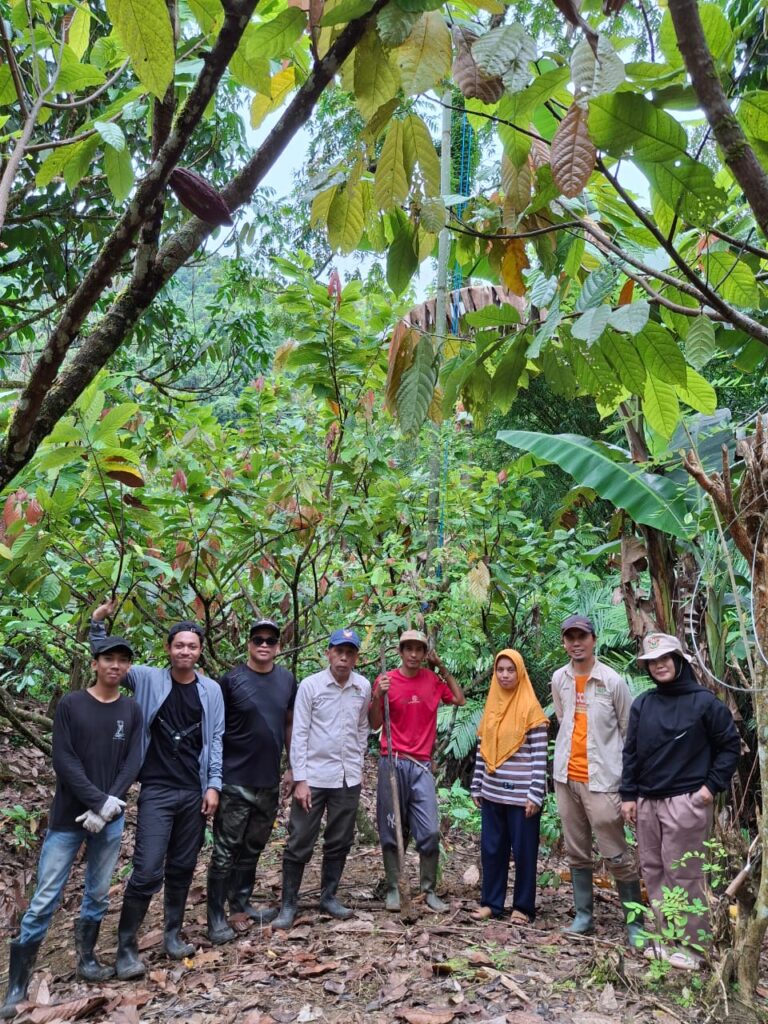

On January 28, 2025, a participatory research activity titled “Participatory Research with Cocoa Farmer” was conducted in Lewaja Village, Enrekang District, South Sulawesi. This initiative brought together 5 participants, including local cocoa farmers and researchers, with the shared objective of improving sustainable pest management practices through collaborative field-based learning. The activity focused on trap installation as a scientific approach to better understand the dynamics between insect populations, environmental factors, and natural enemies, particularly in relation to the Cocoa Pod Borer (CPB), a major pest affecting cocoa productivity.
The research employed a hands-on approach, where participants were directly involved in installing insect traps across selected cocoa plantations. This participatory method not only enhanced data collection accuracy but also empowered farmers with practical knowledge and technical skills. By observing insect captures over time, participants gained insights into pest population fluctuations and the ecological interactions that influence them. These findings are expected to contribute to the development of an early warning system for CPB control, allowing farmers to take timely and effective action.
From a scientific perspective, the integration of ecological monitoring and farmer participation represents a holistic strategy in pest management. Instead of relying solely on chemical control methods, this approach promotes environmentally friendly practices by leveraging natural enemies and understanding ecosystem balance. The data generated through this activity will serve as a foundation for designing adaptive pest management strategies that are both sustainable and locally relevant.
This activity strongly aligns with several Sustainable Development Goals (SDGs), particularly SDG 1: No Poverty, SDG 4: Quality Education, and SDG 17: Partnerships for the Goals. By improving cocoa yield and reducing crop losses due to pests, the initiative contributes to increasing farmers’ income and economic resilience, directly supporting SDG 1. Furthermore, the participatory nature of the research provides informal yet impactful educational opportunities, enhancing farmers’ knowledge and capacity in agricultural science, which aligns with SDG 4. Equally important, the collaboration between researchers and local farmers exemplifies SDG 17, highlighting the importance of partnerships in addressing agricultural challenges and achieving sustainable development.
In addition, the activity indirectly supports SDG 15: Life on Land, as it promotes biodiversity conservation through the use of natural pest control mechanisms and reduces dependency on harmful pesticides. By fostering ecological awareness among farmers, the program encourages practices that protect terrestrial ecosystems while maintaining agricultural productivity.
Overall, this participatory research initiative demonstrates how science, community engagement, and sustainability can be effectively integrated to address real-world agricultural problems. It serves as a model for future programs aiming to enhance farmer capacity, promote environmentally sound practices, and strengthen collaborative networks in rural development.


