
Decoding Classroom Vibes: How AI Helps Teachers Read the Room

GOWA, Indonesia Apr 23 2026/CDM/ – Understanding how students feel is the secret ingredient to effective teaching. However, in a busy classroom, a teacher cannot always spot the moment a child becomes frustrated or weary. A groundbreaking study titled “VGG16-BASED STUDENTS’ EMOTION RECOGNITION BASED ON THEIR FACIAL EXPRESSIONS IN DIFFERENT LEARNING TIMES IN THE CLASSROOM” offers a high-tech solution to this age-old challenge. Published in the journal ICIC Express Letters by ICIC International in August 2025, this research explores how artificial intelligence (AI) can “read” students’ faces to improve the learning environment.
The Science of a Smile (and a Scowl)
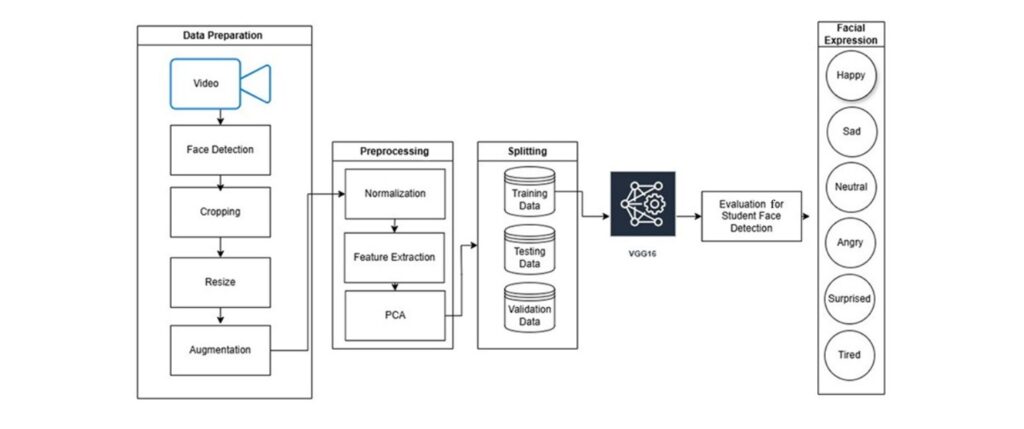
The researchers, led by Andi Hutami Endang and colleagues, utilized a sophisticated deep learning model known as VGG16. By analyzing over 3,800 photos extracted from classroom video footage, the AI was trained to recognize six key emotions: happy, sad, tired, neutral, angry, and surprised.
The system doesn’t just look at a face as a whole; it performs “feature extraction,” measuring the distance between eyelids, the width of a mouth, and the position of eyebrows. This technical precision allowed the model to achieve a staggering 98% accuracy rate during testing. Interestingly, the AI was most effective at 10:00 AM, suggesting that lighting and student alertness play a major role in how well technology—and perhaps even teachers—can interpret facial cues.
Empowering Education through SDGs
This innovation directly supports Sustainable Development Goal 4: Quality Education. By providing teachers with a rapid way to grasp how their pupils are feeling, educators can adapt their teaching strategies in real-time. If the AI detects a surge in “Tired” or “Sad” expressions, a teacher might decide to switch to a more engaging activity or offer a short break, ensuring that education remains inclusive, equitable, and effective for every child.
Why It Matters
The study found that the model was particularly excellent at identifying “Tired” and “Surprised” expressions. While it occasionally struggled to tell the difference between “Sad” and “Neutral” faces due to their visual similarities, the overall results remain highly promising for the future of “adaptive teaching”.
As we move toward smarter classrooms, tools like these act as a bridge between technology and human empathy. By automating the observation of student wellbeing, we allow teachers to focus on what they do best: inspiring and supporting their students. This research reminds us that while the data is digital, the goal is deeply human—creating a classroom where every student feels seen and understood.
Reference
DOI:
https://doi.org/10.24507/icicelb.17.03.279
Contact:
Prof. Dr. Ir. Amil Ahmad Ilham, S.T., M.IT
+62 853-9883-1853
amil@unhas.ac.id