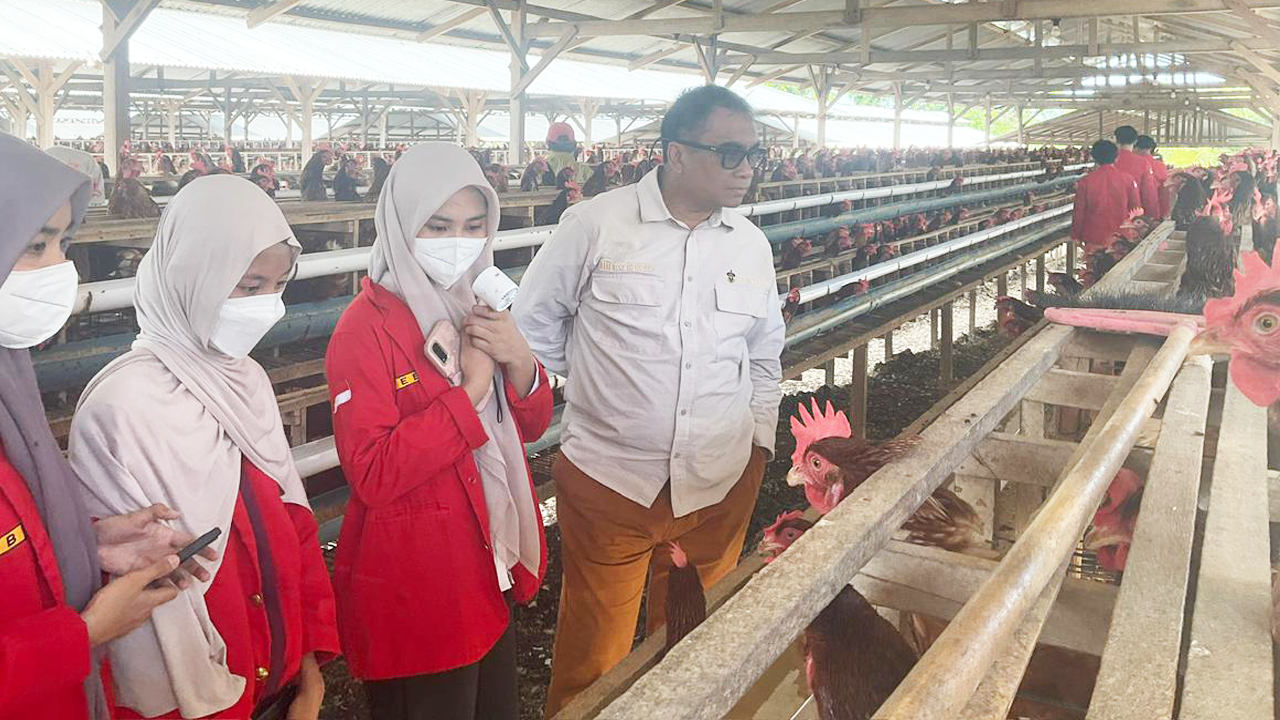

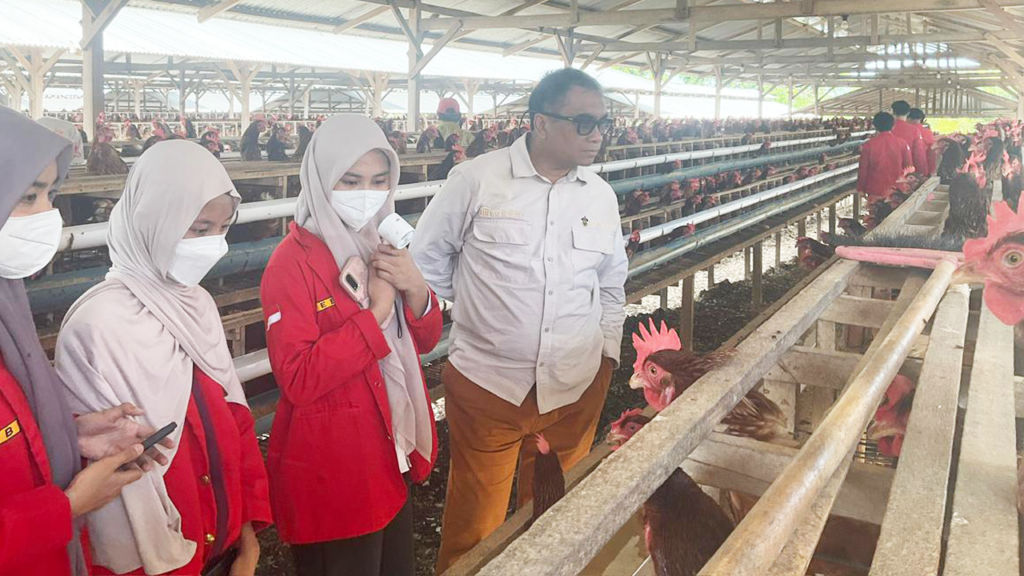
Sidenreng Rappang Regency, November 2025. On Sunday, November 16, 2025, approximately 30 students from the Faculty of Economics and Business at Universitas Hasanuddin embarked on a meaningful community service excursion to Mitra Bina Mandiri Poultry Farm in Sidenreng Rappang Regency. The visit, part of the university’s experiential learning initiative, provided students with an immersive look into the operational dynamics of a modern Indonesian agribusiness enterprise, bridging classroom theory with real-world practice.
The poultry farm, owned by local entrepreneur Haji Pathuddin, is a multi-faceted operation that blends traditional farming methods with cutting-edge technology — a testament to the evolution of Indonesia’s agricultural sector. The students were guided through three distinct production complexes: the egg rack production facility, the traditional hennery, and the modern hennery equipped with an automatic egg collector system.
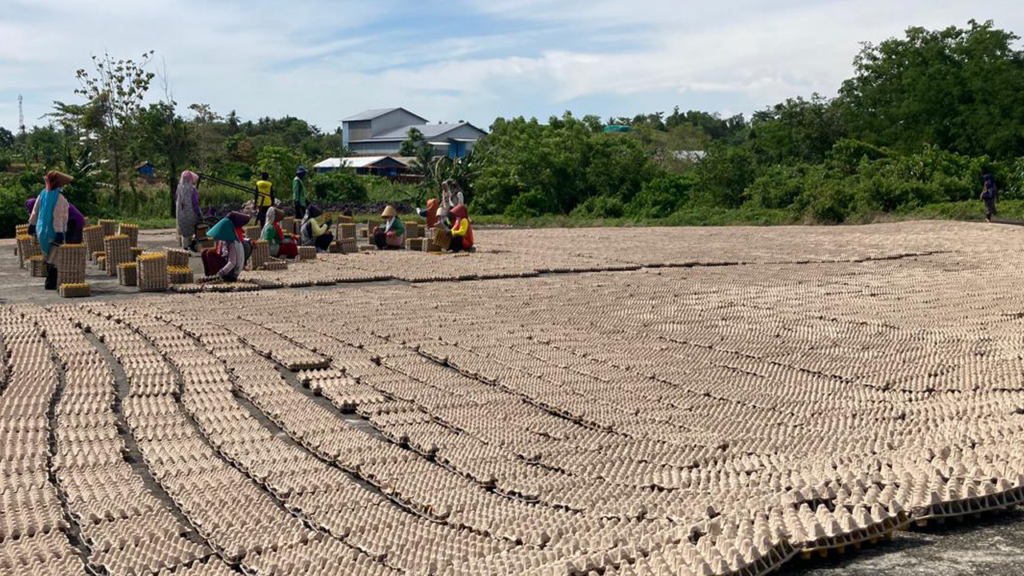
The tour began at the egg rack production facility, where students observed the manufacturing process of the specialized plastic trays used to safely transport eggs to markets. “We learned how even something as simple as an egg rack involves precise engineering, cost analysis, and supply chain coordination,” student’s said. “It’s not just about farming, it’s about supporting infrastructure.
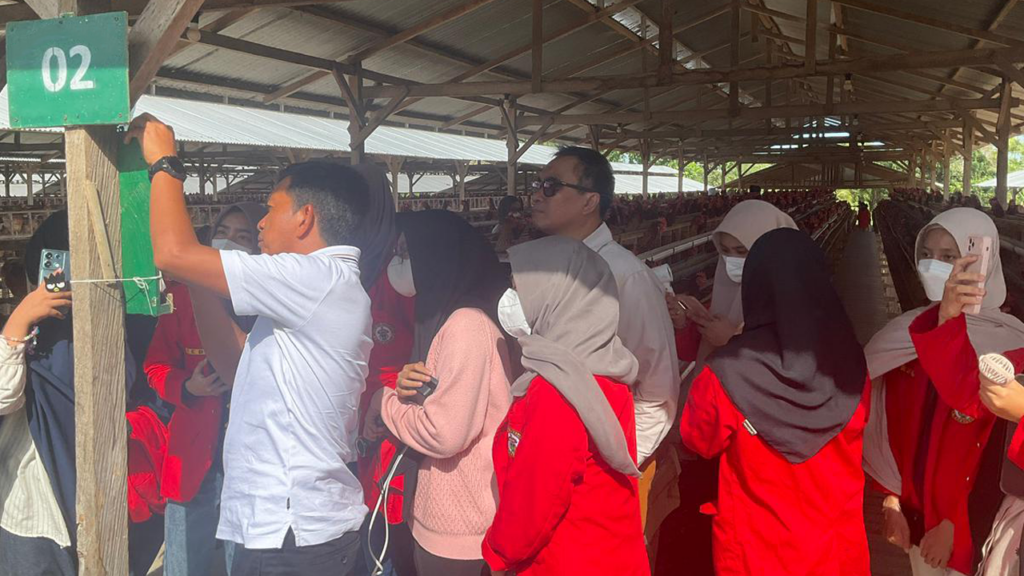
Next, the group visited the traditional hennery, a rustic yet meticulously managed setup where hens cramped in a bamboo-made rack and eggs are collected manually. Here, Haji Pathuddin shared the challenges of large-scale traditional poultry farming, from seasonal feed price fluctuations to labor constraints, offering students a candid view of the economic pressures faced by traditional farmers in rural Indonesia.
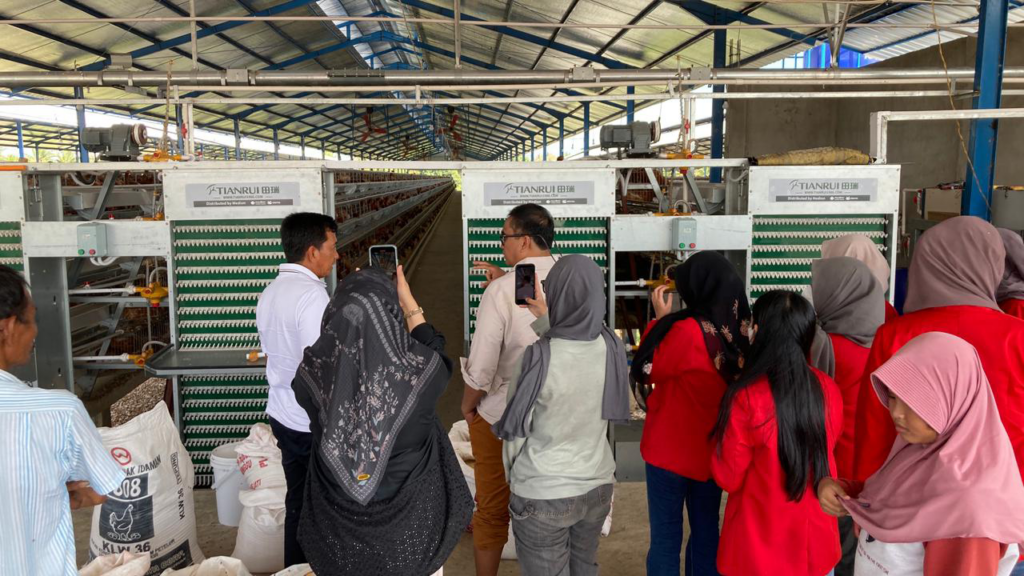
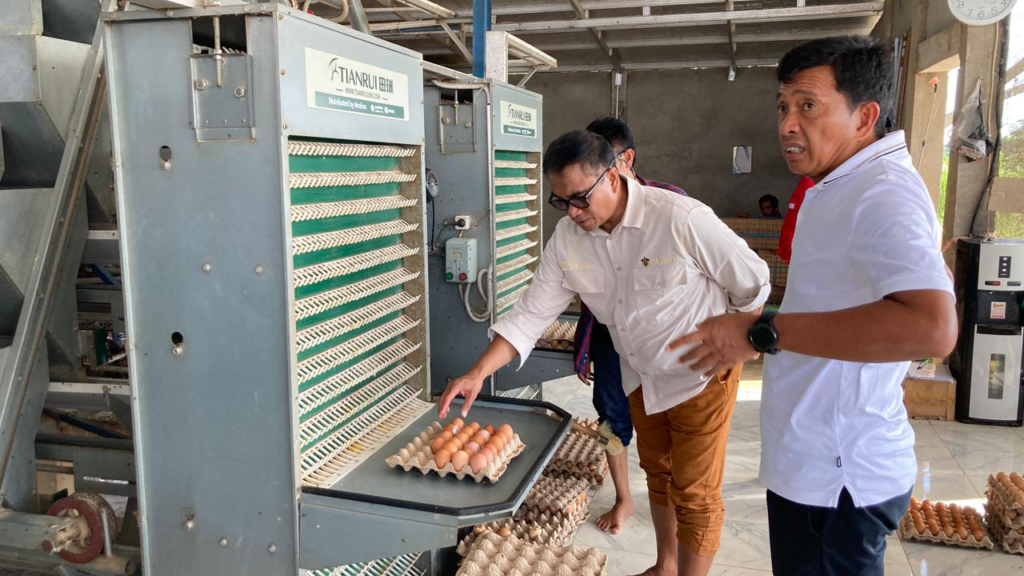
The highlight of the visit came at the modern hennery about 3 kilometers from the previous traditional one, where automated systems take center stage. Conveyor belts gently transport eggs from nesting boxes to a central collection point, minimizing breakage and human error. Students were fascinated by the integration of technology in improving efficiency, reducing waste, and scaling output. “Seeing the automatic egg collector in action was eye-opening, it’s not just about machines, it’s about data tracking, inventory management, and predictive logistics. This is what modern agribusiness looks like,” student’s said.
Beyond the technical aspects, the students delved into the broader business ecosystem: from sourcing feed and managing veterinary care to distribution networks and market pricing strategies. Haji Pathuddin emphasized the importance of vertical integration controlling production from hatch to shelf and how this model enhances profitability and quality control.
“This isn’t just a farm,” Haji Pathuddin told the group. “It’s a business that feeds families, employs local workers, and contributes to regional food security. Understanding its economics is as vital as understanding its biology.”
The visit concluded with a Q&A session and a heartfelt exchange between students and farm staff. Many expressed renewed appreciation for the complexity of food systems and the entrepreneurial spirit driving rural development.
As part of their community service requirement, the students also volunteered to assist with basic farm documentation and created a simplified business process flowchart for the farm’s management team, a practical contribution that will aid in future operational planning.
This field trip exemplifies the Faculty of Economics and Business’s commitment to cultivating not just economists and business professionals, but socially aware leaders who understand the real-life impact of economic decisions. In an era where sustainable agriculture and food security are global priorities, experiences like these equip students with the contextual knowledge to innovate and lead in Indonesia’s evolving economic landscape.
For Haji Pathuddin and Mitra Bina Mandiri Poultry Farm, the visit was more than a tour, it was an investment in the next generation of Indonesian business minds. And for the students? It was a day that transformed eggs from a grocery item into a symbol of resilience, innovation, and the quiet power of rural enterprise.