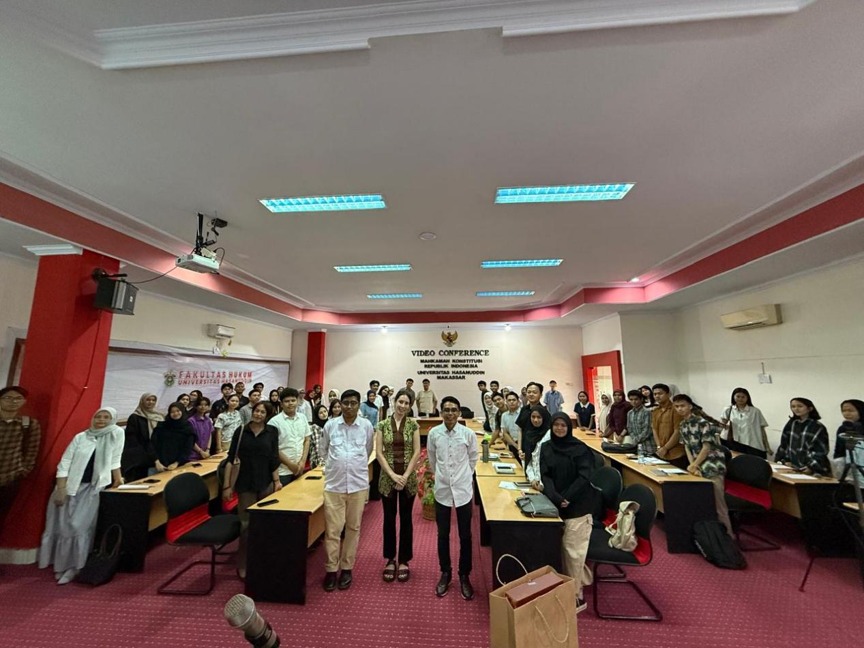
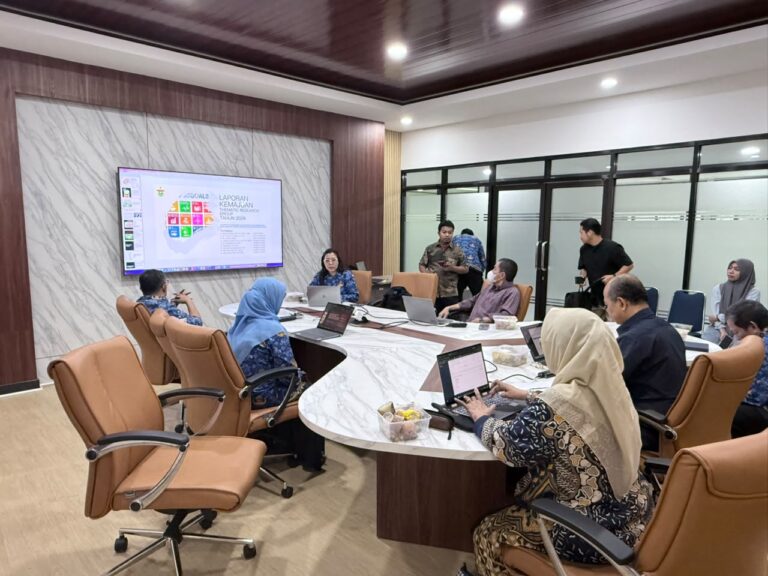
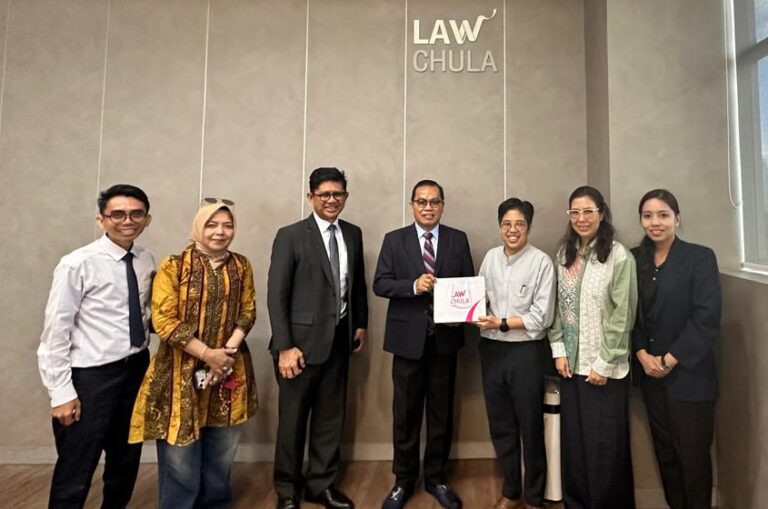
MAKASSAR-The Thematic Research Group (TRG) Business Law Research Group (BLRG) of Hasanuddin University organized an interactive discussion and sharing session in 2025, specifically themed “Field of Land Rights and Legal Pluralism.” This strategic agenda featured keynote speaker Elisabeth Storor, who presented an in-depth study on the dynamics of land rights amid plural legal systems. The event served as a crucial discourse space for Unhas researchers to reinforce the dimension of ecological justice in responding to the complexities of agrarian disputes and natural resource governance in Indonesia.
In her presentation, Elisabeth Storor provided a crucial perspective that assisted the BLRG Unhas team in dissecting the complex clashes of legal claims in the land sector. The discussion sharply highlighted how the intersection—and frequent friction—between the customary law of local communities, national positive law, and international business law instruments triggers the escalation of land-use conflicts and natural resource exploitation. Through a legal pluralism approach, the research team was encouraged to critically identify regulatory loopholes that have historically marginalized local community rights within the spheres of extractive industries and agrarian projects.
The comprehensive insights gained from this sharing session serve as a core foundation for BLRG Unhas in designing research outputs oriented toward social justice. The integration of the legal pluralism concept is designed to generate legal policy recommendations that possess not only legal certainty, but are also more inclusive and equitable. The primary objective is to provide concrete, multi-layered legal protection for traditional rights and the living spaces of indigenous communities against the hegemony of unilateral economic exploitation.
Substantially, the intellectual contributions and policy recommendations stemming from this discussion forum resonate strongly with global efforts to achieve the Sustainable Development Goals (SDGs). The recognition and protection of land tenure security for indigenous and local communities directly correlate with SDG 1 (No Poverty) and SDG 10 (Reduced Inequalities), wherein equitable access to agrarian resources constitutes a cornerstone of societal prosperity. Furthermore, efforts to prevent environmental exploitation align with the targets of SDG 15 (Life on Land). Ultimately, resolving land claim conflicts through inclusive policy formulation represents a concrete manifestation of enforcing SDG 16 (Peace, Justice, and Strong Institutions) to achieve sustainable development that leaves no one behind.