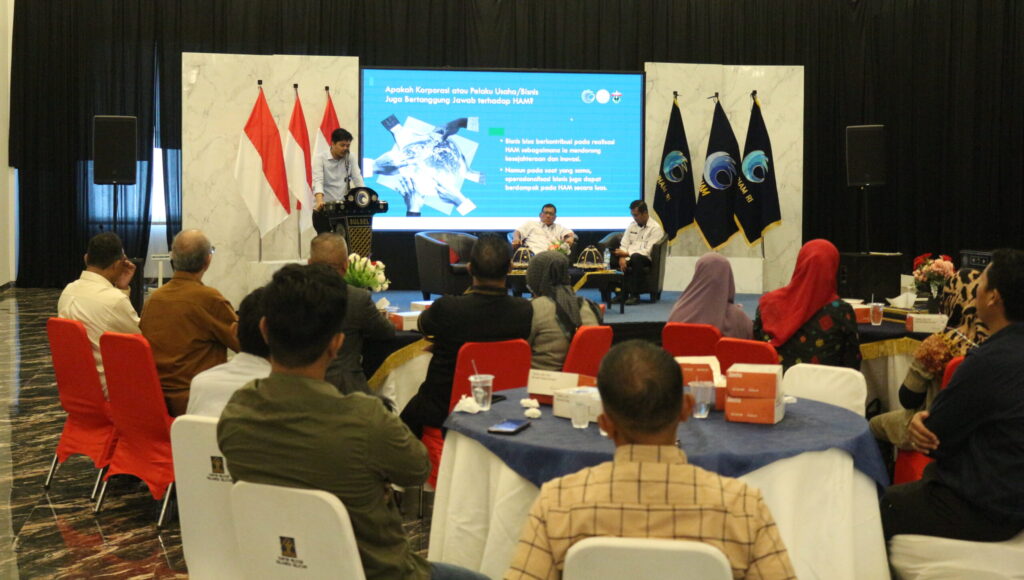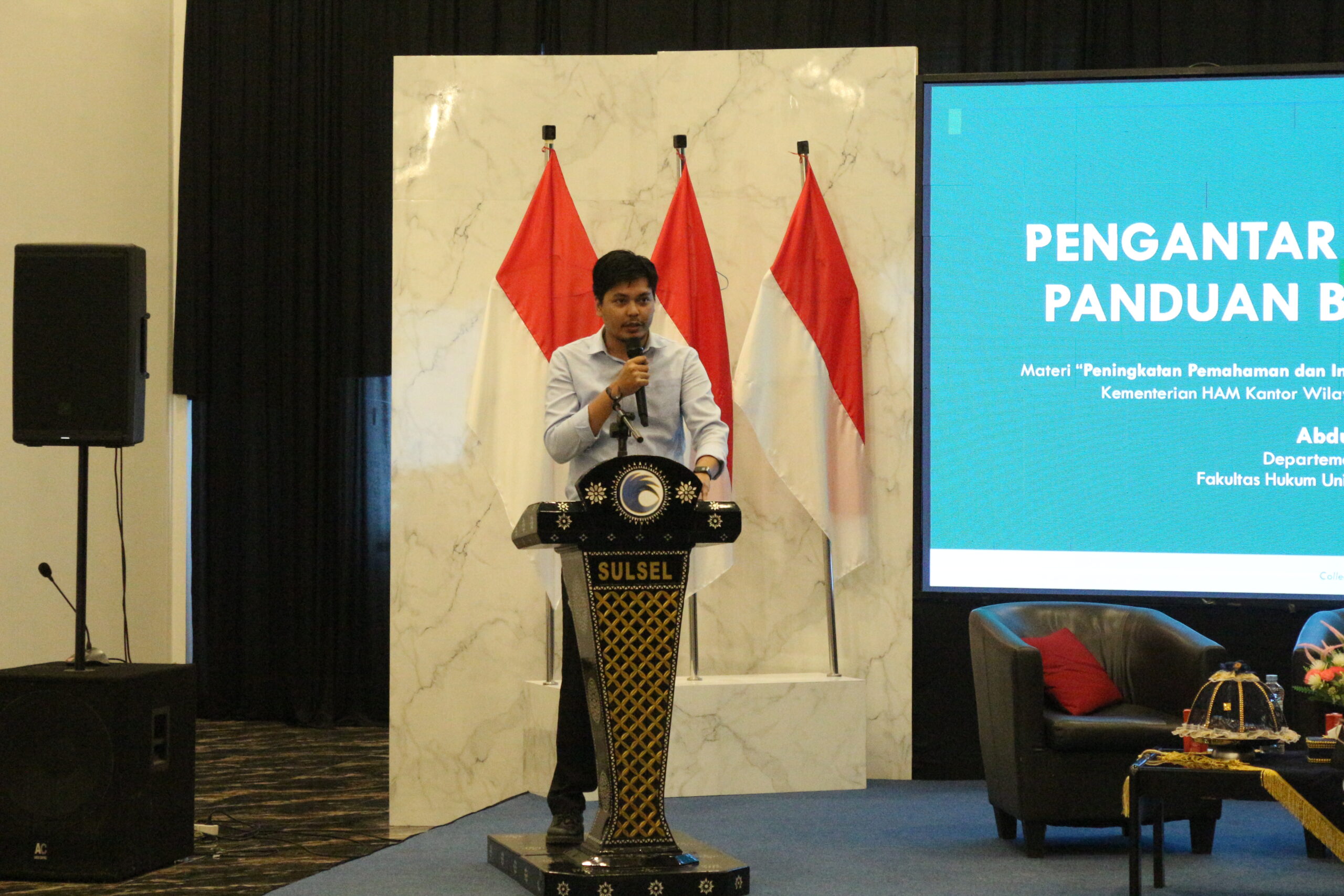

Makassar, 25 November 2025 — Businesses are increasingly expected to operate beyond the pursuit of profit. Sustainable business practices today are closely linked to how companies respect and uphold human rights. In response to this evolving expectation, the Regional Office of the Ministry of Human Rights of South Sulawesi organized a Human Rights Capacity-Building Program for Business Actors on Tuesday (25/11) at the Pancasila Hall of the Ministry’s Regional Office in Makassar.
The event was opened by Idawati Parapak, Head of the Division for Human Rights Instruments and Strengthening, who emphasized the importance of preparing the business sector to align with global human rights standards and national legal developments. She highlighted that integrating human rights considerations into business operations is essential for building responsible and sustainable enterprises.
The agenda was attended by 30 business actors representing various sectors in Makassar. Designed to strengthen participants’ understanding of international human rights standards and the legal responsibilities of businesses, the activity encouraged dialogue on how companies can integrate human rights principles into their operational practices. Participants actively engaged in discussions, particularly as the sessions addressed practical challenges faced by businesses today.
One of the speakers was Abdul Munif Ashri, S.H., M.H., a member of the Thematic Research Group (TRG) Business Law and a lecturer at the Faculty of Law, Hasanuddin University. In his presentation, he discussed the United Nations Guiding Principles on Business and Human Rights (UNGPs), focusing on the framework’s three pillars: the state duty to protect human rights, the corporate responsibility to respect human rights, and the need to ensure access to remedies for victims of business-related human rights violations.
“Businesses that respect human rights will become the global standard. Companies that fail to move in this direction will eventually be left behind by the market,” he noted during the session.
This perspective was further reinforced in the second session delivered by Drs. Andi Darwis, S.H., MBA., Secretary General of the Regional Executive Board of the Indonesian Employers Association (Apindo) of South Sulawesi. He provided a clear explanation of Indonesia’s labor law framework, including the range of legal consequences—civil, administrative, and even criminal—that may arise when business actors violate labor regulations.
The program forms part of broader efforts by the Ministry of Human Rights to promote awareness and implementation of human rights standards within the private sector. Initiatives such as this contribute to strengthening responsible business conduct and fostering collaboration between government institutions, academia, and business actors.
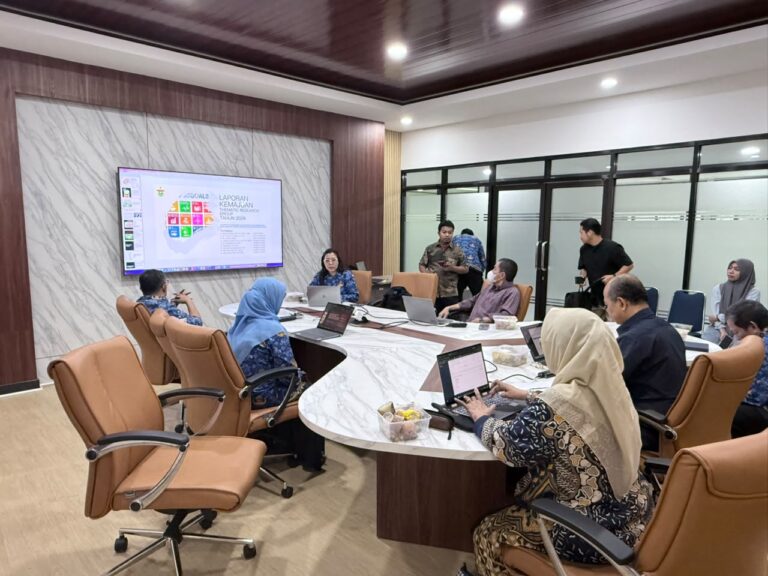
This activity also contributes to several Sustainable Development Goals (SDGs), particularly SDG 8 (Decent Work and Economic Growth) through the promotion of responsible business practices, SDG 12 (Responsible Consumption and Production) by encouraging ethical corporate conduct, and SDG 16 (Peace, Justice, and Strong Institutions) by strengthening respect for human rights within economic activities.