


MAKASSAR, Indonesia, Nov 2025 – A healthy shrimp pond may look calm on the surface, but beneath the water, an invisible threat can slowly develop. As shrimp grow, uneaten feed, feces, and other organic waste accumulate and release ammonia, a toxic compound that can threaten shrimp health and reduce aquaculture productivity. But what if an ordinary material found under a teak tree could help solve the problem? A recent study titled “Ammonia Remediation and Water Quality Improvement in Shrimp Ponds Using Teak Leaf (Tectona grandis) Biochar,” published in the Egyptian Journal of Aquatic Biology & Fisheries by the Egyptian Society for the Development of Fisheries and Human Health, explored the potential of turning teak leaf litter into biochar for improving shrimp pond water quality.
Why Is Ammonia Dangerous?
Ammonia is one of the major pollutants in intensive shrimp farming. It can come from uneaten feed, shrimp feces, and decomposing organic matter. When ammonia accumulates, shrimp may experience stress, reduced appetite, weakened immunity, and increased susceptibility to disease. At high concentrations, it can even become fatal. Managing ammonia is therefore essential for maintaining a healthy aquaculture environment.
From Teak Leaves to a Water-Cleaning Material The researchers transformed teak leaves into biochar through pyrolysis at 300°C for four hours. The biochar was then activated using phosphoric acid and potassium hydroxide to improve its adsorption properties. Why does biochar work? Think of it as a tiny sponge. Its porous structure provides many spaces where pollutants can be captured. The study found that the teak leaf biochar had a carbon content of 77.4% and an iodine adsorption capacity of 776 mg/g, indicating strong adsorption potential.
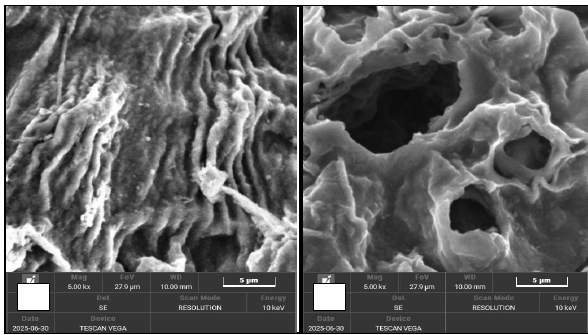
What Did the Researchers Find?
The researchers tested three biochar doses—20, 30, and 40 g/L—and compared them with untreated pond water. Water quality was monitored for nine days. The most effective treatment was 40 g/L of biochar. By day six, ammonia concentration dropped from 3.96 mg/L to only 0.0763 mg/L, bringing it below the 0.1 mg/L threshold discussed in the study. The biochar also reduced BOD and COD, indicators of organic pollution. However, by day nine, some pollutant levels began to rise again, suggesting that the biochar’s adsorption capacity can become saturated and may require replacement or complementary treatment.
Supporting SDG 14: Life Below Water
This research directly supports Sustainable Development Goal (SDG) 14 – Life Below Water, particularly efforts to reduce pollution and improve the quality of aquatic environments.
Although shrimp ponds are human-managed ecosystems, their water ultimately interacts with surrounding coastal and aquatic environments. Better pond water management can therefore contribute to more responsible aquaculture.
Turning Waste into a Solution
The study offers a simple but powerful idea: a fallen teak leaf can become a tool for cleaner aquaculture. Instead of treating leaf litter as waste, it can be transformed into a value-added material that helps remove pollutants from shrimp pond water. The message is clear: sustainable aquaculture may not always require expensive technology. Sometimes, the solution can begin with materials that nature has already provided.
Reference
DOI:
https://doi.org/10.21608/ejabf.2025.422757.6555
Contact:
Prof. Fahruddin
+62 853-4264-9190
fahruddin_science@unhas.ac.id