
MAKASSAR, Indonesia, June 29, 2026/AIS-TRG/– A hospital is more than a building filled with doctors, nurses, medical equipment, and patients. Behind every healthcare service is an organization that depends on people working together under pressure. When employees feel connected to their work and workplace, could that affect how well the hospital performs?
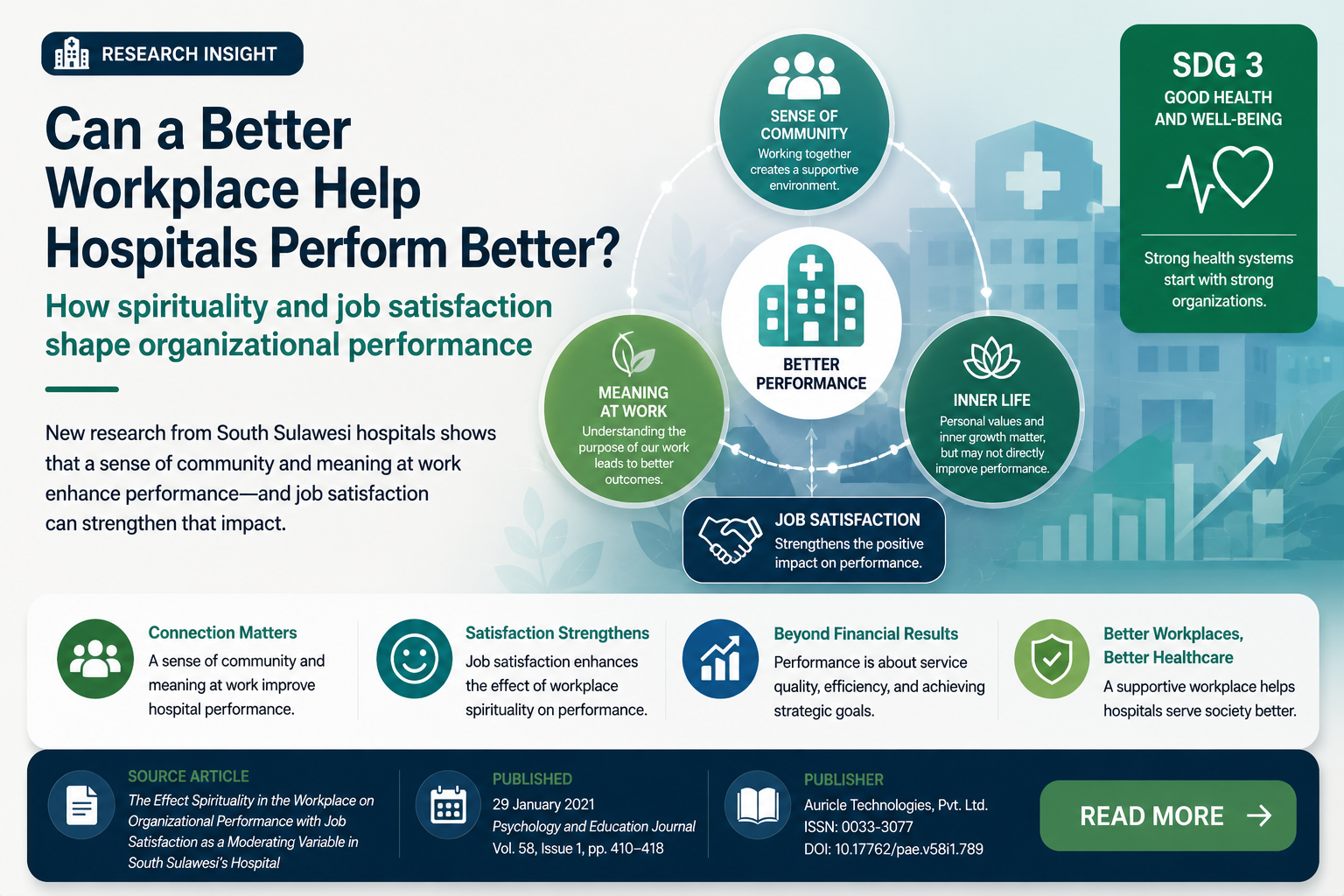
A study conducted in South Sulawesi hospitals explored this question by examining workplace spirituality, job satisfaction, and organizational performance. Rather than treating spirituality as something purely personal or religious, the researchers examined workplace spirituality through elements such as a sense of community, meaning at work, and inner life.
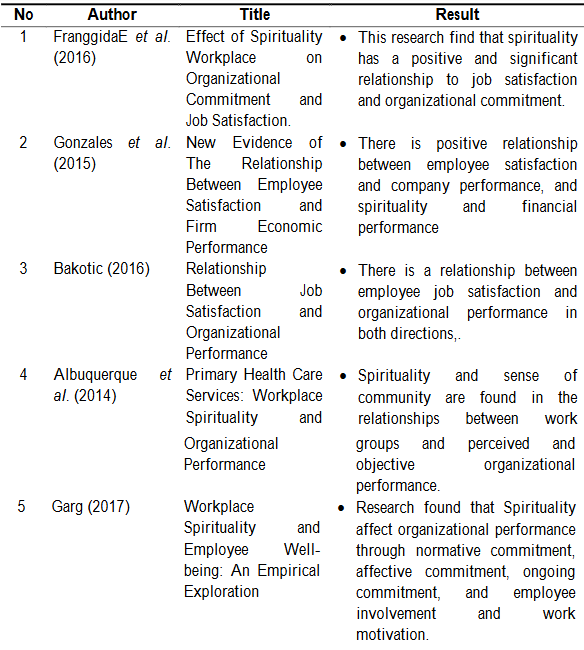
The researchers used a quantitative survey approach and analyzed the relationships using Moderating Regression Analysis. The respondents included directors and section heads from government hospitals selected through purposive sampling. The study measured workplace spirituality, job satisfaction, and organizational performance using questionnaire-based instruments.
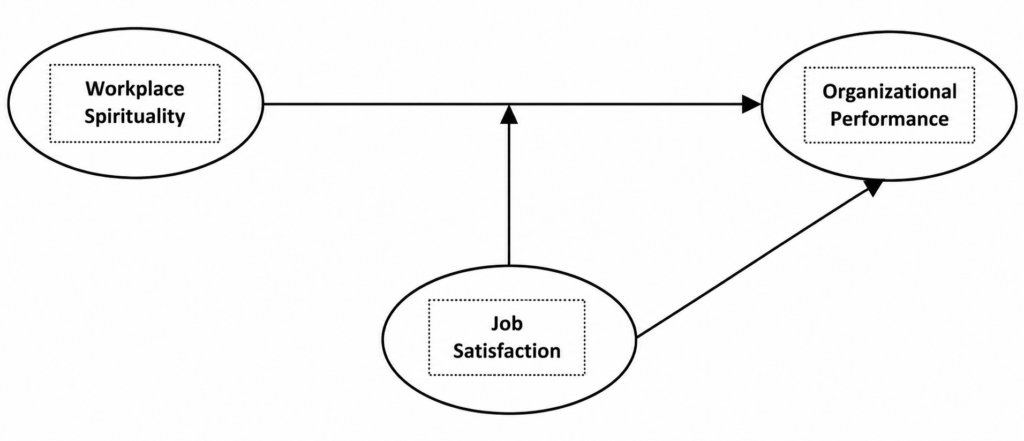
The results reveal an important distinction. A sense of community and meaning at work had a positive and significant relationship with organizational performance. In contrast, the inner-life dimension of workplace spirituality did not have a significant direct effect. The finding suggests that feeling connected to colleagues and finding meaning in one’s work may matter more for organizational performance than personal spirituality alone.
There was another surprising result: job satisfaction by itself did not significantly affect organizational performance. The study reported a significance value of 0.078, above the conventional 0.05 threshold. However, job satisfaction could strengthen some relationships between workplace spirituality and organizational performance. In particular, it moderated the effects associated with sense of community and inner life.
Why might this matter in hospitals? Healthcare workers often operate in demanding environments, where large numbers of patients, emotional pressure, and continuous responsibilities can create high levels of stress. A supportive workplace may therefore be important not only for employees but also for how healthcare organizations function. The researchers recommend that hospitals consider training and workplace environments that support employees’ sense of meaning and connection.
This research can be connected to Sustainable Development Goal (SDG) 3: Good Health and Well-Being. The study does not directly measure patient health outcomes or SDG 3 indicators. Nevertheless, because hospitals are central to healthcare delivery, improving the organizational environment in which healthcare services are provided can be viewed as one supporting element of stronger health institutions.
The source article is “The Effect Spirituality in the Workplace on Organizational Performance with Job Satisfaction as a Moderating Variable in South Sulawesi’s Hospital,” published in the Psychology and Education Journal, with Auricle Technologies, Pvt. Ltd. identified as the publisher, on 29 January 2021. The authors are Kartini Hanafi, Grace T. Pontoh, Eni Novitasari, and Endang Sri Ningsih. The article appears in Volume 58, Issue 1, pages 410–418.
The broader lesson is straightforward: healthcare performance is not determined only by equipment, procedures, or financial resources. The workplace itself matters. When healthcare professionals experience meaning, community, and a supportive environment, they may be better positioned to contribute to the performance of the organization serving the public.
Reference
https://doi.org/10.17762/pae.v58i1.789
Contact:
Grace T. Pontoh
+6281332206898
gracetpontoh@fe.unhas.ac.id