
MAKASSAR, Indonesia, August 1, 2026/AIS-TRG/– When people hear “financial reporting,” they may think of numbers, budgets, and accounting rules. But behind every government financial report are people who design systems, perform controls, use technology, and make decisions. If those people lack the right knowledge and skills, even a well-designed system may fail to produce reliable information.
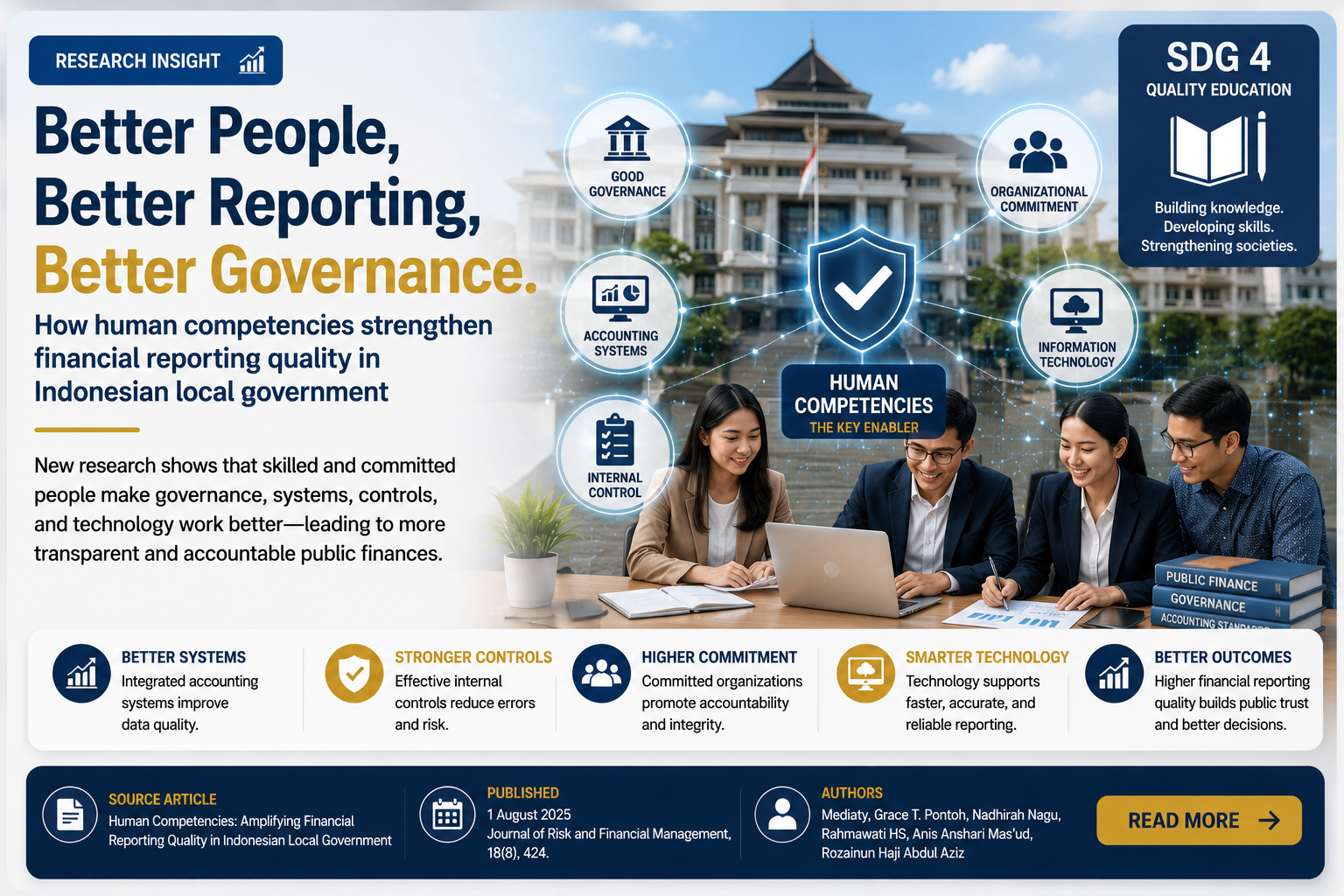
A recent study of Indonesian local governments explores this human side of financial reporting quality. The researchers examined five factors—good governance, regional financial accounting systems, internal control systems, organizational commitment, and information technology utilization—and asked whether human resource competencies could strengthen their effects on financial reporting quality.
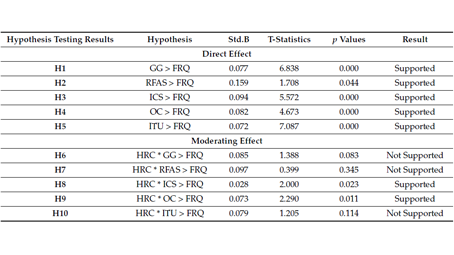
The study collected survey data from 170 Local Government Work Units (SKPDs) across South Sulawesi Province and analyzed the relationships using Structural Equation Modeling. The results were clear: all five factors had a positive and significant relationship with financial reporting quality. In practical terms, better governance, stronger accounting systems, effective internal controls, stronger organizational commitment, and useful technology were each associated with better-quality financial reports.
But the most interesting finding was about people.
Human resource competencies did not strengthen every relationship equally. Competence significantly strengthened the relationship between internal control systems and financial reporting quality. It also strengthened the relationship between organizational commitment and financial reporting quality. However, the moderating effect was not significant for good governance, regional financial accounting systems, or information technology utilization.
This distinction matters. It suggests that technology and formal systems cannot simply be “fixed” by adding more skilled employees. Their effectiveness may depend heavily on how well the systems themselves are designed and standardized. Internal controls and organizational commitment, by contrast, require greater human judgment, participation, monitoring, and daily execution. Competent employees can therefore make these mechanisms work more effectively.
The message connects with Sustainable Development Goal (SDG) 4: Quality Education. Although the study focuses on financial reporting rather than education itself, its findings show why continuous learning and professional competence matter in public institutions. Human resource competencies include knowledge and responsibility, education, training, and experience. Strengthening these capabilities can help employees perform financial duties accurately and support more transparent public financial management.
The source article is “Human Competencies: Amplifying Financial Reporting Quality in Indonesian Local Government,” published in the Journal of Risk and Financial Management by MDPI on 1 August 2025. The article was written by Mediaty, Grace T. Pontoh, Nadhirah Nagu, Rahmawati HS, Anis Anshari Mas’ud, and Rozainun Haji Abdul Aziz. It appears in Volume 18, Issue 8, Article 424.
The broader lesson is straightforward: high-quality financial reporting is not produced by accounting systems alone. It requires capable people who can understand standards, operate controls, use technology, and take responsibility for the information they produce. Investing in professional competence is therefore not merely an HR strategy—it is part of building more reliable and accountable public institutions.
Reference:
DOI 10.3390/jrfm18080424.
Contact:
Grace T. Pontoh
+6281332206898
gracetpontoh@fe.unhas.ac.id