Telling the Story of Pantai Baba’toa Online: Digital Branding Training in Lapeo, Polewali Mandar
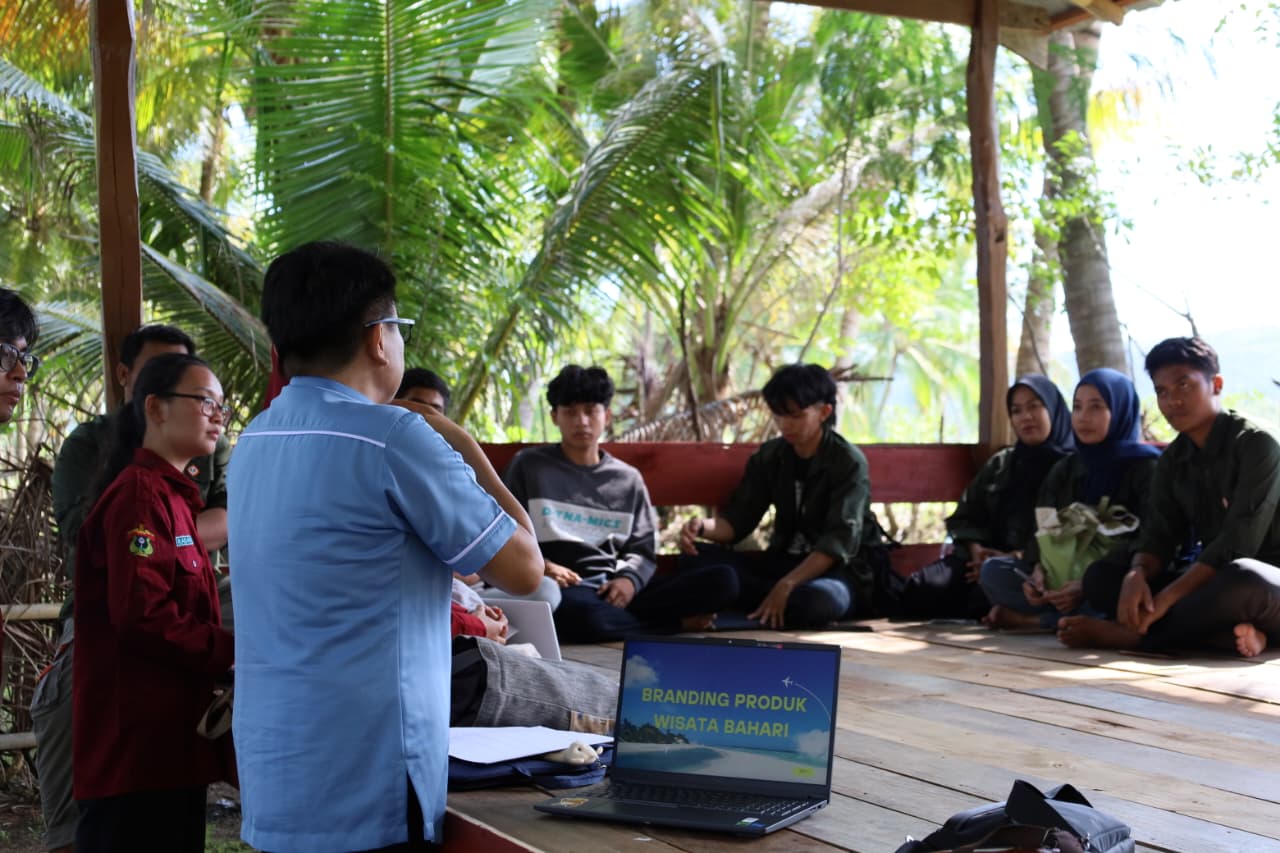
A beach can be beautiful and still go unnoticed. Today, visitors discover places through photos, posts, and the impression a destination gives online, and for small tourism groups, building that impression is a skill that has to be learned. In Lapeo Village, Polewali Mandar, the tourism awareness group of Pantai Baba’toa (Kelompok Sadar Wisata) took part in a community service program to do exactly that.
The program was carried out by a team from Universitas Hasanuddin. Its aim was to improve the members’ understanding and skills in building a digital brand image for their marine tourism products.
The team used a participatory approach that combined qualitative and quantitative methods. Participants completed a questionnaire before and after the training, and the team delivered material on digital, branding-based marine tourism strategies. Participants improved in every aspect that was measured. The largest gain, 15.56%, came in using social media to build product branding. Scores for photography technique stayed low, which the team puts down to too little hands-on practice during the training.
The activity supported the branding of the destination, with the goal of attracting more visitors and supporting local economic development. This activity connects to Sustainable Development Goal 8: Decent Work and Economic Growth. A tourism group that can present its beach well online has a better chance of drawing visitors, and visitors bring income to the community around it. It also reflects Sustainable Development Goal 17: Partnerships for the Goals. The program brought university expertise to a village tourism group, with both sides working together.