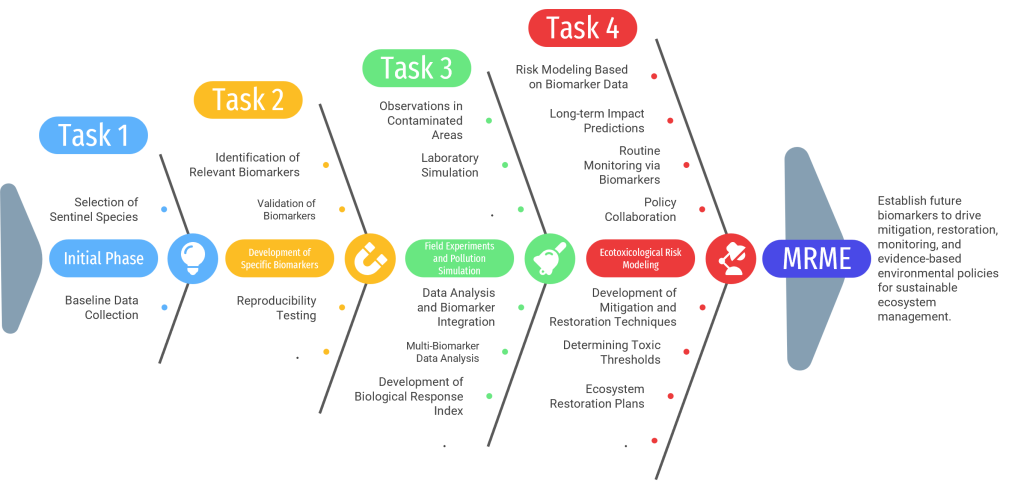
Initial Phase: Identification of Sentinel Organisms
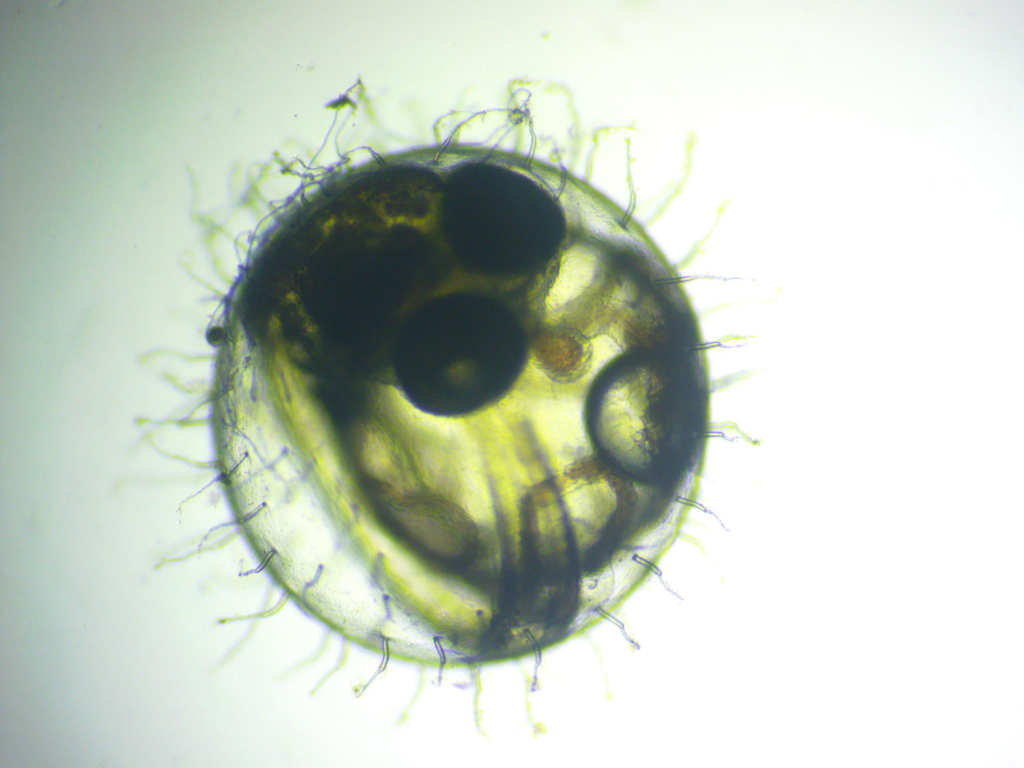
Selection of Sentinel Species: Identify aquatic species sensitive to environmental changes (e.g., fish, plankton, mollusks, invertebrates) as sentinel organisms.
Baseline Data Collection: Gather baseline ecological and biological data of sentinel organisms in aquatic ecosystems under study.
Development of Specific Biomarkers
Identification of Relevant Biomarkers: Determine biomarkers responsive to specific pollutants (e.g., antioxidant enzymes, heart rate, morphological abnormalities).
Validation of Biomarkers: Conduct laboratory tests to validate biomarker sensitivity and specificity to different pollutant levels.
Reproducibility Testing: Ensure that biomarker responses are consistent across different environmental conditions for the same sentinel species.
Field Experiments and Pollution Simulation
Observations in Contaminated Areas: Test biomarkers in sentinel organisms within contaminated environments to assess real-world responses.
Laboratory Simulation: Simulate pollutant exposure in sentinel organisms in controlled lab settings to study molecular mechanisms and physiological responses.
Data Analysis and Biomarker Integration
Multi-Biomarker Data Analysis: Integrate various biomarkers (molecular, biochemical, physiological) to understand holistic responses to pollution at individual and population levels.
Development of Biological Response Index: Use approaches like the Integrated Biological Response (IBR) to summarize biomarker results into a single index reflecting environmental stress levels.
Ecotoxicological Risk Modeling
Risk Modeling Based on Biomarker Data: Develop risk models using biomarker data to assess sentinel organism sensitivity to various pollutants.
Long-term Impact Predictions: Use biomarker and sentinel organism data to predict long-term impacts on ecosystems and their species
Application for Environmental Monitoring
Routine Monitoring via Biomarkers: Incorporate biomarker findings into regular ecosystem monitoring programs for early detection of pollutant exposure.
Policy Collaboration: Promote the use of sentinel organisms and biomarkers in policy-making for environmental protection and ecosystem restoration.
Development of Mitigation and Restoration Techniques
Determining Toxic Thresholds: Define pollutant exposure thresholds that are safe for ecosystems based on biomarker data.
Ecosystem Restoration Plans: Use sentinel organism data to develop effective mitigation strategies and restore damaged ecosystems.