
About Aquatic Ecotoxicology
Aquatic ecosystems, whether in marine or freshwater environments, play a crucial role in maintaining global environmental balance. However, in recent decades, increasing human activity has led to a significant rise in the quantity and variety of pollutants released into the environment. From metals to synthetic organic compounds, and from excessive nutrients to emerging pollutants such as pharmaceuticals and microplastics, aquatic ecosystems are now under increasing pressure.
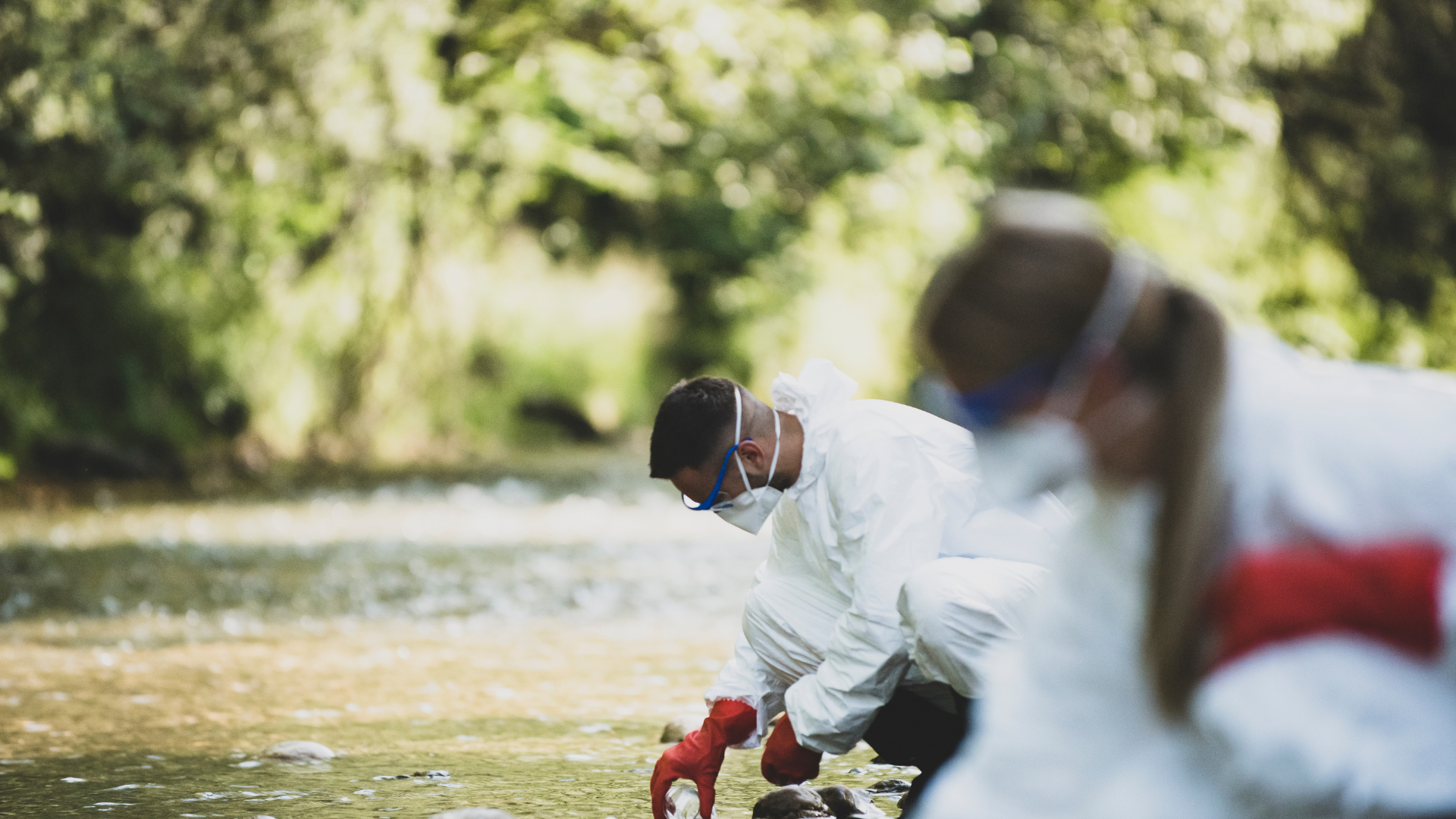
The Aquatic Ecotoxicology Research Team was established in response to these challenges, with the primary goal of understanding how various pollutants affect aquatic organisms and ecosystems. Our research focuses on identifying the mechanisms of toxicity experienced by various organisms, ranging from microorganisms, algae, and invertebrates, to fish, when exposed to single pollutants or complex mixtures. With a comprehensive approach, we explore the impact of pollution at different levels of biological organization, including the molecular, cellular, biochemical, physiological, behavioural, population, and community levels.
In an era where environmental pressures are increasingly complex and unpredictable, interdisciplinary and innovative approaches are essential to understanding the risks and impacts posed by pollutants in aquatic ecosystems. Through a combination of laboratory research, field studies, and ecosystem modelling, our team strives not only to understand but also to mitigate the impacts of aquatic pollution. Our research not only contributes to the development of fundamental science but also provides a strong scientific foundation for sustainable environmental management policies.
In this context, the Aquatic Ecotoxicology Research Team is committed to developing innovative and evidence-based solutions to protect and maintain the health of aquatic ecosystems worldwide. Through collaboration with various stakeholders, we aim to produce recommendations that can be implemented in efforts to conserve aquatic environments, ensuring the survival and well-being of future generations.
The Aquatic Ecotoxicology research team focuses on a deep understanding of the impact of pollutants on aquatic ecosystems, both in marine and freshwater environments. We explore how toxic chemicals, both single and in complex mixtures, affect various types of aquatic organisms, from microorganisms to vertebrates like fish. Our research encompasses analysis at various biological scales, including studies at the molecular, cellular, biochemical, physiological, behavioural, population, community, and ecosystem levels, to provide a comprehensive picture of the mechanisms of toxicity and the ecological impacts that arise.
Through an interdisciplinary approach, we combine laboratory and field methods, using modern analytical techniques such as biomarkers, genomics, and ecosystem modelling, to identify and predict the ecotoxicological risks posed by various chemical compounds. Our focus is not only on traditional pollutants such as metals and pesticides but also on emerging pollutants like pharmaceuticals, microplastics, and other chemicals that have not been extensively studied.
In the rapidly developing digital era, the field of Aquatic Ecotoxicology is increasingly leveraging advances in Information Technology (IT) and Artificial Intelligence (AI) to address the complex challenges faced in the study and management of aquatic ecosystems. The use of IT and AI offers great opportunities to collect, analyze, and interpret ecotoxicological data on an unprecedented scale, accelerating research and innovation in this field.
In Aquatic Ecotoxicology, various IT-based tools and technologies are used to collect data from various sources, such as environmental sensors, satellite imagery, and automated monitoring systems. The data generated includes information on water quality, pollutant distribution, and the biological condition of aquatic organisms, all of which are critical elements in understanding the dynamics of aquatic ecosystems. By utilizing big data technology, this information can be efficiently managed and analyzed, allowing researchers to identify patterns and trends that may be difficult to detect with traditional approaches.
Artificial Intelligence (AI) plays a crucial role in deepening the analysis of this data. Through machine learning techniques and neural networks, AI can help predict the impact of pollutants on organisms and aquatic ecosystems based on historical and experimental data. AI models can also be used to simulate future scenarios, such as changes in pollution patterns or the impact of policy interventions, providing more accurate insights into environmental management planning.
Moreover, AI supports the development of more sophisticated ecotoxicological models, capable of considering the complex interactions between various types of pollutants and organisms. This is particularly important given the multifactorial nature of aquatic pollution, where the cumulative effects of various contaminants are often more damaging than the effects of single pollutants. By leveraging AI, researchers can build more accurate predictive models for assessing environmental risks and supporting better decision-making.
The integration of IT and AI in Aquatic Ecotoxicology also expands cross-disciplinary and regional collaboration. Data collected from various locations can be jointly analyzed on cloud-based platforms, enabling researchers around the world to collaborate in solving complex global issues. This not only enhances research efficiency but also accelerates the application of scientific findings in environmental policy and management practices.
Mission
- Enhancing Scientific Understanding: Conducting leading-edge research on the toxic effects of pollutants on aquatic organisms and ecosystems, utilizing IT and AI for more accurate data analysis, impact prediction, and complex ecosystem modelling.
- Technological and Methodological Innovation: Developing and integrating IT-based tools, such as big data analytics and intelligent environmental sensors, as well as AI models, to accelerate data collection, analysis, and ecotoxicological scenario simulation across various aquatic ecosystems.
- Cross-Disciplinary Collaboration and Integration: Building global partnerships with research institutions, industry, and government to promote collaborative research that leverages IT and AI, and to support technology and knowledge transfer in addressing aquatic pollution challenges.
- Application of Research in Policy: Translating research findings into policy recommendations and evidence-based environmental management strategies, using AI-based predictions to support more precise decision-making in protecting and restoring aquatic ecosystems.
- Capacity Building and Education: Educating and training a new generation of researchers, scientists, and stakeholders in Aquatic Ecotoxicology, with a focus on IT and AI utilization, to ensure their preparedness to tackle complex environmental challenges in the future.
Aim
- Enhancing Scientific Understanding: Conducting leading-edge research on the toxic effects of pollutants on aquatic organisms and ecosystems, utilizing IT and AI for more accurate data analysis, impact prediction, and complex ecosystem modelling.
- Technological and Methodological Innovation: Developing and integrating IT-based tools, such as big data analytics and intelligent environmental sensors, as well as AI models, to accelerate data collection, analysis, and ecotoxicological scenario simulation across various aquatic ecosystems.
- Cross-Disciplinary Collaboration and Integration: Building global partnerships with research institutions, industry, and government to promote collaborative research that leverages IT and AI, and to support technology and knowledge transfer in addressing aquatic pollution challenges.
- Application of Research in Policy: Translating research findings into policy recommendations and evidence-based environmental management strategies, using AI-based predictions to support more precise decision-making in protecting and restoring aquatic ecosystems.
- Capacity Building and Education: Educating and training a new generation of researchers, scientists, and stakeholders in Aquatic Ecotoxicology, with a focus on IT and AI utilization, to ensure their preparedness to tackle complex environmental challenges in the future.
Useful Information
Looking forward to connecting with you! Don’t hesitate to reach out.
Physical Address
Marine Scince and Fisheries Faculty, Hasanuddin University Jl. Perintis Kemerdekaan No.KM. 10, Tamalanrea Indah, Kec. Tamalanrea, Kota Makassar, Sulawesi Selatan 90245
khusnul@unhas.ac.id
Phone Numbers | WhatsApps
+6285691546955
Send us your Feedback
We value your opinions! Share your feedback to help us improve and grow. Whether it’s about our research, website, or events, your insights are important to us.